I’m the pastor of FBC Jackson in Jackson, Alabama. Each week, I post “Article Roundup: Helpful Reads,” sharing articles that I believe will benefit the saints who make up FBC Jackson and followers of Christ everywhere. Happy reading!
I’m grateful that Andrew Walker continues to address this topic. “Once it is understood that the political divide in contemporary America is, at its core, a moral divide—and that moral reasoning is inescapably shaped by underlying religious or metaphysical commitments—it follows that the fundamental distinction between the major political parties lies in the extent to which each permits itself to be guided by religiously informed moral values. While party identities may evolve over time, the modern Democratic Party has become institutionally aligned with a secular progressive framework that is, in its foundational assumptions, incompatible with a biblical moral vision.”
A stream of gratitude should flow from our hearts and mouths as we reflect on God’s work of creation. “We must never suppose that God created the cosmos out of lack—because he wanted a relationship, or he wanted someone to love. God did not create the world because he was thirsty. Rather, God created the world because it is the nature of a fountain to overflow. Creation is the super-abundance of divine goodness, beauty, mercy, love, wisdom, power, sovereignty, self-sufficiency, self-existence, justice, holiness, faithfulness, and freedom.”
When Sinclair Ferguson writes about the person of the Holy Spirit, you should read it! “So, for all the repetition of the mantra that the Holy Spirit is no longer “the forgotten person of the Godhead,” it is questionable whether we enjoy richer, more intimate communion with the Spirit himself. So, the lingering question (at least for me) remains this: Who is the Holy Spirit? How can I think what Spirit dwells within me?”
Church, we’re almost home! “Between Jesus’s first and second comings, we are in the last chapter of history. For in Jesus’s death, resurrection, and ascension, the ages have shifted. We have entered into the time when the man Jesus Christ has launched our homecoming. The major turning point of history, therefore, is not the Enlightenment, the founding of America, or the last election. It’s not your birthday or recent promotion or dismissal. It is the time in history when God entered the creation in Christ and commenced the church’s return to the presence of God—now in the church’s worship (Heb. 12:18‒25) and soon in that new creation world without end (Heb. 12:26‒27).”
Articles like this are always timely. Perhaps that’s because I often find myself misusing time. “Be intentional, believer, about your diligence unto the Lord. Make the best use of your time. We won’t be perfect, but we want to glorify God with our time. Whether it’s social media, TV, or the like, it’s not the consumption that is the problem (although it sometimes can be), but it’s the over-consumption. We replace Bible-reading with binge-watching the latest show on Netflix. We replace prayer with mindlessly scrolling through reels. We replace our spiritual disciplines with different things that distract us. God has called us to more than that.”
I’m the pastor of FBC Jackson in Jackson, Alabama. Each week, I post “Article Roundup: Helpful Reads,” sharing articles that I believe will benefit the saints who make up FBC Jackson and followers of Christ everywhere. Happy reading!
Praise the Lord for Agnes Shankle, a woman who stood up and spoke for the glory of God and the good of her local church. Also, she is an excellent example of how congregationalism can prevent a church from drifting. “A sign of a church’s health is not simply how well the church’s leaders know their Bibles but how well the members do. It should be every church’s prayer that if its leadership ever attempts to lead in a direction of unfaithfulness to God’s word, there is an Agnes Shankle in their midst who is willing to stand up and say, ‘Not in my house.'”
Let us remain faithful to good, sound apostolic doctrine, trusting that the Lord will work through it to empower us to live godly lives in this present evil age. “It is not enough to exhort people to live like Jesus. To be sure, the apostolic message exhorted people to live godly lives but only in conjunction with a robust message about sin, salvation, incarnation, resurrection, atonement, reconciliation, and eternal life. Any gospel that denies these essentials or ignores them or skips over them to get to something else or leads people to doubt them or does not deal straightforwardly with them is, in effect, a different gospel. The Christian faith is more than a doctrine to be believed, but it is never less.”
God enables Spirit-indwelt Christ-followers to put sin to death and live godly, holy lives in this present evil age. “If you believe Christ automatically does everything to make the Christian life happen, how do you understand ‘make every effort’? There is no such thing as a passive Christian life. The passive soldier is an easy target. The good news is that God makes His resurrection power available to us to walk in victory over sin. Unfortunately, many people think of this as automatic and do not take aggressive efforts to guard themselves.”
Samuel Perkins strives to show how the Beatific Vision “enriches the Christian life in one particular area: Christian fellowship, especially fellowship found in the context of our local churches.” “Not in vain does the author of Hebrews warn against the habit of skipping church (Heb. 10:25). He goes on to say that, in a very real sense, when we gather together for regular worship, we go to heaven (Heb. 12:18–29). In other words, on those frantic Lord’s Day mornings, when you are trying to get your kids out the door with pleas of ‘time to go to church!’ you would not be lying if instead you said, ‘time to go to heaven!’ This would do wonders for the way we look at our humble little churches and the relationships we forge there. The prospect of the beatific vision motivates us to redouble our efforts to press in and invest in these relationships. The deeper, more sanctifying, more intimate, more God-glorifying our relationships are here, the more they reflect our heavenly homeland and give us a taste of future glory.”
I’m thankful for how Jake Meador teaches us to show honor to whom honor is due. This also serves as a good reminder to thank God for those teachers He has used to edify and build us up in the faith. “Two of TGC’s founders, of course, are no longer involved in the work—D. A. Carson because of health reasons and Tim Keller because he has gone to his rest. The third founder, John Piper, now nearly 80, continues to speak (and, if his quip about AI at the end of his keynote is any measure, still has his fastball). But even for Piper, much of the work he will do I suspect he has done. And as I thought about these things while attending the conference, the overwhelming sense I had throughout was a feeling of profound gratitude.”
I’m the pastor of FBC Jackson in Jackson, Alabama. Each week, I post “Article Roundup: Helpful Reads,” sharing articles that I believe will benefit the saints who make up FBC Jackson and followers of Christ everywhere. Happy reading!
The Bible is amazing. God’s providential governance of all things is breathtaking. “A late Friday afternoon providence may have felt like small comfort to his shattered followers. But they did not yet know how soon this seed, sown in an unsuspecting garden, would spring with the indestructible life of Israel’s resurrection hope.”
This is such a helpful reminder. When it comes to spiritual disciplines, we must keep the end in mind! “Habits are important when they help us focus on Christ, deepen our relationship with him, and transform us through his presence. Think of habits as valuable servants but poor masters. Let them help you deepen your connection while staying focused on your relationship with the Triune God.”
This is an important point of clarification. “But sometimes this servant leadership becomes toxic. Sometimes, what people mean by servant leadership is not leadership at all. If I only understand leadership as deferring to others and not stepping on people’s toes, then I’m at risk for ignoring what God has called me to do.”
I would love to see FBC Jackson become more familiar with the Nicene Creed. I’ll probably teach through it at some point! “Here are six summary statements—or, we might say, six lessons—we can learn from this seventeen-hundred year-old confession of faith, the Nicene Creed.”
On April 14, 2025, Christianity Today published an article titled “Was Jesus Crucified with Nails? Why One Evangelical Bible Scholar Thinks the Answer Might Be No.” The article was biblically anemic. Thankfully, Benjamin Gladd published an article on the importance of nails on April 18, 2025. I don’t know if it was a response to the Christianity Today article, but it sure was timely. “By preserving the details about nails that pierced Jesus’s hands and feet, we’re reminded that at the gospel’s heart lies One who is pierced, One who bore God’s wrath, so you and I can enjoy God’s favor.”
Mohler speaks candidly about Pope Francis. “Francis will go down in history as the pope of liberal gesture—the vicar of equivocation. Just when his church needed a firm hand and intellectual firepower, he responded with a shrug. He filled critical Vatican appointments with liberal cronies and appointed as the church’s chief doctrinal protector a fellow Argentinian whose writings included materials rightly defined as sexually perverse.”
Leonardo speaks candidly about Pope Francis as well! “The change Francis brought about didn’t promote an evangelical move in the Roman Church. He made his church more ‘catholic’ and less Roman, but no more biblical. Regardless of who the next pope will be, the need for a biblical reformation will be as relevant as ever.”
I’m the pastor of FBC Jackson in Jackson, Alabama. Each week, I post “Article Roundup: Helpful Reads,” sharing articles that I believe will benefit the saints who make up FBC Jackson and followers of Christ everywhere. Happy reading!
If the church is to maintain a consistent pro-life ethic, it must oppose the current practices surrounding IVF, even if some folks will be offended. “But most conservative Protestant denominations, let alone the multitude of nondenominational congregations, have tried to dodge the issue. And there is an obvious reason for this: IVF is popular, and many churches have members who have used it, in many cases without regard for the fate of “excess” embryos. Taking a stand on IVF—even only to say that human embryos should not be destroyed—would mean calling people to repentance in ways that will be difficult and painful. But a church that won’t do that risks becoming merely a Jesus-branded social club.”
This article will encourage the parents of young children. “Today I found myself becoming irritated because I have writing to do, and instead I was coaxing a toddler to sit on the toilet. For just one moment the attitude hit hard that I have more important things to do, and as that thought hung in the air over my frazzled, middle-aged, graying head, I felt my stomach drop. Instant repentance washed over me, and I know Jesus heard the silent cry of my heart: Lord, forgive me.”
EVERY SUNDAY IS RESURRECTION SUNDAY! “Sadly, the church only seems to get excited about the resurrection once a year at Easter time. In reality, every Sunday should be Resurrection Sunday. The reason why the early church began to meet on the first day of the week was to celebrate Jesus’s defeat of death. Imagine what church would be like if we consciously gathered every week to celebrate the resurrection?”
John gives us several reasons why married couples should start having children sooner rather than later. I think they’re compelling. “Don’t wait to start having kids” was the best advice I ever received as a newlywed. While conventional wisdom says to put off parenthood for a couple years to focus on your marriage or your household finances, the truth is that you will never be fully ready and there are serious costs to waiting.”
It’s always good to get a refresher on the doctrines of justification and sanctification. “From this definition, we can already see that justification and sanctification, though related, are different gifts. The most serious, and potentially damning, errors surface when the two are not carefully distinguished.”
I’m the pastor of FBC Jackson in Jackson, Alabama. Each week, I post “Article Roundup: Helpful Reads,” sharing articles that I believe will benefit the saints who make up FBC Jackson and followers of Christ everywhere. Happy reading!
Singleness should not be an enigma in Christ’s church. “Singleness and marriage present theological truths that together give a fuller, more beautiful picture of the gospel. By considering and communicating ways that single believers and married believers can help one another better grasp the gospel, we highlight the value of both states.”
I often ask church members, “Who are your closest friends in the church?” Sadly, most only mention family. Very few mention their fellow brothers and sisters in Christ. This ought not be! “One comedian joked that one of Jesus’s greatest miracles was having twelve adult male friends. We smile, then wince. Should such relationships be this rare? Does God’s word give us expectations that we should want this kind of friend? Pray for this kind of friend? Desire to be this kind of friend? I think it does.”
According to David Mathis, God’s laughter should affect how we live in this life. I think he’s right. “While God laughs at the wicked, the righteous learn to laugh with their God. His laughter reminds us that he never worries. He never fears. He is never under threat. His laughter evokes our trust and fills our hearts with admiration and courage.”
Pastoral transitions rarely go well. I suppose it’s because of the spirit described in 1 Corinthians 3 that exists in most churches. That said, it really seems like a plurality of elders is vital for a healthy transition. “Pastoral transitions are among the most delicate moments in a church’s life. Retiring pastors, incoming leaders, and church leadership teams each have a vital role to play in ensuring a smooth and God-honoring transition. When approached with humility, wisdom, and trust in God’s sovereignty, these transitions can strengthen the church for generations to come.”
An increasing number of pastors are expressing a desire to leave their pastorate. Why? The main reasons for this trend are inner church conflicts and a lack of optimism regarding the future growth of the church. And though the article doesn’t state this, I think it’s a helpful addition: these two problems—internal conflict and stagnant growth—are often interconnected rather than separate problems. “The Hartford Institute report indicated that clergy dissatisfaction was not linked to the pastor’s own health or feeling of personal wellness. “Burnout” was not the problem. Instead, the biggest issue listed was conflict within the congregation. On the other hand, optimism about a congregation’s future strongly correlated with the ministers wanting to stay at their post. So if pastors want to keep their job, and if churches want to keep their pastors—or attract new candidates—then the two most important goals should be church unity and church growth. Churches should reduce internal conflict and attract and keep new members.”
I’m the pastor of FBC Jackson in Jackson, Alabama. Each week, I post “Article Roundup: Helpful Reads,” sharing articles that I believe will benefit the saints who make up FBC Jackson and followers of Christ everywhere. Happy reading!
I love the local church. The healthiest Christians are those who revolve their entire lives around their local church. That said, I’m so thankful for how Rachel essentially stops and marvels at the beauty of it. “Only God could have come up with the idea of the local Church. A place where people from all walks of life can come together to worship our God because of Him.”
I’ve come to the conclusion that I should read whatever Greg Morse writes. I may be mistaken, but I believe most people need the gentle correction and reproof that Greg provides in this article. “The point is not to never watch a movie or a show or a game. A play proved to be sweet to my soul this past year (David by Sight & Sound Theaters). The point is this: never be unthoughtful about your entertainments. Let the world turn its brain off and return to its stories; you cannot. Most programs, we admit, are probably not helping us much to heaven. Former generations of Christians seemed more aware of this and more ruthless against worldliness. They asked each other, “Do you not know that friendship with the world is enmity with God?” (James 4:4).”
These five spiritual disciplines will help your marriage. More importantly, they’ll bring lots of glory to the Lord Jesus Christ! “I wanted to also talk about family spiritual disciplines or rhythms. Really these are personal habits that should flow over to each other and in the home. As you know The Disciple-Making Parent ministry is to help parents pass the gospel to their children. But that starts with bringing the gospel into our home with our spouse. Let me suggest five different spiritual habits or rhythms that you can bring into your home that will bring blessing.”
I appreciate Joe Rigney’s perspective here. “Nevertheless, Christians can be somewhat encouraged by signs of a resurgent cultural Christianity. Because while cultural Christianity never saved anyone, it does offer a touchstone of reality, and with it a renewed sense of sin and guilt. And in a nation like ours, there are still 7,000 that have not bowed the knee to Baal, and are ready to point our nation and its officials to the hope that is only found in the Lord Jesus Christ.”
The approval rating for the Democratic Party is tanking. People are pushing back against extreme progressivism and its antagonistic stance toward traditional values. We, as evangelicals, must be prepared to engage. “The culture’s rightward shift is not necessarily a revival—but it is an opportunity. A people grounded in creation and alive to grace could help give it form and direction. But a church that only speaks of grace as escape, not restoration, will fail to channel this moment toward the good. It will either surrender to secular nostalgia or react against it with progressive instincts in theological disguise. Evangelicals must relearn how to love the world—not in the worldly sense, but in the creational sense. Until then, we will not meet the culture’s shift with the wisdom and depth it demands. We will only speak half the gospel to people asking, at last, the right kinds of questions.”
Bethany is the wife of a local church pastor. In this article, she shares some of the joys and challenges of being a pastor’s wife. “Eight years later, I sit on the second row of our current church where he serves as the Assistant Pastor. We are still early in our ministry life, but over the years the Lord has begun to unfold this world of being a pastor’s wife and teach me what it means to follow my husband as he serves in the local church.”
Here’s a behind-the-scenes look at what I’ve been reading over the past few months. I’ve included a brief description of each book from Amazon to give you a taste of what they’re about. Perhaps one of these titles will catch your interest and motivate you to add it to your cart! Before you start scrolling, let me mention some things about these books:
I don’t agree with every point in every book I read.
I’ve found all of these books to be very helpful.
I’ve found some of these books to be more helpful than others.
I’ve listed these books in the order that I read them.
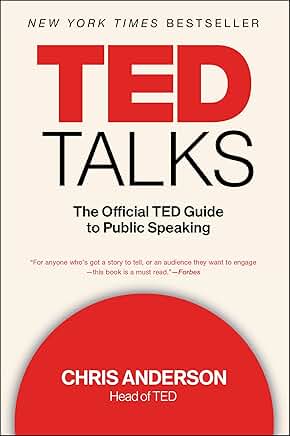
“Done right, a talk can electrify a room and transform an audience’s worldview; it can be more powerful than anything in written form. This “invaluable guide” (PublishersWeekly) explains how the miracle of powerful public speaking is achieved, and equips you to give it your best shot. There is no set formula, but there are tools that can empower any speaker.
Since taking over TED in 2001, Chris Anderson has worked with all the TED speakers who have inspired us the most, and here he shares insights from such favorites as Sir Ken Robinson, Salman Khan, Monica Lewinsky, and more— everything from how to craft your talk’s content to how you can be most effective on stage.”
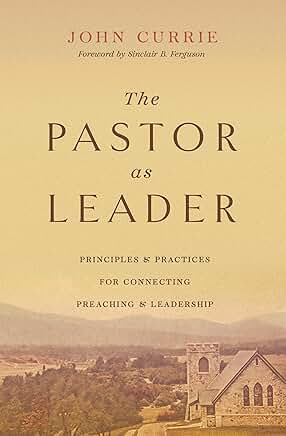
“Many pastors feel torn between preaching and leading, but both responsibilities are essential. Without faithful exposition of Scripture, churches risk straying theologically. Without strong leadership, teaching lacks spiritual zeal. How can pastors find balance and steward their calling effectively?
In The Pastor as Leader, John Currie equips pastors to be men of God who competently carry out their purpose: leading God’s people through the preaching of God’s word. Recognizing a common disconnect between the roles of preaching and leadership, Currie offers foundational principles for pastoring “under Christ’s appointment, conformed to Christ’s character, which exemplifies and implements Christ’s wisdom, preached from Christ’s word.” By integrating two primary roles of the pastorate, readers will learn how to faithfully and confidently proclaim the Scriptures as they communicate biblical vision and strategy for the church’s mission.”
“Pastoral leadership is the process where, for the glory of God, a man of God, appointed by the Son of God and empowered by the Spirit of God, proclaims the Word of God so that the people of God are equipped to move forward into the purposes of God together.” John Currie
“We don’t like to admit it, but anyone who honestly evaluates the church’s life and outlook will understand that these are not good days for evangelicalism. We’ve achieved success, but in a worldly sort of way–big numbers, big budgets, and big outreaches. Yet church attendance is actually down and alleged “born again” believers do not differ significantly in their worldview from their neighbors. Why? We have forgotten our theology and, consciously or not, have pursued the wisdom of the world, accepted its “doctrines,” and utilized its methods.
Pastor James Montgomery Boice believed that our ignorance of God and neglect of the gospel of grace is the root of the problem. Here he identifies what’s happening within the church and explains how the five doctrinal truths that transformed the world during the Reformation not only offer the solution but can shape a renewal today.
By offering people what they desperately lack–the Word of God and salvation through Christ–rather than giving them an imitation of what they already have, we will see Christianity thrive once again. And in holding fervently to the foundational truths of the gospel, we will know the power of spiritual renewal in our churches.”
Imagine a well-read man. Do you see a machine dressed in tweed gorging on information? This book is not about becoming that kind of reader.
The well-read man wakes up and consults with Moses on the way to work. He sips his coffee and ponders the wisdom of Hannibal’s elephants crossing the Alps. He turns furrowed-browed philosophers upside down and takes their lunch money. He changes his oil and deliberates with Peter Drucker about effective management practices. He regales his wife with the tale of Monet’s water lilies in the Gardens at Giverny. He sings with Sandra Boynton as his toddlers’ eyes grow heavy. This book is about becoming that man. Be as human as you can be. Learn how to read a book.
“The hardcover box set of C. S. Lewis’s classic fantasy series The Chronicles of Narnia, with cover art by three-time Caldecott Medal-winning illustrator David Wiesner and the full black-and-white original interior art by Pauline Baynes.
Journeys into magical realms, battles between good and evil, talking creatures, and more, await readers of all ages in The Chronicles of Narnia.
This timeless box set includes all seven titles—The Magician’s Nephew; The Lion, the Witch and the Wardrobe;The Horse and His Boy; Prince Caspian; The Voyage of the Dawn Treader; The Silver Chair; and The Last Battle—with interior black-and-white art by Pauline Baynes, the original illustrator.”
“Some day you will be old enough to start reading fairy tales again.” C.S. Lewis
A Concise and Systematic Exploration of the Doctrine of Predestination. . . .
How can God choose to save some and eternally punish others? What about my loved ones who are not believers? For many, contemplating predestination brings about fear, trepidation, controversy, and emotional exhaustion, making it a difficult topic to study―let alone view as a blessing.
This addition to the Short Studies in Systematic Theology series carefully examines God’s word to answer 15 commonly asked questions regarding the doctrines of election and reprobation. With helpful visuals, key definitions, answer summaries, and prayer responses, this concise guide is perfect for all believers who want to discover and delight in what God has revealed throughout Scripture. Readers will not only learn how God saves his people from their sins, but will be stirred to respond to him in worship.”
“In 40 Questions About Calvinism, church historian Shawn Wright tackles many issues about the theological system known as Calvinism. Taking an irenic approach, Wright explains the key doctrines while also contrasting them with Arminianism. The accessible format allows readers to easily look up topics they’re most interested in, including:
What is the difference between Calvinism and the Reformed tradition?
Does God love all people?
What is predestination?
Did Jesus die for the sins of the whole world?
Can people resist the Holy Spirit?
Do Calvinists practice evangelism and missions?
For Calvinists or those seeking to understand Calvinism better, 40 Questions About Calvinism helps readers understand the key terms, issues, and debates of this highly influential theological viewpoint.”
“The actual life and teaching of Jacobus Arminius are often unknown or misunderstood. Answers beyond a basic caricature can be elusive. In 40 Questions About Arminianism, however, J. Matthew Pinson combines solid historical research with biblical and doctrinal precision to address the following questions and more:
Who was Jacobus Arminius?
How has the church interpreted God’s desire that everyone be saved?
How is Arminianism different from Calvinism?
Can one be both Reformed and Arminian?
What is “universal enabling grace”?
What do Arminians mean by “free will”?
Do Arminians believe that God predestines individuals to salvation?
Is it possible for a Christian to apostatize?
An accessible question-and-answer format helps readers pursue the issues that interest them most, with additional resources available at 40questions.net. Questins regarding historical backgrounds and the Bible encourage a broad understanding of historic and contemporary Arminianism.”
In January, I began a Sunday evening teaching series on the Ten Commandments titled “An Introduction to Christian Ethics.” Here’s a look at the resources I’ve used.
And God spoke all these words, saying, ‘I am the Lord your God, who brought you out of the land of Egypt, out of the house of slavery.” Exodus 20:1-2
“This book serves as an introduction to the field of biblical ethics, a subcategory of the discipline of moral theology. It differs from moral philosophy in that biblical ethics is distinctively Christian, and it is more specific than Christian ethics proper because it specifically focuses upon the application of the moral law — as it is revealed in Scripture — to daily living.
Introduction to Biblical Ethics explains the nature, relevancy, coherency, and structure of the moral law as revealed throughout the Bible. In addition to covering the foundational elements of biblical ethics, major issues investigated in this volume include: different types of law in Scripture, the relationship between the law and the gospel, and issues related to the prospect of conflicting moral absolutes.
Additionally, after a discussion of ethical methodology, and using the Ten Commandments as a moral rubric, author David W. Jones explores the place of the moral law in the lives of believers. In the final chapters, the events surrounding the giving of the Decalogue are surveyed, and the application of each of the Ten Commandments to Christian living is explored.”
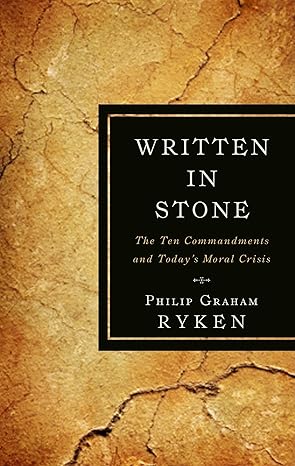
“The Ten Commandments are an expression of God’s eternal character and having binding force today. Here Philip Ryken offers basic principles for interpreting and applying them—explaining them one by one, illustrating each with a biblical account, and relating each to the preson and redemptive work of Jesus Christ.”
Philip Ryken offers basic principles for interpreting and applying the Ten Commandments―explaining each one, illustrating each with a biblical account, and relating each to the person and redemptive work of Jesus Christ.
This is a book to be read and savored. Readers will find themselves examining their own lives, changing their ways, and delighting in newfound grace.”
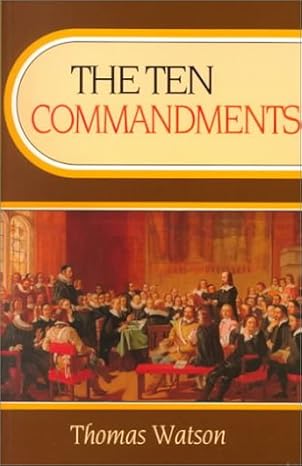
“In this book Thomas Watson continues his exposition of the Shorter Catechism drawn up by the Westminster Assembly. Watson was one of the most popular preachers in London during the Puritan era. His writings are characterized by clarity, raciness and spiritual richness. The series of three volumes, of which this is the second, makes an ideal introduction to Puritan literature.
There are few matters about which the Puritans differ more from present-day Christians than in their assessment of the importance of the ten commandments. The commandments, they held, are the first thing in Christianity which the natural man needs to be taught and they should be the daily concern of the Christian to the last.
In The Ten Commandments Watson examines the moral law as a whole as well as bringing out the meaning and force of each particular commandment. In view of the important function of the law in Christian life and evangelism this is a most valuable volume.”
“Are the 10 Commandments still relevant today? Do they still apply? Which ones? What do they mean in light of God’s mercy revealed in Jesus?
Highlighting the timelessness and goodness of God’s commands, pastor Kevin DeYoung delivers critical truth about the 10 Commandments as he makes clear what they are, why we should know them, and how to apply them. This book will help you understand, obey, and delight in God’s law―commandments that expose our sinfulness and reveal the glories of God’s grace to us in Christ.”
“If God has spoken, then the highest human aspiration must be to hear what the Creator has said. God has indeed spoken, through the Ten Commandments, and Al Mohler explores this revelation of God and the implications for His people. The promise is to hear, to obey, and to live. These “Ten Words” tell us who God is and what His people should look like.
Mohler is a respected voice on the state of our culture (and the church) today. The Ten Commandments speak to current issues today such as the exclusivity of the Christian God, the essence of worship, capital punishment, just war, business ethics and the postmodern definition of truth.”
“In this book, I urge readers not to side with either tendency. The point of Christian ethics is not to be as liberal as we can be, or as conservative. It is, rather, to be as biblical as we can be. So this book will seem to be more liberal than the majority on some issues and more conservative on others. God’s Word has a way of surprising us, of not fitting into our prearranged categories.
Jesus rebuked both the conservative Pharisees and the liberal Sadduccees; Paul rebuked both legalists and libertines. Understanding God’s will rarely means falling into lockstep with some popular ideology. We need to think as part of a community, listening to our brothers and sisters, but we also need the courage to step aside from the crowd when God’s Word directs us in that way.”
“If books are among our friends, we ought to apply similar standards to them that we apply to our flesh-and-blood friends. We should want to choose them wisely and well and hope that we will be the better for their companionship.” Doug Wilson














 Doctrine & Devotion