The short answer is yes. But, for a detailed biblical explanation that includes practical reasons for not living together, read this article by Daniel Darling. “Our bodies aren’t autonomous. We belong to our Creator. We’re not our own. What’s more, we’re indwelled by God’s Spirit as his temple (1 Cor. 6:15–20). So sexual activity outside marriage is a serious sin against God. It’s not unforgivable. It’s not beyond God’s redeeming and restoring grace. But what we do with our bodies matters to God, and if we’re committed to following Jesus, we’ll be committed to following his plan for our lives, including sex.”
I don’t want to fall prey to brain rot! That said, this article motivated me to delete some social media apps, pick up a book, and start reading. “We may have gradually and unintentionally adopted our culture’s entertainment habits, but we can purposefully create our own culture of discipline and deep thinking. Proverbs 1:5 implores us, ‘Let the wise hear and increase in learning, and the one who understands obtain guidance.’ Our society desperately needs more people who can think wisely, discern clearly, and guide the next generation in God’s truth. It sounds like a big task, but it can start with something as small as turning off the TV and picking up a good book.”
The great doctrine of the Incarnation of the Son of God encourages Christians to live humble lives marked by sacrificial service. “The Christmas spirit does not shine out in the Christian snob. For the Christmas spirit is the spirit of those who, like their Master, live their whole lives on the principle of making themselves poor—spending and being spent—to enrich their fellow men, giving time, trouble, care, and concern, to do good to others—and not just their own friends—in whatever way there seems need. There are not as many who show this spirit as there should be.”
Unfortunately, due to our sinful nature, Alan Noble’s warning is necessary. That said, you should read and take heed! “In the past few years we’ve seen it happen to pastors and theologians and apologists and lay Christians who otherwise appear to live righteous, holy lives and who preach the gospel faithfully. It can happen to you and it can happen to me. So what are we to do?”
Be encouraged! The darkness DID NOT and WILL NOT overcome the light. “That baby was really born, to a real virgin, just as the prophets foretold. He lived. He died. He rose from the dead on the third day. He is coming again. We know that the darkness will not be victorious over the world, because it was not victorious over the One through whom the world was made. If God can summon light into existence when there was only darkness, surely he can send his light into the world with assurance of complete success, no matter how impossible the odds. For this is the miracle and the wonder of Christmas: The Light of the world was born in the darkness of night, as the Word of God lay in the manger unable to speak a syllable.”
I am the pastor of First Baptist Church Jackon in Jackson, Alabama. Once a week, I share a post titled “Article Roundup: Helpful Reads,” where I compile articles that I believe are beneficial for the saints who make up FBC Jackson. I am confident that these articles can also be helpful for followers of Christ around the world. Happy reading!
My wife and I have been contemplating the question: “How can we raise grateful kids?” Sam Crabtree offered helpful insights in his article. “So if our kids are born thankless, how can we raise kids to recognize with heartfelt gratitude that they are served by an endless conveyor belt of divinely supplied benefits including life, breath, and everything? How can we help them see that God is working all things together for the good of those who love him? How can we help them see that he is good all the time and that our pleasure in him is enlarged and deepened and gladdened when we consciously thank him? How can we raise grateful kids?”
Do you read often? Are you frustrated by how much you forget? Do you want to read and retain information? Jonathan Threlfall can help you with this. “Someone recently asked me how to stay focused and retain what they read. It’s an important question, especially for anyone devoted to a life of profitable reading and learning. Here’s some advice on how to read to comprehend and retain. I’ve broken down the suggestions into three categories: What to do (1) before, (2) during, and (3) after you read.”
What does it mean for a pastor to have a pastor’s heart? Many people interpret this as a pastor being lenient towards sin. However, according to Rob Golding, this perspective originates from Satan rather than the Holy Spirit. I believe he’s correct! “If the common conception of a pastor’s heart is one in which sin is never condemned in order that the pastor can lead with love and emphasize forgiveness, would this not play into the devil’s hand?”
Many churches are doctrinally indifferent and ecclesiologically ignorant. This causes significant harm to their members. We need more churches engaged in serious ministry! “The church that is flippant regarding discipleship keeps its programs going, while never really examining, or re-examining the material taught. It does not train or supervise its teachers. It does not keep track of the attendance of members, nor of their involvement in ministry. It does not try to make sure every member has been taught by another believer, or in a small group. For that matter, it has an extremely porous membership process and is rather casual about distinguishing members from adherents.”
Healthy local churches consist of healthy church members. Healthy church members are those who strive to glorify the Lord Jesus Christ by centering their lives around the church. “Neglecting church life leads to deterioration in other areas of life. We may think forsaking church gatherings for family gatherings will bless our family, that moving far from church for our career is worth the cost, that Sunday school is more expendable than an extra hour of sleep, or that fewer church relationships and commitments will reduce our stress. But the inverse is true.”
Do you need help understanding the New Testament letter of James? Brandon Crowe will help you by using Scripture to interpret Scripture—an essential practice in understanding the Word of God. “Don’t stop with these four faces. Look for others as you read through James. See if you can detect how it echoes other Scriptures, and don’t forget to use your Bible’s cross-references. These can point you to a whole host of recognizable faces. James was intimately familiar with Scripture, and the more familiar we are, the better we’ll understand James.”
Although this is a very short read, I found it incredibly helpful. In an age that often devalues the corporate gathering of God’s people, Jeremy Howard shows the importance of why we gather. “The body of Christ has been designed to live and move. Each member is placed into the body by the Father’s choice (1 Corinthians 1:30), through the Son’s blood (Romans 5:9), with the Spirit’s equipping (1 Corinthians 12:11). The intention of our triune God is for us to participate in the fellowship, showing each other and the world that we belong to Him (John 13:34, cf. 1 John 2:19).”
For Christians, our good works are not filthy rags—despite what many Christians mistakenly claim! Instead, as the Spirit empowers us, we can truly carry out good works. And as we walk in these good works, our gracious Lord takes notice. “But there’s a flip side to this lack of awareness of how deep our sins go. Sometimes, the believers most likely to harp on how sinful we are miss the other side of sanctification, an element of the good news that’s every bit as powerful and life-changing. It’s this: You don’t realize the pervasiveness of Christ’s holiness in you. A Christian living by the Spirit does far more good than he or she even realizes.”
D.A. Carson provides eight pieces of advice for living prudent lives when there is simply “too much to do.” Although aimed at pastors, I believe these suggestions apply to all Christians.
Some argue that Christmas has pagan origins, but Kevin DeYoung provides compelling reasons to reject this notion. “While we can’t know for certain that this is where December 25 came from—and we certainly can’t be dogmatic about the historicity of the date—there is much better ancient evidence to suggest that our date for Christmas is tied to Christ’s death and conception than that it is tied to the pagan celebrations of Saturnalia and Sol Invictus.”
Some of the best sermons I’ve ever heard have been preached by men who were disqualified to even be in the pulpit. “Years ago, an older pastor warned me that giftedness is not godliness. It stuck with me. It is true but easily ignored when someone’s oratory skill sweeps us away. Learning how to communicate and deliver a powerful sermon is not holiness. Sometimes, it is the effective cover utilized to pursue a life of ungodliness and rebellion.”
A right understanding of the doctrines of justification and sanctification is absolutely essential to a healthy Christian life. “In the end, there is no conflict between Paul and James. It is right to say we are justified by faith alone apart from works of the law, provided we understand, as James reminds us, that the faith that justifies will always work itself out in love.”
Our churches need more parlor preachers. We need church members wielding the sword of the Spirit in casual conversations. “Some of the most shaping words spoken in the Christian assembly come not from the pulpit above but from the pew below. A church taught to make the most of the time together, to come to speak and not just to listen, to fill the building with holy conversation, experiences a foretaste of that country where we shall speak forever of all that God has done.”
As one pastor said, “Sunday morning church is a decision made on Saturday night.” This article will help you prepare for corporate worship in a healthy manner. “The way we schedule our days relates significantly to how we prepare for many different events in life, and such planning can similarly help us to prepare for Lord’s Day worship.”
Time is more valuable than money. If we lose money, we can always earn it back. However, when we lose time, it is gone forever. As followers of Christ, let us strive to make the best use of our time! “Too many Christians go about life without proper self-examination and neglect to seize the opportunities right in front of them. Time is precious and must be treated with the utmost care for holy living. It must be redeemed.”
IVF is the Wild Wild West these days, especially in the United States. And the more you read about it, the more you realize the whole process reduces a human being to an expensive commodity. “Christians have good reason to call all IVF into question, not only because of the downstream possibilities of genetic selection and engineering but because the procedure itself undermines the integrity and dignity of human reproduction.”
I really enjoyed reading this article. Local churches would benefit if more Christians arrived at church a bit earlier and stayed a bit later. “Christianity is not a spectator sport. So, let’s get in the game — and stay there, side by side, Sunday after Sunday — until Jesus our King brings us safely home.”
Pastors experience the highs and lows of church life. We see people come to know Christ, and we see people apostatize. We observe individuals serving one another, and we see fellow Christians sin against each other. We see people join the church, and we see people leave the church. We receive words of encouragement, but we also encounter slanderous accusations. Amid all this, there is a temptation to focus on the negative aspects of church life. Tim Counts argues that we must resist this temptation.
Around this time last year, Conrad Mbewe lost his son. You’ll find this article heart-wrenching and edifying. “Thursday, November 16, 2023 — one year ago today — will be etched in my memory as the night that started the journey of my worst fears: losing a family member to the cold hand of death.”
I found this article to be very helpful. “In the past, many churches required people to make a pledge of total abstinence in order to join the church, or else expected total abstinence for church officers. In my childhood, my family attended a Baptist church where the “Church Covenant” was pasted inside the back cover of the church hymnal, and it included a promise to abstain from the “sale and use of intoxicating drinks as a beverage” (if I remember the wording correctly). Anyone who wanted to become a member of the church had to agree to abide by that promise. But I would not favor or support such a requirement. It is requiring a standard of conduct stricter than the Bible itself. Neither Jesus (John 2:6–11) nor Paul (1 Tim. 5:23) could have joined such a church.” For those of you wondering, I agree with Wayne Grudem on this issue.
Evangelical Christians often focus heavily on the tribulation and the millennium. While these subjects are important, it would benefit many Christians to reflect more on the resurrection of the body and the New Earth. “We mustn’t miss this point: God created the world to function as his sanctuary—for heaven and earth to be one location—but this intention never came to pass. It’s like building a dream house and never moving in; God’s desire to dwell fully with humanity and creation never transpired in the way Genesis anticipated. On account of sin and disobedience, a great gulf separated heaven from earth. Yet God promised he would, at the end of history, bridge this gulf (see Isa. 40:1–5; 65:17; 66:22).”
Carl Trueman discusses the tragedy of IVF, an issue that Christians should pay much more attention to. “While I do not deny the humanity of the child born by IVF or surrogacy, the procedures do. The child in the womb is treated not as a person but as a thing, not as a subject but as an object, not as intrinsically valuable but as having value only as instrumental to some other end. This is something that many Christians fail to see.”
The Bible frequently uses physical maladies to illustrate spiritual maladies. Mitch Chase delves into how Scripture uses physical blindness to reveal spiritual blindness. “A person’s spiritual perception—or lack thereof—is revealed in how they respond to Jesus. The man who confessed Jesus is the one who truly sees. And these Pharisees, these teachers and leaders in Israel, are blind.”
The Bible is crucial for effective, fruitful, and productive ministry. Andreas Kostenberger provides a brief overview of why this is the case. “The Bible is unlike any other book. It is a library of 66 books. And it is not just an ancient artifact; it is alive! Through the Bible, God still speaks today. At the same time, the Bible contains diverse literary genres and thus requires careful interpretation. Yet the Bible is not a law book but a story about God’s love in Christ. The Bible is sufficient for all of life and espouses the life-giving truth of God.”
I knew there was always a need for more missionaries, but I was unaware that many of those who are sent do not stay in the field for very long. “Although the lack of workers for the harvest has been a persistent problem since the time of Christ, nowadays there is a new and noticeable trend in missions: those who go don’t necessarily stay. The definition of what it means “to stay” will differ from one person to the next. I won’t attempt to argue that point since I don’t have a concrete answer myself. What I’m pondering is the noticeable shift in less missionaries staying for an entire career or even a lifetime, compared to our predecessors throughout history.”
Many people lack understanding about the eternal state, particularly concerning what glorified saints will do for all of eternity on the New Earth. Thankfully, Benjamin Gladd provides us with some clarity. “According to a recent survey, roughly 73 percent of adults in the United States believe in heaven. Drilling down further, about 60 percent believe the afterlife entails a future free of suffering where we’ll have “perfectly healthy bodies.” But I suspect the majority have thought little about what they’ll do in these bodies for all eternity. This article considers what activities the church will perform for eternity as described in Revelation 22.”
Kevin DeYoung goes over 10 theories of the atonement. I was unaware of half of them! “Over the centuries, theologians have articulated several different theories or models of the atonement. Most of the models get something right, though some are much closer to the mark than others. We will look at ten models, concluding with penal substitution, which is at the heart of the atonement and the “theory” that holds all the biblical insights of the other theories together.”
Here’s a behind-the-scenes glance at what I’ve been reading over the past few months. I’ve added a brief book description from Amazon to give you a taste of each book. Perhaps one of these books will garner your attention and compel you to add it to your cart! But let me mention a few things before you start scrolling:
I don’t agree with everything in every book I read
I’ve found all of these books helpful
I’ve found some of these books more helpful than others
Leadership is hard. Pastoring through divisive times is even harder. How do we lead well when criticized? How do we keep loving the church when hurt by her? What does it look like to remain committed to the gospel in cultural division?
Seasoned pastor Jonathan Dodson comes alongside struggling pastors and ministry leaders to guide them into the comfort of Christ. But he doesn’t stop there. Full of wisdom drawn from 2 Timothy, this book will equip you to lead the church with grace, charity and spiritual power through divisive times.
Great for pastors and ministry leaders who need encouragement and insight, or are wrestling with their calling. Makes a thoughtful gift.
With advancements in internet technology, people can get instant answers to just about any of their questions, connect long distance with family and friends, and stay informed with events around the world in real time.
In Digital Liturgies, tech-realist Samuel D. James examines the connection between patterns in technology and human desires. Everyone longs for a glimpse of heaven; James argues they are just looking for it in the wrong place—the internet.
This accessible book exposes 5 “digital liturgies” that prohibit people from contemplating big truths, accepting the uncomfortable, and acknowledging God as their Creator. It then calls readers to live faithfully before Christ, finding wisdom through Scripture and rest in God’s perfect design.
A Biblical View of the Internet and Technology: Readers explore the connection between human desire, the internet, and wisdom through a Christian lens
Great for College Students, Parents, and Pastors: This book encourages readers to live faithfully for Christ
Offers a Tech-Realist Perspective: Samuel D. James highlights the inherent dangers of digital technologies, offering wisdom for navigating our internet-saturated world
Evangelism is an extraordinary task; it’s what God uses to bring people from death to life. But it has always been difficult.
C.S. Lewis was used by God in the conversions of countless people, from friends and acquaintances in his own lifetime to modern-day readers of books such as The Chronicles of Narnia and Mere Christianity (the most influential Christian book of the 20th century). As Tim Keller comments, “C.S. Lewis was incredibly skilled at getting Christianity across in a way that’s powerful to thoughtful people.” So, if we want help with evangelism, there is much we can learn from the clarity and imagination of this hugely influential Christian writer.
You may feel inadequate to the task; after all, there is only one C.S. Lewis. But evangelist Randy Newman skillfully helps us to apply the methods Lewis used (storytelling, humour, imagery and more) in our own conversations.You will be equipped to talk about your faith and engage with unbelievers wisely, whatever their attitude towards the Christian faith.
“This isn’t a book to increase membership in a C.S. Lewis fan club or prompt praise for him. It’s to strengthen our resolve to point lost people to the one who could deliver them from a realm where it’s ‘always winter but never Christmas.’ My prayer is that this book will help you say and do things that will make an eternal difference in many people’s lives.” From the introduction to Mere Evangelism by Randy Newman.
There are many misconceptions about what it means to be humble. Some think that being humble means hiding your talents and abilities or being weak and inauthentic. But the Bible paints a different picture—defining humility as a self-forgetfulness leading to joy and explaining that it is a life-giving virtue that frees you from the restricting needs of your ego.
In Humility: The Joy of Self-Forgetfulness, Gavin Ortlund encourages readers that humility is not just an abstract virtue but a mark of gospel integrity. Ortlund examines humility both on a personal level and in the context of the church, giving examples of ways to cultivate it—including meditation on the gospel and practicing intentional gratitude. Drawing from Philippians 2 and historical texts such as C. S. Lewis’s Mere Christianity and Jonathan Edwards’s sermon “A Christian Spirit Is a Humble Spirit,” Ortlund defines humility in light of the incarnation and death of Jesus Christ, casting a vision for a gospel-centered, humble life.
First Book in the Growing Gospel Integrity Series: Created in partnership with Union School of Theology, with future volumes written by Sinclair B. Ferguson, Joe Rigney, and Conrad Mbewe
Written by Gavin Ortlund: Author of Theological Retrieval for Evangelicals: Why We Need Our Past to Have a Future and Finding the Right Hills to Die On: The Case for Theological Triage
For Small Groups and Individual Study: Questions at the end of each chapter encourage small group discussion
Known primarily for his allegorical work, The Pilgrim’s Progress, John Bunyan was also a preacher, a gifted theologian and interpreter of Scripture. Academically, he was not a learned man, but when it came to practical and experiential mastery of the Scriptures and their theology, he was as gifted as anyone. His writings have a beauty and practicality not often found. He teaches that the greater the Christian’s understanding of truth, the stronger their own passion for Jesus will be, and the greater their worship and doxology will become.
Jacob Tanner’s enlightening biography traces Bunyan’s life from his humble beginnings to his calling home to the Celestial City. From his debaucherous youth to glimpses of grace and eventual calling to ministry.
There are lessons here for any twenty–first century Christian. He can teach men to be mature, fathers to be loving, husbands to be faithful, pastors to be tender, saints to suffer well, Christians to be steadfast. One of his greatest lessons to modern Christians is how to live faithfully for Christ in a world that is antagonistic to God.
Convinced that knowing the Word of God is fundamental to preaching, John Stott here presents brief studies of five New Testament metaphors that characterize preachers: steward, herald, witness, father, and servant. In the course of these five studies, Stott discusses the message and authority of preachers, the character of their proclamation, the vital necessity of their own experience of the gospel, and their motives and moral qualities, particularly humility, gentleness, and love.
A biblically faithful portrayal of what preachers are supposed to be emerges from Stott’s reflections —as he says, “a portrait painted by the hand of God himself on the broad canvas of the New Testament.”
Throughout Scripture, important biblical figures have faced numerous adversities with remarkable courage. In the New Testament, the apostles endured persecution, imprisonment, and even death for spreading the good news of the gospel. Yet, amid their struggle, they continued to expand the kingdom of God—even rejoicing as they suffered for Christ. How can believers exhibit this same courage today?
In Courage, author Joe Rigney explores the Christian virtue of fortitude and its connection to the gospel. From a theological perspective, Rigney argues that courage—used in the proper context—is a sign of God’s salvation and a believer’s faith in Christ. In this concise and practical book, readers will defeat feelings of anxiety, anger, and fear as they gain boldness from God to endure all of life’s circumstances.
Explores Christian Fortitude: How the gospel shapes this important Christian virtue
Practical Study: This concise guide encourages Christians to build up their boldness through Christ
A Part of the Growing Gospel Integrity Series: Created in partnership with Union School of Theology
Written by Joe Rigney: Author of The Things of Earth; Strangely Bright; and More Than a Battle: How to Experience Victory, Freedom, and Healing from Lust.
For many, contemplating predestination brings about fear, trepidation, controversy, and emotional exhaustion, making it a difficult topic to study―let alone view as a blessing.
This addition to the Short Studies in Systematic Theology series carefully examines God’s word to answer 15 commonly asked questions regarding the doctrines of election and reprobation. With helpful visuals, key definitions, answer summaries, and prayer responses, this concise guide is perfect for all believers who want to discover and delight in what God has revealed throughout Scripture. Readers will not only learn how God saves his people from their sins, but will be stirred to respond to him in worship.
Great for Theologians, Pastors, and Students: Designed to be short and approachable, this concise study dives deep into the doctrine of predestination
Part of the Short Studies in Systematic Theology Series: Other titles include The Person of Christ; Glorification; and The Doctrine of Scripture
Written by Andrew David Naselli: Pastor and professor of systematic theology and New Testament
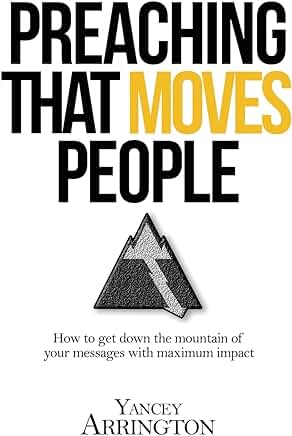
Dr. Yancey Arrington says the reason many preachers don’t connect with their congregants isn’t because they haven’t thought through the message, but because they haven’t felt through it. In this practical guide for preachers of churches big and small, Arrington offers an innovative and effective paradigm based on his years of coaching preachers that brings the best to bear in both the ‘who’ and ‘how’ of the preaching event. Be prepared to better preach in a way that moves people!
When we’re standing at the gravesite, death gives little closure and leaves many questions unanswered. Despite the common claim that “dying is just a natural part of life,“ people seem to avoid this unsettling subject more than ever. Yet the Bible doesn’t shy away from the reality of death. God’s Word has the answers we need to face the grave with confidence in our risen Redeemer.
In this book, Dr. Guy Waters provides the Bible’s answers to essential questions about death, dying, and what comes after this life. Here is balm for the grieving, counsel for caretakers, and guidance to help God’s people rest in Christ’s victory as we come to life’s final battle.
Commentaries on Philippians
Back in January, I began a sermon series through Paul’s letter to the Philippians. Here are some of the commentaries I’ve found helpful.
Paul wrote his letter to the Philippians while he was in prison, but it contains no hint of self-pity. Instead, the letter radiates joy―joy that Christ was proclaimed, joy in fellowship with the Philippian Christians, and above all, joy in Jesus himself.
In this Bible Speaks Today volume, J. A. Motyer identifies three major themes that filled Paul’s heart and mind as he wrote: the unity of the church, the person of Jesus and what he has achieved, and the call to live a life worthy of the gospel. Guiding readers passage by passage through Philippians, Motyer provides helpful background, highlights key themes, and offers applications for Christians today.
The Exegetical Guide to the Greek New Testament (EGGNT) closes the gap between the Greek text and the available lexical and grammatical tools, providing all the necessary information for greater understanding of the text. The series makes interpreting any given New Testament book easier, especially for those who are hard pressed for time but want to preach or teach with accuracy and authority.
Each volume begins with a brief introduction to the particular New Testament book, a basic outline, and a list of recommended commentaries. The body is devoted to paragraph-by-paragraph exegesis of the Greek text and includes homiletical helps and suggestions for further study. A comprehensive exegetical outline of the New Testament book completes each EGGNT volume.
Preach powerful, life-changing sermons every Sunday with the bestselling commentary series, The Preacher’s Outline & Sermon Bible. This unique resource will help you do more sermon preparation in less time.
Cut research time in half with balanced, comprehensive insight from 2,000 years of the best Christian thinkers, designed especially for you and your busy schedule
Understand the Bible better with deeper studies that expand on original Greek sources, provide historical background, and explain key points.
Get a headstart with an outline & subject index designed for topical study—perfect for quickly creating messages on a particular theme.
Create clear and concise messages with verse-by-verse, ready-to-use outlines that draw out key concepts.
Leave your congregation with practicalapplications with our easy-to-understand thoughts and deeper studies.
The NIV Application Commentary helps you communicate and apply biblical text effectively in today’s context. To bring the ancient messages of the Bible into today’s world, each passage is treated in three sections:
Original Meaning. Concise exegesis to help readers understand the original meaning of the biblical text in its historical, literary, and cultural context.
Bridging Contexts. A bridge between the world of the Bible and the world of today, built by discerning what is timeless in the timely pages of the Bible.
Contemporary Significance. This section identifies comparable situations to those faced in the Bible and explores relevant application of the biblical messages. The author alerts the readers of problems they may encounter when seeking to apply the passage and helps them think through the issues involved.
This unique, award-winning commentary is the ideal resource for today’s preachers, teachers, and serious students of the Bible, giving them the tools, ideas, and insights they need to communicate God’s Word with the same powerful impact it had when it was first written.
THE NEW AMERICAN COMMENTARY is for the minister or Bible student who wants to understand and expound the Scriptures. Notable features include:* commentary based on THE NEW INTERNATIONAL VERSION;* the NIV text printed in the body of the commentary;* sound scholarly methodology that reflects capable research in the original languages;* interpretation that emphasizes the theological unity of each book and of Scripture as a whole;* readable and applicable exposition.