A dead faith inevitably reveals itself. In this article, Plummer lists five signs of a dead faith from the book of James. “Thus, James instructs us that there are two categories of faithโ(1) faith that has works and is thus living and (2) faith that doesย not haveย works and is thus dead. Works and faith are not the same thing. Rather, works are produced by a genuine faith and are, therefore, evidence of it. In fact, Jamesโs explicit language would even call into question my use above of the verb โproduced.โ Genuine faithย hasย works. Works are inherent and organic to living, saving faith.”
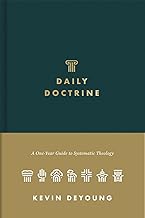
I always enjoy looking through Kevin DeYoung’s top 10 books of any given year. Here are his top 10 books of 2025. “This list is not meant to assess the thousands of good books published in the past year. This is simply a list of the booksโChristian and non-Christian, but all non-fictionโthat I thought were the best in the past year. โBestโ doesnโt mean I agreed with everything in them; it means I found these booksโall published in 2025โa strong combination of thoughtful, useful, helpful, insightful, and challenging. Undoubtedly, the list each year reflects my own interests and tends to be heavy on history and theology.”
On a similar note, the TGC staff listed out their book awards as well. “The Gospel Coalitionโs annual book awards offer help identifying โsound theological worksโ for your enrichment. We work hard to identify some of the best evangelical books published each year. This announcement is the culmination of months of hard work by a big team of book lovers. We receive nominations from publishers in 11 categories. Then our editors work together to recommend finalists in each category. Finally, a panel of judges reads each one carefully before casting their votes.”
“You need to read. Renounce as much as you will all light literature, but study as much as possible sound theological works, especially the Puritanic writers, and expositions of the Bible. We are quite persuaded that the very best way for you to be spending your leisure, is to be either reading or praying.” Spurgeon
Erik reminds young men, really all of us, that we must discipline ourselves for the purpose of godliness. “A Christianโs life of discipline mostly looks mundane and unimpressive. We devote ourselves to the word, worship, prayer, proclamation, fellowship, service, suffering, giving, missions, and other basic means of grace that lead to growing intimacy with God and kingdom fruitfulness. Apart from such seemingly mundane discipline, however, we will drift toward despair rather than deeper delight.“
Randy Alcorn shares an excerpt from J. I. Packerโs Knowing God that describes what it means to have the Christmas spirit. Itโs a powerful quote. Hereโs a taste: “The Christmas spirit does not shine out in the Christian snob. For the Christmas spirit is the spirit of those who, like their Master, live their whole lives on the principle of making themselves poorโspending and being spentโto enrich their fellow humans, giving time, trouble, care and concern, to do good to othersโand not just their own friendsโin whatever way there seems need.”
On Sunday evenings throughout the summer, a few men in our church have been leading our congregation through a teaching series called โBiblical Foundations for Baptist Churches,โ an introductory look at Baptist ecclesiology. A month ago, I taught on โThe Churchโs Shepherd Leaders: Elders,โ which has sparked numerous conversations among our church members. I imagine this was because I used the term โelderโ throughout my teaching.
To some in our congregation, the term โelderโ is shrouded in mystery. Many lifelong Baptists are unfamiliar with the term. One pastor said mentioning โeldersโ in a contemporary Baptist church was like mentioning the phrase โCollege of Cardinals.โ To others, the term โelderโ reeks of Presbyterianism rather than Congregationalism. And to others, the term โelderโ is somehow linked with Reformed soteriology, so any mention of elders is a covert attempt to โCalvinizeโ the church.
Because of this confusion, I wanted to take a moment to clarify my thoughts in writing, with the desire that this would bring clarity to those interested in this topic. Essentially, I just want to make a historical, biblical, and practical case for a plurality of elders shepherding a local church. Then, Iโll conclude by mentioning what all this means for our church family.
The Historical Case for a Plurality of Elders
What if I told you that W.B. Johnson (1782-1862), the first president of the Southern Baptist Convention, advocated for a plurality of elders in a local church? In his book, The Gospel Developed Through The Government and Order of the Churches of Jesus Christ, Johnson stated, โIt is worthy of particular attention, that each church had a plurality of elders, and that although there was a difference in their respective department of service, there was a perfect equality of rank among them.โ
I imagine a single quote from one man isn’t entirely convincing, so allow me to present a historical survey of Baptist Confessions stemming from the 1600s to the 1900s. This survey will show that: 1) from the earliest beginnings, Baptists have held to the view that there are two ongoing church offices presented in the New Testament: elders and deacons; 2) Baptists have held to the view of plural eldership; 3) Baptists have used the terms elder, overseer (bishop), and pastor interchangeably; and 4) it is only in more modern developments that plural eldership has largely disappeared.
A Short Confession of Faith in Twenty Articles, by John Smyth, 1609
Article 16: The ministers of the church are, not only bishops (โEpiscoposโ), to whom the power is given of dispensing both the word and the sacraments, but also deacons, men and widows, who attend to the affairs of the poor and sick brethren.
A Declaration of Faith of English People Remaining at Amsterdam, 1611
Article 20: That the Officers of every Church or congregation are either Elders, who by their office do especially feed the flock concerning their souls (Acts 20:28, 1 Peter 5:2,3) or Deacons, men and women, who by their office relieve the necessities of the poor and impotent brethren concerning their bodies, Acts 6:1-4.
Propositions and Conclusions Concerning the Christian Religion, 1612-1614
Proposition 76: That Christ hath set in His outward church two sorts of ministers: viz., some who are called pastors, teachers or elders, who administer in the word and sacraments, and others who are called Deacons, men and women: whose ministry is to serve tables and wash the saints’ feet (Acts 6:2-4; Phil. 1:1; 1 Tim. 3:2,3,8,11; and chap.5).
The London Confession, 1644
Article 36: That being thus joined, every Church has power given them from Christ for their better well-being, to choose to themselves meet persons into the office of Pastors, Teachers, Elders, Deacons, being qualified according to the Word, as those which Christ has appointed in his Testament, for the feeding, governing, serving, and building up of his Church, and that none other have power to impose them, either these or any other.
Second London Confession, 1677, 1688
Article 26, Paragraph 8: A particular Church gathered, and completely Organized, according to the mind of Christ, consists of Officers, and Members; And the Officers appointed by Christ to be chosen and set apart by the Church (so called and gathered) for the peculiar Administration of Ordinances, and Execution of power, or Duty which he entrusts them with, or calls them to, to be continued to the end of the World, are Bishops or Elders and Deacons.
The Philadelphia Confession of Faith, 1742
Chapter 27, Paragraph 8: A particular church, gathered and completely organized according to the mind of Christ, consists of officers and members; and the offices appointed by Christ to be chosen and set apart by the church, for the peculiar administration of ordinances, and execution of power or duty, which he instructs them with, or calls them to, to be continued to the end of the world, are bishopsor elders, and deacons.
The New Hampshire Confession, 1833
Paragraph 13: Of a Gospel Church We believe that a visible Church of Christ is a congregation of baptized believers (66), associated by covenant in the faith and fellowship of the gospel; observing the ordinances of Christ (68); governed by his laws, and exercising the gifts, rights, and privileges invested in them by his Word; that its only scriptural officers are Bishops, or Pastors, and Deacons, whose qualifications, claims, and duties are defined in the Epistles to Timothy and Titus.
Swedish Baptist Confession of Faith, 1861
Article 9: We believe that a true Christian church is a union of believing and baptized Christians, who have covenanted to strive to keep all that Christ has commanded, to sustain public worship, under the guidance of the Holy Spirit to choose among themselves shepherds or overseers and deacons, to administer baptism and the Lord’s supper. . .
Articles of the Baptist Bible Union of America, 1923
Article 13: We believe that a church of Christ is a congregation of baptized believers. . . that its officers of ordination are pastors, elders and deacons, whose qualifications, claims, and duties are clearly defined in the Scriptures.
Statement of Faith of the Southern Baptist Convention, 1925, 1963
Article 6: This church is an autonomous body, operating through democratic processes under the Lordship of Jesus Christ. In such a congregation members are equally responsible. Its Scriptural officers are pastors and deacons.
Confession of Faith and Ecclesiastical Principles of the Evangelical Association of French-Speaking Baptist Churches
Part 2, Article 2: In addition to pastors or elders, the local church may have other responsible servants, for example deacons and deaconesses, whose role it is to assist the pastors or elders in their ministry, by assuming special responsibility for everything that relates to the material interests of the congregation.
The Baptist Faith and Message 2000
Article 6: In such a congregation each member is responsible and accountable to Christ as Lord. Its two scriptural offices are that of pastor/elder/overseer and deacon. While both men and women are gifted for service in the church, the office of pastor/elder/overseer is limited to men as qualified by Scripture.
Interpreting Scripture is enriched by the community of the redeemed, both past and present. This historical survey of Baptist Confessions shows that our Baptist forefathers used the terms elder, overseer (bishop), and pastor interchangeably, and they were comfortable with the idea of plural eldership. Therefore, plural eldership is not un-Baptistic. Instead, its absence is a modern development. And let me say this: I believe its resurgence in Southern Baptist Churches is a breath of fresh air.
โThe recovery of biblical eldership is one of the most important developments in ecclesiology in our time. And it is happening for a very important reason: churches are turning to the New Testament once again to determine how congregations are to be organized and led.โ Albert Mohler
Ultimately, the Word of God, not tradition, is our final authority for faith and practice. So, what do the Scriptures say?
The Biblical Case for a Plurality of Elders
The strongest argument for a church to be led by a plurality of elders is the clear evidence in the New Testament of churches having elders. With the historical precedent for plural eldership in Baptist churches now established, I will make a biblical case. My main goal is to show that the terms elder, overseer, and pastor are used interchangeably throughout the New Testament, and then to demonstrate that each local church was led, pastored, and cared for by a plurality of leaders.
Elders (Presbuteros)
This term is used regularly in the New Testament. Generally speaking, an elder was “a person who, by virtue of position in the family, clan, or tribe; or by reason of personality, prowess, stature, or influence; or through a process of appointment and ordination, exercised leadership and judicial functions in both religious and secular spheres in the ancient world, both among biblical and nonbiblical peoples.” In the gospels, it refers to men who were involved in the Jewish community’s leadership structure. These men are often portrayed negatively because they rejected Jesus as the Christ. Throughout the rest of the New Testament, the term elder primarily refers to those appointed by God to lead, oversee, govern, steward, and pastor local churches.
Overseer (Episkopos)
This term is used periodically in the New Testament. Generally speaking, Greeks used this term โto define an office that had superintending functions, whether in political or religious circles.โ An overseer was โto look upon, to consider, to have regard to, something or those in need.โ Throughout the New Testament, the term overseer also refers to those appointed by God to lead, oversee, govern, steward, and pastor local churches.
Elders And Overseers Are Used Interchangeably
In Acts 20, Paul summons the elders of the church in Ephesus: โNow from Miletus he sent to Ephesus and called the elders of the church to come to him. And when they came to him, he said to them. . .โ (Acts 20:17-18). Later on, when heโs addressing them, he refers to the elders as overseers: โPay careful attention to yourselves and to all the flock, in which the Holy Spirit has made you overseers, to care for the church of God, which he obtained with his own bloodโ (Acts 20:28). So, an elder is an overseer and an overseer is an elder.
In Titus 1, Paul reminds Titus of the important task of appointing elders in local churches throughout Crete: “This is why I left you in Crete, so that you might put what remained into order, and appoint elders in every town as I directed you. . .โ (Titus 1:5). As Paul goes on to list out the qualifications for elders, he refers to elders as overseers: โFor an overseer, as Godโs steward, must be above reproach. He must not be arrogant or quick-tempered or a drunkard or violent or greedy for gain. . .โ (Titus 1:7). Once again, an elder is an overseer and an overseer is an elder.
Pastor/Shepherd (Poimen)
This term is used numerous times throughout the New Testament. In the ancient world, a pastor was a shepherd, someone who looked after and cared for sheep. โThe task of the shepherd was to care for the flock, to find grass and water, to protect it from wild animals (Amos 3:12), to look for and restore those that strayed (Ezekiel 34:8; Matthew 18:12), to lead the flock out each day going before it and to return the flock at the close of the day to the fold (John 10:2โ4).โ Throughout the New Testament, this term is largely used in reference to Jesus Christ, the Good Shepherd. It is used only once as a noun in reference to a church leader (Ephesians 4:11). So, a pastor is someone who feeds, nurtures, and protects the sheep who make up a local church.
Elder, Overseer, and Pastor Are Used Interchangeably
Even though the term โpastorโ is used only once as a noun in reference to a church leader, the term is used numerous times as a verb to describe the work of an elder/overseer. We see this in Acts 20, the passage where Paul referred to elders as overseers: โPay careful attention to yourselves and to all the flock, in which the Holy Spirit has made you overseers, to care for (poimaino: to shepherd) the church of God, which he obtained with his own blood (Acts 20:28).โ So, the task of an elder/overseer is to shepherd the church of God.
We see the same truth in 1 Peter 5:1-3. In verse 1, Peter exhorts the elders of the churches. Then, in verse 2, he admonishes them to โshepherd (poimaino) the flock of God that is among you, exercising oversight (episkopeo), not under compulsion, but willingly, as God would have you. . .โ Peter goes on to talk about Jesus Christ as the Chief Shepherd. So, the task of an elder/overseer is to shepherd the flock in a manner that honors the Chief Shepherd. Thus, throught the New Testament, the terms elder, overseer, and pastor are used interchangeably and refer to the same office within a local church.
The Plurality Principle
Plural leadership within a local church is all throughout the New Testament. Itโs so pervasive that one pastor said, โItโs difficult to build a scriptural argument against elder plurality in the early church.โ Because of this, I just want to reference a handful of Bible verses. These verses will make the case that God desires a team of elders to shepherd and oversee a local church.
The Book of Acts: The church in Jerusalem was led by the apostles and elders (Acts 11:30; 15:2, 4, 6; 16:4; 21:18). The apostles appointed elders in every church, from Lystra to Iconium to Antioch (Acts 14:21-23). The church in Ephesus was led by elders, who were also called overseers (Acts 20:17, 28). None of these passages suggests that a local church had one elder. They suggest that each local church had plural eldership.
The Book of Philippians: In Paulโs greeting, he addresses the church in Philippi, as well as the officers: โTo all the saints in Christ Jesus who are at Philippi, with the overseers and deaconsโ (Philippians 1:1). The church in Philippi was led by a plurality of elders and served by a plurality of deacons.
The Book of 1 Thessalonians: Paul asks the church in Thessalonica to respect and esteem the leaders who minister the Word of God to them. In other words, he asks them to respect and esteem the team of elders/overseers/pastors who are shepherding them: โWe ask you, brothers, to respect those who labor among you and are over you in the Lord and admonish you, and to esteem them very highly in love because of their work” (1 Thessalonians 5:12-13). Once again, multiple elders were laboring for the spiritual health of this church.
The Book of 1 Timothy: Paul lists the qualifications for overseers/elders/pastors. In the latter part of the letter, he instructs the church to honor and pay elders who lead and govern well, especially those who dedicate themselves to the ministry of the Word. “Let the elders who rule well be considered worthy of double honor, especially those who labor in preaching and teaching. For the Scripture says, โYou shall not muzzle an ox when it treads out the grain,โ and, โThe laborer deserves his wagesโโ (1 Timothy 5:17-18). Thus, a team of elders led the church in Ephesus, and on the elder team, some men especially devoted themselves to the ministry of the Word.
The Book of Titus: Paul reminds Titus of his objective in Crete, to appoint elders in local churches. โThis is why I left you in Crete, so that you might put what remained into order, and appoint elders in every town as I directed you. . .โ (Titus 1:5-6). The churches in Crete were a mess. They needed plural eldership to arrive at greater spiritual health.
The Book of Hebrews: The author of Hebrews commands the church to obey and submit to their leaders because of the weighty responsibility the Lord has given them. โObey your leaders and submit to them, for they are keeping watch over your souls, as those who will have to give an account. Let them do this with joy and not with groaning, for that would be of no advantage to youโ (Hebrews 13:17). This passage does not suggest that God has called one man to keep watch over the souls of the flock. Rather, it suggests that God has called a team of elders to watch over the flock.
The Book of 1 Peter: Toward the end of his letter, Peter gives a powerful exhortation to the elders of the local church. โSo I exhort the elders among you, as a fellow elder and a witness of the sufferings of Christ, as well as a partaker in the glory that is going to be revealed: shepherd the flock of God that is among you, exercising oversight, not under compulsion, but willingly, as God would have you; not for shameful gain, but eagerly;not domineering over those in your charge, but being examples to the flockโ (1 Peter 5:1-3). Once again, there was plural leadership. A team of pastors was entrusted with exercising oversight and shepherding the local church.
โFirst, no passage suggests that any church, no matter how small, had only one elder. The consistent New Testament pattern is a plurality of elders โin every churchโ (Acts 14:23) and โin every cityโ (Titus 1:5). Second, we do not see a diversity of forms of government in the New Testament church, but a unified and consistent pattern in which every church had elders governing it and keeping watch over it (Acts 20:28; Hebrews 13:17; 1 Peter 5:2-3).โ Wayne Grudem
A Summary of the New Testamenton Elders
In the apostolic age, a plurality of elders were appointed in every church. These men were designated by the terms elder, overseer, and pastor.
While the Bible does not specify the exact number of elders a local church should have, it does operate on the assumption that there will be more than one.
The early churches selected men from within their membership to serve as elders. (It seems likely that many of them would have also continued in their normal occupations.)
Elders were doctrinal guardians of the flock and overseers of the church’s life. They were responsible to God for feeding, caring for, and ministering to the people of God.
There was a division of labor among the plural eldership. While all were appointed as elders and tasked with oversight, some were particularly called to dedicate themselves to preaching the gospel, ministering the Word, and guarding doctrine.
Similarly, elders were equal in rank but distinct in their service. Thus, the elders had to meet the same qualifications and had equal rank and authority, but they would serve the church in different capacities (for example, some elders labored in the ministry of the Word while others labored in different ways).
Elders were responsible for watching over the souls of their flock because one day the Lord Jesus Christ would call them to account.
The members of the flock were commanded to respect, esteem, and obey their elders.
The members of the flock were commanded to compensate their elders, especially those who labor and toil in the ministry of the Word.
The members of the flock were required to follow and imitate the faith of their elders.
The Practical Case for a Plurality of Elders
Thus far, we have observed the historical and biblical precedent for a team of elders leading a local church. It is important to note, however, that practical benefits also exist, not only for the pastor but also for the congregation. Let me mention a handful.
Biblical Accountability: Accountability is vital, and a plurality of godly elders serves as an excellent mechanism for ensuring fellow pastors remain faithful in their living, teaching, and leading. They can lovingly oversee each other’s lives and doctrines, safeguarding one another from two persistent temptations: domineering leadership and passive, people-pleasing leadership. This mutual oversight greatly benefits both the pastors, particularly the lead pastor, and the entire congregation.
Godly Wisdom: Proverbs teaches us that wisdom is found in a multitude of counselors (Proverbs 11:14; 24:6). This principle is particularly relevant for church leadership, which involves numerous decisions. Questions arise constantly: What should be the focus of the next sermon series? What topics should we cover during Wednesday and Sunday evening gatherings? Which curriculum is best suited for our Sunday school classes? How should we guide a church member who is engaged in egregious sin?
One man will lack the comprehensive knowledge and expertise to make godly and prudent decisions in all these matters. A team of godly and mature elders, however, would offer invaluable support. Together, they could brainstorm ideas, teach and counsel one another, and provide wise advice across all these critical areas of church life.
โA plurality in the bishopric is of great importance for mutual counsel and aid, that the government and edification of the flock may be promoted in the best manner.โ W.B. Johnson
Sharing Burdens: Shepherding a local church, regardless of its size, demands more than any single individual can provide. Pastors bear numerous responsibilities: they are called to preach and teach God’s word faithfully and consistently, evangelize the lost diligently, oversee church ministries effectively, manage staff and deacons competently, raise up new leaders continually, visit prospective, homebound, and sick members devotedly, officiate weddings and funerals as needed, and counsel members biblically. No matter how gifted, one person cannot consistently perform all these tasks at a high level over an extended period. However, a team of elders can work together to bear these burdens.
More Oversight: The author of Hebrews states, โObey your leaders and submit to them, for they are keeping watch over your souls, as those who will have to give an accountโ (Hebrews 13:17). In a single-pastor model, the lone pastor faces significant limitations in effectively watching over the souls of the membership due to strained time and short days. A team of elders, however, can overcome this challenge by dividing the membership into groups. This allows each elder to strategically and effectively provide pastoral care and oversight to their assigned group, ultimately benefiting the membership with greater care.
More Gifts: 1 Corinthians highlights that the Holy Spirit bestows spiritual gifts upon believers, all to build up the body of Christ (1 Corinthians 12). No single individual, including the lead pastor, possesses every spiritual gift. For example, a lead pastor might excel at preaching and teaching but lack gifts in pastoral visitation. In a single-pastor model, the church will suffer in areas where the sole pastor’s gifts are insufficient.
This challenge is addressed by a team of elders. Godly, mature elders can complement the lead pastor’s deficiencies, ensuring the congregation is not only edified by a pastor skilled in preaching and teaching but also cared for by other pastors gifted in leadership, administration, and visitation.
What Does This Mean for Our Church Family?
Due to a lack of clarity on my end, I think some people walked away from my Sunday evening teaching with the idea that Iโd try to implement this in the near future. That is far from the case.
โNo church or pastor should rush into changing its leadership structure. Careful thought, study, and planning must precede any changes, because implementing drastic changes too quickly might do the church more harm than good.โ Phil Newton
I would only lead the church to adopt a plurality of elders when I see the following:
I have established credibility.
The staff is on board with the idea.
The congregation is convinced of its importance.
There are several men in our congregation aspiring to the role and work of an elder/pastor/overseer.
The majority of the congregation understands the difference between a deacon and an elder/pastor/overseer.
The majority of the congregation is equipped to elect godly, qualified men to serve as elders/pastors/overseers.
We have revised the constitution and bylaws.
In other words, this will be a long process. Honestly, it may never happen because the ultimate decision lies with the congregation. But I do think itโs a worthwhile endeavor!
In the meantime, I hope to do the following:
Emphasize the importance of having a plurality of elders in discussions regularly.
Teach and preach on this topic periodically (when it comes up in a passage).
Pray for the Lord to raise up men who understand sound doctrine and are developing their skills in teaching and defending it.
Identify men who are faithful, available, and teachable.
Gather these men for in-depth discipleship.
As they grow, continue to seek their godly counsel and advice.
As they continue to develop, provide them with opportunities to teach and preach.
Those are just some of my thoughts! I hope this provides the members of our congregation with some clarity.
Further Reading
For those who desire to read up on this topic, here are some books. Most of them are written by Baptists. The first two books address Baptist ecclesiology as a whole. The rest address elders, a particular aspect of Baptist ecclesiology.
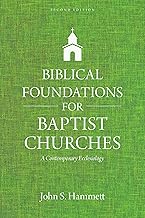
โIn this useful book, professor and former pastor John Hammett helps church leaders think through foundational questions about the nature of the church. Blending biblical teaching and practical ministry experience, Hammett presents a comprehensive ecclesiology from a historic Baptist perspective, examining crucial contemporary issues such as church discipline, the role of elders, and church ministry in a post-Christian culture.โ
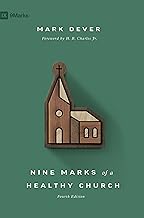
“You may have read books on this topic before but not like this one. Instead of an instruction manual for church growth, this classic text points to basic biblical principles for assessing and strengthening the health of your church. Whether youโre a pastor, a leader, or an involved member of your congregation, studying the nine marks of a healthy church will help you cultivate new life and well-being within your own church for Godโs glory.”
โPaul and Barnabas made a decisive move toward the end of the first missionary journey: they appointed elders in the churches they had established, entrusting them with responsibility to shepherd the young congregations. The need for faithful shepherding has not changed since that time, yet the leadership structure of most churches no longer follows this model. The authors argue that a return to the New Testament pattern of elder plurality best serves the shepherding needs in a local church.
The authors suggest a workable process for improving a local churchโs leadership structure and making the transition to elder plurality. Along the way, the stories of the authors and other church leaders provide a narrative of how faithful elder leadership has strengthened their ministries. The book also addresses a plan for leadership development in difficult international mission settings. Church leaders will find this a useful resource for building a healthy leadership structure.โ
โWhy Elders? A Biblical and Practical Guide for Church Members is a straightforward and readable guide concerning the bibical role of elders and deacons. Each of the four major chapters answers the question as to why elders are crucial in the church today. The elder model of church leadership is important because (1) it is the pattern of the New Testament Church; (2) it provides help and accountablity for a pastor; (3) it produces a healthier church; and (4) it promotes the biblical role of deacons.โ
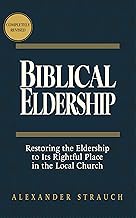
โFor 35 years Biblical Eldership has been the premier book explaining the biblical teaching on church eldership, which is shared pastoral leadership by a council of scripturally qualified, Spirit-placed elders. Biblical Eldership has helped ignite a worldwide awakening to this long-neglected and misunderstood subject. This new edition is a comprehensive revision. For those who love solid Bible exposition, this is a much-welcomed volume. Every New Testament passage on eldership is carefully interpreted and expounded, allowing the biblical authors to speak for themselves. By interacting with the latest scholarship and addressing all key issues of this important topic, the author makes a significant contribution to the subjects of church government and pastoral leadership. Biblical Eldership serves as a commentary, resource tool, and textbook for developing shepherd elders. Thousands of churches worldwide have used this book for training biblical elders. With this thoroughly updated edition, Biblical Eldership will continue to be the go-to standard resource for years to come.โ
โWhat does effective church leadership look like? In this conversational book, pastor Jeramie Rinne sets forth an easy-to-understand โjob descriptionโ for elders drawn from the Bibleโs teaching on church leadership.
Offering practical guidance for new elders and helping church members better understand and support their spiritual leaders, this succinct volume will encourage elders to embrace their calling with grace, wisdom, and clarity of vision.โ
โChurch leadership is a shared responsibility, not a solo venture. This book equips pastors and elders to lead the church together as a team, focusing not so much on what they are to be but on what they as a body are to do. Written by a former pastor, now a seminary lecturer and longtime volunteer elder, this book is a groundbreaking resource for local churches of all shapes and sizes.โ
Iโm the pastor of FBC Jackson in Jackson, Alabama. Each week, I post โArticle Roundup: Helpful Reads,โ sharing articles that I believe will benefit the saints who make up FBC Jackson and followers of Christ everywhere. Happy reading!
I’m grateful that Andrew Walker continues to address this topic. “Once it is understood that the political divide in contemporary America is, at its core, a moral divideโand that moral reasoning is inescapably shaped by underlying religious or metaphysical commitmentsโit follows that the fundamental distinction between the major political parties lies in the extent to which each permits itself to be guided by religiously informed moral values. While party identities may evolve over time, the modern Democratic Party has become institutionally aligned with a secular progressive framework that is, in its foundational assumptions, incompatible with a biblical moral vision.”
A stream of gratitude should flow from our hearts and mouths as we reflect on God’s work of creation. “We must never suppose that God created the cosmos out of lackโbecause he wanted a relationship, or he wanted someone to love. God did not create the world because he was thirsty. Rather, God created the world because it is the nature of a fountain to overflow. Creation is the super-abundance of divine goodness, beauty, mercy, love, wisdom, power, sovereignty, self-sufficiency, self-existence, justice, holiness, faithfulness, and freedom.”
When Sinclair Ferguson writes about the person of the Holy Spirit, you should read it! “So, for all the repetition of the mantra that the Holy Spirit isย no longerย โthe forgotten person of the Godhead,โ it is questionable whether we enjoy richer, more intimate communion with the Spirit himself. So, the lingering question (at least for me) remains this:ย Whoย is the Holy Spirit? How can I think what Spirit dwells within me?”
Church, we’re almost home! “Between Jesusโs first and second comings, we are in the last chapter of history. For in Jesusโs death, resurrection, and ascension, the ages have shifted. We have entered into the time when the man Jesus Christ has launched our homecoming. The major turning point of history, therefore, is not the Enlightenment, the founding of America, or the last election. Itโs not your birthday or recent promotion or dismissal. It is the time in history when God entered the creation in Christ and commenced the churchโs return to the presence of Godโnow in the churchโs worship (Heb. 12:18โ25) and soon in that new creation world without end (Heb. 12:26โ27).”
Articles like this are always timely. Perhaps that’s because I often find myself misusing time. “Be intentional, believer, about your diligence unto the Lord. Make the best use of your time. We wonโt be perfect, but we want to glorify God with our time. Whether itโs social media, TV, or the like, itโs not theย consumptionย that is the problem (although it sometimes can be), but itโs theย over-consumption. We replace Bible-reading with binge-watching the latest show on Netflix. We replace prayer with mindlessly scrolling through reels. We replace our spiritual disciplines with different things that distract us.ย God has called us to more than that.”
Iโm the pastor of FBC Jackson in Jackson, Alabama. Each week, I post โArticle Roundup: Helpful Reads,โ sharing articles that I believe will benefit the saints who make up FBC Jackson and followers of Christ everywhere. Happy reading!
Singleness should not be an enigma in Christ’s church. “Singleness and marriage present theological truths that together give a fuller, more beautiful picture of the gospel. By considering and communicating ways that single believers and married believers can help one another better grasp the gospel, weย highlight the value of both states.”
I often ask church members, “Who are your closest friends in the church?” Sadly, most only mention family. Very few mention their fellow brothers and sisters in Christ. This ought not be! “One comedian joked that one of Jesusโs greatest miracles was having twelve adult male friends. We smile, then wince. Should such relationships be this rare? Does Godโs word give us expectations that we should want this kind of friend? Pray for this kind of friend? Desire to be this kind of friend? I think it does.”
According to David Mathis, God’s laughter should affect how we live in this life. I think he’s right. “While God laughsย atย the wicked, the righteous learn to laughย withย their God. His laughter reminds us that he never worries. He never fears. He is never under threat. His laughter evokes our trust and fills our hearts with admiration and courage.”
Pastoral transitions rarely go well. I suppose it’s because of the spirit described in 1 Corinthians 3 that exists in most churches. That said, it really seems like a plurality of elders is vital for a healthy transition. “Pastoral transitions are among the most delicate moments in a churchโs life. Retiring pastors, incoming leaders, and church leadership teams each have a vital role to play in ensuring a smooth and God-honoring transition. When approached with humility, wisdom, and trust in Godโs sovereignty, these transitions can strengthen the church for generations to come.”
An increasing number of pastors are expressing a desire to leave their pastorate. Why? The main reasons for this trend are inner church conflicts and a lack of optimism regarding the future growth of the church. And though the article doesn’t state this, I think it’s a helpful addition: these two problemsโinternal conflict and stagnant growthโare often interconnected rather than separate problems. “The Hartford Institute report indicated that clergy dissatisfaction was not linked to the pastorโs own health or feeling of personal wellness. โBurnoutโ was not the problem. Instead, the biggest issue listed was conflict within the congregation. On the other hand, optimism about a congregationโs future strongly correlated with the ministers wanting to stay at their post.ย So if pastors want to keep their job, and if churches want to keep their pastorsโor attract new candidatesโthen the two most important goals should be church unity and church growth. Churches should reduce internal conflict and attract and keep new members.”
Hereโs a behind-the-scenes look at what Iโve been reading over the past few months. Iโve included a brief description of each book from Amazon to give you a taste of what theyโre about. Perhaps one of these titles will catch your interest and motivate you to add it to your cart! Before you start scrolling, let me mention some things about these books:
I donโt agree with every point in every book I read.
I’ve found all of these books to be very helpful.
I’ve found some of these books to be more helpful than others.
I’ve listed these books in the order that I read them.
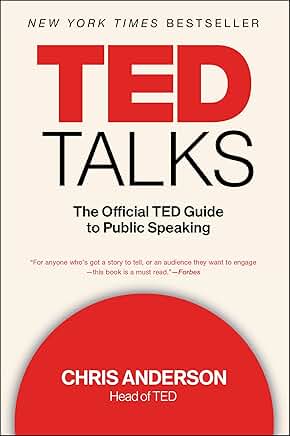
“Done right, a talk can electrify a room and transform an audienceโs worldview; it can be more powerful than anything in written form. This โinvaluable guideโ (PublishersWeekly) explains how the miracle of powerful public speaking is achieved, and equips you to give it your best shot. There is no set formula, but there are tools that can empower any speaker.
Since taking over TED in 2001, Chris Anderson has worked with all the TED speakers who have inspired us the most, and here he shares insights from such favorites as Sir Ken Robinson, Salman Khan, Monica Lewinsky, and moreโ everything from how to craft your talkโs content to how you can be most effective on stage.”
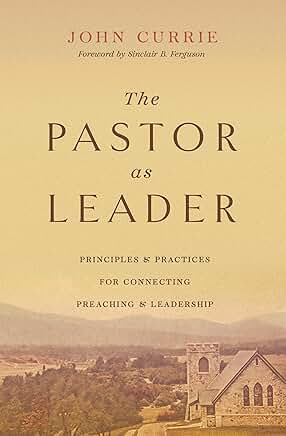
“Many pastors feel torn between preaching and leading, but both responsibilities are essential. Without faithful exposition of Scripture, churches risk straying theologically. Without strong leadership, teaching lacks spiritual zeal. How can pastors find balance and steward their calling effectively?
In The Pastor as Leader, John Currie equips pastors to be men of God who competently carry out their purpose: leading Godโs people through the preaching of Godโs word. Recognizing a common disconnect between the roles of preaching and leadership, Currie offers foundational principles for pastoring โunder Christโs appointment, conformed to Christโs character, which exemplifies and implements Christโs wisdom, preached from Christโs word.โ By integrating two primary roles of the pastorate, readers will learn how to faithfully and confidently proclaim the Scriptures as they communicate biblical vision and strategy for the churchโs mission.”
“Pastoral leadership is the process where, for the glory of God, a man of God, appointed by the Son of God and empowered by the Spirit of God, proclaims the Word of God so that the people of God are equipped to move forward into the purposes of God together.” John Currie
“We don’t like to admit it, but anyone who honestly evaluates the church’s life and outlook will understand that these are not good days for evangelicalism. We’ve achieved success, but in a worldly sort of way–big numbers, big budgets, and big outreaches. Yet church attendance is actually down and alleged “born again” believers do not differ significantly in their worldview from their neighbors. Why? We have forgotten our theology and, consciously or not, have pursued the wisdom of the world, accepted its “doctrines,” and utilized its methods.
Pastor James Montgomery Boice believed that our ignorance of God and neglect of the gospel of grace is the root of the problem. Here he identifies what’s happening within the church and explains how the five doctrinal truths that transformed the world during the Reformation not only offer the solution but can shape a renewal today.
By offering people what they desperately lack–the Word of God and salvation through Christ–rather than giving them an imitation of what they already have, we will see Christianity thrive once again. And in holding fervently to the foundational truths of the gospel, we will know the power of spiritual renewal in our churches.”
Imagine a well-read man. Do you see a machine dressed in tweed gorging on information? This book is not about becoming that kind of reader.
The well-read man wakes up and consults with Moses on the way to work. He sips his coffee and ponders the wisdom of Hannibal’s elephants crossing the Alps. He turns furrowed-browed philosophers upside down and takes their lunch money. He changes his oil and deliberates with Peter Drucker about effective management practices. He regales his wife with the tale of Monet’s water lilies in the Gardens at Giverny. He sings with Sandra Boynton as his toddlers’ eyes grow heavy. This book is about becoming that man. Be as human as you can be. Learn how to read a book.
“The hardcover box set of C. S. Lewis’s classic fantasy series The Chronicles of Narnia, with cover art by three-time Caldecott Medal-winning illustrator David Wiesner and the full black-and-white original interior art by Pauline Baynes.
Journeys into magical realms, battles between good and evil, talking creatures, and more, await readers of all ages in The Chronicles of Narnia.
This timeless box set includes all seven titlesโThe Magician’s Nephew; The Lion, the Witch and the Wardrobe;The Horse and His Boy; Prince Caspian; The Voyage of the Dawn Treader; The Silver Chair; and The Last Battleโwith interior black-and-white art by Pauline Baynes, the original illustrator.”
โSome day you will be old enough to start reading fairy tales again.โ C.S. Lewis
A Concise and Systematic Exploration of the Doctrine of Predestination. . . .
How can God choose to save some and eternally punish others? What about my loved ones who are not believers? For many, contemplating predestination brings about fear, trepidation, controversy, and emotional exhaustion, making it a difficult topic to studyโlet alone view as a blessing.
This addition to the Short Studies in Systematic Theology series carefully examines Godโs word to answer 15 commonly asked questions regarding the doctrines of election and reprobation. With helpful visuals, key definitions, answer summaries, and prayer responses, this concise guide is perfect for all believers who want to discover and delight in what God has revealed throughout Scripture. Readers will not only learn how God saves his people from their sins, but will be stirred to respond to him in worship.”
“In 40 Questions About Calvinism, church historian Shawn Wright tackles many issues about the theological system known as Calvinism. Taking an irenic approach, Wright explains the key doctrines while also contrasting them with Arminianism. The accessible format allows readers to easily look up topics they’re most interested in, including:
What is the difference between Calvinism and the Reformed tradition?
Does God love all people?
What is predestination?
Did Jesus die for the sins of the whole world?
Can people resist the Holy Spirit?
Do Calvinists practice evangelism and missions?
For Calvinists or those seeking to understand Calvinism better, 40 Questions About Calvinism helps readers understand the key terms, issues, and debates of this highly influential theological viewpoint.”
“The actual life and teaching of Jacobus Arminius are often unknown or misunderstood. Answers beyond a basic caricature can be elusive. In 40 Questions About Arminianism, however, J. Matthew Pinson combines solid historical research with biblical and doctrinal precision to address the following questions and more:
Who was Jacobus Arminius?
How has the church interpreted God’s desire that everyone be saved?
How is Arminianism different from Calvinism?
Can one be both Reformed and Arminian?
What is “universal enabling grace”?
What do Arminians mean by “free will”?
Do Arminians believe that God predestines individuals to salvation?
Is it possible for a Christian to apostatize?
An accessible question-and-answer format helps readers pursue the issues that interest them most, with additional resources available at 40questions.net. Questins regarding historical backgrounds and the Bible encourage a broad understanding of historic and contemporary Arminianism.”
In January, I began a Sunday evening teaching series on the Ten Commandments titled “An Introduction to Christian Ethics.” Here’s a look at the resources I’ve used.
And God spoke all these words, saying, ‘I am the Lord your God, who brought you out of the land of Egypt, out of the house of slavery.” Exodus 20:1-2
“This book serves as an introduction to the field of biblical ethics, a subcategory of the discipline of moral theology. It differs from moral philosophy in that biblical ethics is distinctively Christian, and it is more specific than Christian ethics proper because it specifically focuses upon the application of the moral law — as it is revealed in Scripture — to daily living.
Introduction to Biblical Ethics explains the nature, relevancy, coherency, and structure of the moral law as revealed throughout the Bible. In addition to covering the foundational elements of biblical ethics, major issues investigated in this volume include: different types of law in Scripture, the relationship between the law and the gospel, and issues related to the prospect of conflicting moral absolutes.
Additionally, after a discussion of ethical methodology, and using the Ten Commandments as a moral rubric, author David W. Jones explores the place of the moral law in the lives of believers. In the final chapters, the events surrounding the giving of the Decalogue are surveyed, and the application of each of the Ten Commandments to Christian living is explored.”
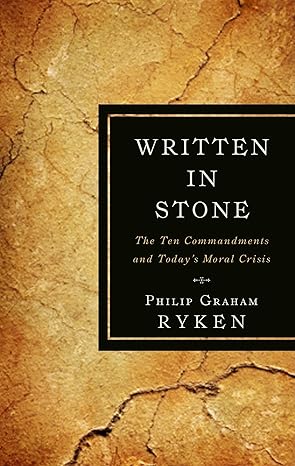
“The Ten Commandments are an expression of God’s eternal character and having binding force today. Here Philip Ryken offers basic principles for interpreting and applying themโexplaining them one by one, illustrating each with a biblical account, and relating each to the preson and redemptive work of Jesus Christ.”
Philip Ryken offers basic principles for interpreting and applying the Ten Commandmentsโexplaining each one, illustrating each with a biblical account, and relating each to the person and redemptive work of Jesus Christ.
This is a book to be read and savored. Readers will find themselves examining their own lives, changing their ways, and delighting in newfound grace.”
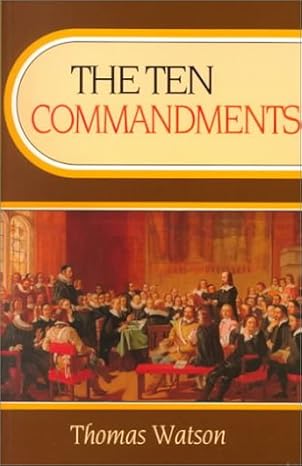
“In this book Thomas Watson continues his exposition of the Shorter Catechism drawn up by the Westminster Assembly. Watson was one of the most popular preachers in London during the Puritan era. His writings are characterized by clarity, raciness and spiritual richness. The series of three volumes, of which this is the second, makes an ideal introduction to Puritan literature.
There are few matters about which the Puritans differ more from present-day Christians than in their assessment of the importance of the ten commandments. The commandments, they held, are the first thing in Christianity which the natural man needs to be taught and they should be the daily concern of the Christian to the last.
In The Ten Commandments Watson examines the moral law as a whole as well as bringing out the meaning and force of each particular commandment. In view of the important function of the law in Christian life and evangelism this is a most valuable volume.”
“Are the 10 Commandments still relevant today? Do they still apply? Which ones? What do they mean in light of Godโs mercy revealed in Jesus?
Highlighting the timelessness and goodness of Godโs commands, pastor Kevin DeYoung delivers critical truth about the 10 Commandments as he makes clear what they are, why we should know them, and how to apply them. This book will help you understand, obey, and delight in Godโs lawโcommandments that expose our sinfulness and reveal the glories of Godโs grace to us in Christ.”
“If God has spoken, then the highest human aspiration must be to hear what the Creator has said. God has indeed spoken, through the Ten Commandments, and Al Mohler explores this revelation of God and the implications for His people. The promise is to hear, to obey, and to live. These “Ten Words” tell us who God is and what His people should look like.
Mohler is a respected voice on the state of our culture (and the church) today. The Ten Commandments speak to current issues today such as the exclusivity of the Christian God, the essence of worship, capital punishment, just war, business ethics and the postmodern definition of truth.”
“In this book, I urge readers not to side with either tendency. The point of Christian ethics is not to be as liberal as we can be, or as conservative. It is, rather, to be as biblical as we can be. So this book will seem to be more liberal than the majority on some issues and more conservative on others. God’s Word has a way of surprising us, of not fitting into our prearranged categories.
Jesus rebuked both the conservative Pharisees and the liberal Sadduccees; Paul rebuked both legalists and libertines. Understanding God’s will rarely means falling into lockstep with some popular ideology. We need to think as part of a community, listening to our brothers and sisters, but we also need the courage to step aside from the crowd when God’s Word directs us in that way.”
“If books are among our friends, we ought to apply similar standards to them that we apply to our flesh-and-blood friends. We should want to choose them wisely and well and hope that we will be the better for their companionship.” Doug Wilson
Iโm the pastor of FBC Jackson in Jackson, Alabama. Each week, I post โArticle Roundup: Helpful Reads,โ sharing articles that I believe will benefit the saints who make up FBC Jackson and followers of Christ everywhere. Happy reading!
Garrett Kell gives some helpful counsel to wives who have spiritually lethargic husbands. “But what happens when a husband wonโt lead? How should his wife respond? How can she pursue her husband in a way that encourages him to seek Jesus and, in turn, to lead her?”
I’m so thankful that Joe Carter addressed this topic. This article will demonstrate why marriage vows are the most important part of a wedding ceremony. “One profound privilege of pastoral ministry is officiating weddings. Itโs always an honor to be asked by a couple to perform their ceremony and help shape one of the most significant moments of their lives. Yet there are five words I dread hearing: ‘We wrote our own vows.'”
This meditation beautifully highlights the glory of the Son of God. Reading it slowly and with a worshipful heart will stir your affections for Christ. “We are supposed to see the sun and realize that it is only a shadow of the true center of the universe. Jesus is the One around whom we all revolve. Jesus is the radiance of the glory of God. Jesus is the true Light.”
You may find some of these tricks helpful. “Youโve sat down with that book. Youโve skimmed the pages. You might have even finished reading it. But how do you get more out of your reading? Is it even possible? Does it require a college degree, hours of education, and the most advanced note taking system you can learn? Not at all. It just requires a willing reader, a book able to be marked and highlighted, and nine tricks for success. So if youโre a homeschooling parent looking for some ideas, a student looking for some guidance, or a reader who wants to get more out of your reading, then read on.”
Hunter is a wife and mother of four children. She offers helpful insights that clarify what discipleship is and what it isn’t. “Why arenโt more Christians committed to making disciples as Jesus commanded (Matt. 28:18โ20)? I wonder if such reluctance stems from misconceptions aboutย what discipleship entails. Perhaps by understanding what discipleshipย isnโt, we can dismantle unnecessary barriers and more readily embrace Jesusโs call.”
Iโm the pastor of FBC Jackson in Jackson, Alabama. Each week, I post โArticle Roundup: Helpful Reads,โ sharing articles that I believe will benefit the saints who make up FBC Jackson and followers of Christ everywhere. Happy reading!
Kevin DeYoung makes an important point for pastors during our tumultuous political climate. “Pastors are not called to comment on everything, nor are weย equippedย to comment on everything. Brothers, we must not plunge ourselves into subjects on which we do not have the right, nor the expertise, to speak as ministers of the gospel. Before you send out your instant analysis on the controversyย du jour, ask yourself: Can I say what Iโm about to say by virtue of my training as a minister or by my hard-won expertise in some related area?”
This is a great idea for an article. I’m sure many spouses will find it both helpful and encouraging. “I heard that you are married to an unbeliever and could use some encouragement. I wish you and I could sit down over coffee together and I could hear about your specific struggles. But for now, I pray that God will graciously use my words here to comfort and strengthen you.”
I always make it a point to share articles like this. We need to think from a Christian perspective about IVF. “Families are not โmade great againโ by having unborn children created in labs, graded, discarded, or stored in freezers, and we must make this case both persuasively and emphatically.”
This is a great article on the attributes of God. I’m quite confident it will stir your affections for the Lord Jesus Christ! “I once heard it said that the true measure of a personโs character can be determined not by their ability to express any single attribute well, but rather by their capacity to display seemingly contrary attributes in harmony with one another at any given time.”
Given the current cultural climate, it’s important to remember how clearly the Bible prohibits women from serving as pastors. “The question whether women may serve as pastors or elders is one that hits home for many Christians. Believers have seen this issue embroil and even divide their churches. In taking up such a critical and sensitive matter, it is important to turn to the Bible. What light does the Word of God shed on this controversial topic?”