
On My Shelf: April-September

Here’s a behind-the-scenes glance at the books I’ve read since April. (I usually post an On My Shelf blog every three months, but I’ve been slacking.) I’ve added a brief book description from Amazon to give you a taste of each book. Perhaps one of these books will garner your attention and compel you to add it to your cart! But let me mention a few things before you start scrolling:

  • I don’t agree with everything in every book I read
  • I’ve found all of these books helpful
  • I’ve found some of these books more helpful than others
  • These books are listed in the order I read them

Pastor, Jesus Is Enough: Hope for the Weary, the Burned Out, and the Broken by Jeremy Writebol

In Pastor, Jesus Is Enough, Jeremy Writebol invites pastors to hear the words of the risen Jesus in the seven letters within Revelation 2–3:

  • Pastors love Jesus most
  • Pastors suffer
  • Pastors teach and tell the truth
  • Pastors become like Jesus
  • Pastors abide in Jesus
  • Pastors find their value in Jesus
  • Pastors repent

The exhortations in Revelation 2–3 are directed to churches. But they also exhort pastors. In these letters, Jesus draws near to pastors―whether hurting or straying―and reminds them of his sufficiency. In these warnings and promises, Jesus has hard words for pastors. But they are words of life. Most of all, Jesus urges pastors to keep their focus on him. Being enough is exhausting. But pastor, the good news is that you cannot be enough. Because only Jesus is enough.

The Compelling Community: Where God’s Power Makes a Church Attractive by Mark Dever & Jamie Dunlop

What does a community that testifies to God’s power look like? God’s people are called to a togetherness and commitment that transcends all natural boundaries―whether ethnic, generational, or economic. But such a community can be enjoyed only when it relies on the power of God in the gospel.

In The Compelling Community, pastors Mark Dever and Jamie Dunlop cast a captivating vision for authentic fellowship in the local church that goes beyond small groups. Full of biblical principles and practical advice, this book will help pastors lead their congregations toward the kind of community that glorifies God, edifies his people, and attracts the lost.

America’s Religious History: Faith, Politics, and the Shaping of a Nation by Thomas Kidd

America’s Religious History is an up-to-date, narrative-based introduction to the unique role of faith in American history. Moving beyond present-day polemics to understand the challenges and nuances of our religious past, leading historian Thomas S. Kidd interweaves religious history and key events from the larger story of American history, including:

  • The Great Awakening
  • The American Revolution
  • Slavery and the Civil War
  • Civil rights and church-state controversy
  • Immigration, religious diversity, and the culture wars

Useful for both classroom and personal study, America’s Religious History provides a balanced, authoritative assessment of how faith has shaped American life and politics.

Caring for One Another: 8 Ways to Cultivate Meaningful Relationships by Edward Welch

Imagine . . . an interconnected group of people who entrust themselves to each other. You can speak of your pain, and someone responds with compassion and prayer. You can speak of your joys, and someone rejoices with you. You can ask for help with sinful struggles, and someone prays with you.

The goal of this book is that these meaningful relationships will become a natural part of daily life in your church. With short chapters and discussion questions meant to be read in a group setting, Ed Welch guides small groups through eight lessons that show what it looks like when ordinary, needy people care for other ordinary, needy people in everyday life.

Are We Living in the Last Days?: Four Views of the Hope We Share about Revelation and Christ’s Return by Bryan Chapell
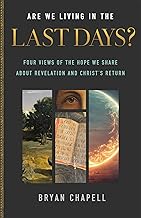
Will Jesus’s return be preceded by a single world government? Will every person have a government-issued ID or mark? Does Christ return once or twice? Will believers go through a Great Tribulation? Will there be a literal battle of Armageddon? Does it even matter what we believe about future events?

Biblical prophecies about the end times have confused, confounded, and even divided God’s people for centuries. But the reason Scripture gives us hints about the future is to provide the encouragement we need to endure the present, confident that God keeps his promises.

In this balanced look at four major views of the end times, bestselling author Bryan Chapell explains the primary ways Christians have interpreted biblical prophecy about the last days, not so that we might pick a hill to die on but so that we can cling to what unites us in Christ. No matter what end times view we find most compelling, in God’s plans we can find strength for today and hope for tomorrow.

Decisions Made Simple: A Quick Guide to Guidance by Tim Chester

How we get reliable guidance is always a hot topic for Christians. Should we wait for a personal ‘word’ from the Lord, perhaps delivered by some mysterious process? Does God have anything to say about the daily matters that concern his people? Can the Bible be involved in our understanding the will of God for our lives, considering that it was written when so much that is familiar to us was not dreamt of? Perhaps most importantly of all, the dangers of personal decision and guidance without considering our relationship with others, particularly the believing community, are raised. Tim Chester addresses the issues and provides clear, thoughtful biblical answers. Reflections on each section and a final decision-making checklist make this a truly practical and readable guide.

Understanding Baptism (Church Basics) by Bobby Jamison
What’s the big deal about baptism? Jesus commands his disciples to be baptized, and it’s a glorious picture of a person’s union with Jesus’ death, burial, and resurrection. Still, many Christians feel unclear about the topic, having more questions than answers. This short work provides a biblical explanation of baptism. What is it? Who should be baptized? Why is it required for church membership? And how should churches practice baptism?

Spiritual-Mindedness (Puritan Paperbacks) by John Owen
Thomas Chalmers wrote that Owen’s book on Spiritual-Mindedness holds ‘a distinguished rank among the voluminous writings of this celebrated author’. For him three features made it very special: -The force with which it applies truth to the conscience. -The way Owen plumbs the depths of Christian experience as a skillful physician of the soul. -The uncovering of the secrets of the mind and heart so that the true spiritual state of the reader is discovered. This book began life as a collection of meditations on Romans 8:6, which were written for the author’s own benefit during a time of illness. Alarmed by the subtle power the world exercises over the mind, Owen shows us how to really live by raising our thoughts above all earthly objects and setting them on ‘things above, where Christ is’ (Col. 3:1) A favorite book of William Wilberforce, it contains some passages which are not surpassed in all of Owen’s writings. It comes from the pen of a tender-hearted pastor whose only purpose is to encourage the believer in the ongoing battle against sin. So if you feel overwhelmed by the power of worldliness then this is definitely the book for you!

Undistracted: Capture Your Purpose. Rediscover Your Joy by Bob Goff

The world has never been more distracting—joy has never been more possible.

You live with a massive amount of distraction:

  • desperate headlines
  • smartphone scrolling
  • an endless to-do list

Not to mention the nagging questions of your heart:

  • Am I making the right decision? 
  • Am I with the right person? 
  • Will my past mistakes keep me from my best future?

Through the pithy and inspiring storytelling that has endeared him to millions, New York Times bestselling author Bob Goff invites you to laugh with more gusto, dream with more confidence, and love with more intention in this disarming call to live Undistracted. Bob’s stories are like the rumble strips on the road that make you suddenly alert to how far you have drifted from your lane. From visiting friends in San Quentin to accidentally getting into a stalker’s car at the airport to establishing Uganda’s first space program, Bob shows you the way back to an audaciously attentive life. Your undistracted life is an adventure waiting to happen. What stories will you live with undistracted purpose and unstoppable joy?

When Helping Hurts: How to Alleviate Poverty Without Hurting the Poor . . . and Yourself by Steve Corbett

Poverty is much more than simply a lack of material resources, and it takes much more than donations and handouts to solve it. When Helping Hurts shows how some alleviation efforts, failing to consider the complexities of poverty, have actually (and unintentionally) done more harm than good. 

But it looks ahead. It encourages us to see the dignity in everyone, to empower the materially poor, and to know that we are all uniquely needy—and that God in the gospel is reconciling all things to himself. 

Focusing on both North American and Majority World contexts, When Helping Hurts provides proven strategies for effective poverty alleviation, catalyzing the idea that sustainable change comes not from the outside in, but from the inside out.

Chosen by God by R.C. Sproul

Chosen by God by Dr. R. C. Sproul is a contemporary classic on predestination, a doctrine that isn’t just for Calvinists. It is a doctrine for all biblical Christians. In this updated and expanded edition of Chosen by God, Sproul shows that the doctrine of predestination doesn’t create a whimsical or spiteful picture of God, but rather paints a portrait of a loving God who provides redemption for radically corrupt humans.

We choose God because he has opened our eyes to see his beauty; we love him because he first loved us. There is mystery in God’s ways, but not contradiction.

Character Matters: Shepherding in the Fruit of the Spirit by Aaron Menikoff

Pastor, it’s time to turn down the noise and focus on what matters.

Today’s pastoral world is packed with books, conferences, and seminars teaching you different techniques for being an all-star pastor, growing your church quickly, and changing the world. But the key to true success is much harder and much simpler. Pastors are called to be faithful, to have exemplary character, and to love Jesus. Without faithfulness, their ministry ends up harming others rather than helping them. Churches need pastors with sound doctrine and a sound life.

Character Matters was written to help you slow down, cut through the noise and distractions, and focus on what matters—the fruit of the Spirit. Each chapter is a guided, biblical meditation on one aspect of each piece of the fruit of the Spirit. As you reflect and focus on the simple things that matter, you’ll see your heart change and your ministry follow, slowly, surely, and by the power of the Spirit.

Spurgeon: A Life by Alex DiPrima
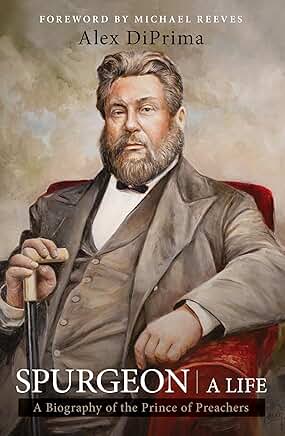
“In this book, Alex DiPrima has produced what many others have failed to deliver: a one-volume biography of Spurgeon that tells the story with power, insight, and due recognition of his historical significance.”

—R. Albert Mohler Jr., president, The Southern Baptist Theological Seminary

Alex DiPrima paints a fresh portrait of Charles Haddon Spurgeon, the most well-known gospel minister of the nineteenth century. By providing social, historical, and religious context, DiPrima helps us comprehend the scope of Spurgeon’s ministry in London. Combining academic expertise with popular presentation, this short biography of the famed Prince of Preachers will be the go-to introduction to Spurgeon for years to come.

The Soul-Winning Church: Six Keys to Fostering a Genuine Evangelistic Culture by J.A. Medders

How to build a culture of truly effective gospel-sharing in your church. 
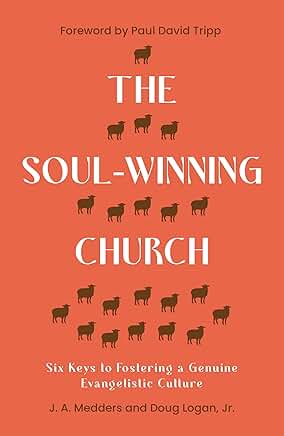
Your church’s sermons often include a call to evangelize. You’ve held evangelism training events. You give out invites to your Christmas and Easter services. So… where are all the new Christians? Is your church actually reaching the lost with the gospel?

For many of us, despite having the best intentions our churches struggle to reach out with the gospel effectively. J.A. Medders and Doug Logan Jr. have decades of experience in leading churches and mentoring pastors, and here they outline six principles for cultivating a genuine evangelistic culture throughout your church. 

Includes case studies from a variety of different cultures and contexts to give you practical ideas for implementing these six principles.

Shepherds for Sale: How Evangelical Leaders Traded the Truth for a Leftist Agenda by Megan Bashan

How deeply have leftist billionaires infiltrated America’s churches?

In Shepherds for Sale, Megan Basham of the Daily Wire documents how progressive powerbrokers —from George Soros, to the founder of eBay, to former members of the Obama administration— set out to change the American church. Their goal: to co-opt evangelicals for political purposes. She exposes:

The left-wing billionaires, foundations, and think tanks that deliberately target Christian media, universities, megachurches, nonprofits, and even entire denominations

  • The left-wing billionaires, foundations, and think tanks that deliberately target Christian media, universities, megachurches, nonprofits, and even entire denominations
  • The celebrity megachurch pastor who secretly encouraged a group of pastors to change their views on sexuality
  • The revered Presbyterian theologian who backed a congregation rebelling against his own denomination

These are just a glimpse into the compromises and astroturf campaigns Basham uncovers. Many evangelical leaders are pushing their members to “whisper” about sexual sins, reconsider the importance of abortion, lament the effects of climate change, and repent of “perpetuating systemic racism.” And in exchange for toeing a left-wing line, many of those church leaders and institutions have received cash, career jumps, prestige, and praise. Basham brings the receipts, and names names.

A rigorously reported exposé, Shepherds for Sale is a warning of what happens when the church trusts the world’s wisdom instead of Scripture.


Commentaries on the Sermon on the Mount

Back in August, I began a sermon series on Matthew 5-7, The Sermon on the Mount. Here are some of the commentaries I am using:

Studies in the Sermon on the Mount by Martyn Lloyd Jones

A spiritual classic, this detailed and comprehensive study by one of the greatest expository preachers of our time explains Christ’s teaching in the Sermon on the Mount and incisively applies it to the Christian life.

With characteristic vigor and emotional vitality Dr. Lloyd-Jones presents a brilliant and detailed exposition of one of the best known but most frequently misunderstood passages of Scripture. Here is a comprehensive and exhaustive study of our Lord’s words as recorded in Matthew chapter five. This beautiful portion of the Sermon on the Mount is carefully analysed, its contents outlined and thoughtfully arranged, and vastly rich and abundant truths are gleaned for the reader’s spiritual nurture.

The author brought a wealth of devoted study as well as a profound spiritual appreciation to the work of interpreting this greatest address of our delightful experience in meditation. It presents depth of thought in simple language and beauty of style and contains a veritable thesaurus of spiritual truths drawn from the entire Bible.

Sermon On The Mount: Restoring Christ’s Message to the Modern Church by Charles Quarles

Matthew 5-7, popularly known as the Sermon on the Mount, has been described as “the essence of Christianity” and inspired many commentaries. However, New Testament professor Charles Quarles believes a fair number of those volumes either present Christ’s sermon as containing an impossible spiritual ethic or instead dilute its message so much that hardly any ethical challenge remains. Also concerning, a recent Gallup poll indicated only onethird of American adults recognize Jesus as the source of this teaching that has often inspired people who do not even embrace evangelical Christianity.

Quarles’ new analysis, part of the New American Commentary Studies in Bible & Theology series, aims to fill the gap between these extremes by dealing with the important questions of whether believers can live by the Sermon on the Mount today, and, if so, how. Looking at the Beatitudes, what it means to be salt and light, and the demand for superior righteousness, he writes to restore this crucial section of our Lord’s teaching to its proper place in His church.

The Beatitudes by Thomas Watson

The Beatitudes, written by Thomas Watson, is an exposition of Matthew 5:1-12. Thomas Watson was a prominent Nonconformist Puritan and religious author. Watson was born and raised in England and was a popular preacher until the Restoration. He is now best remembered for his many popular Christian books such as A Body of Divinity, The Godly Man’s Picture, and The Doctrine of Repentance.

The Sermon on the Mount: The Message of the Kingdom by Kent Hughes

The three chapters of Matthew known as the Sermon on the Mount contain truths so rich and powerful that even a lifetime of study could not exhaust their depths. For centuries, Jesus’s majestic portrait of the kingdom of heaven and his unparalleled instructions for godliness have captivated Christians and non-Christians alike. In this classic commentary, now revised with a fresh look and ESV Bible references, seasoned pastor R. Kent Hughes guides readers through this glorious portion of the Bible with exegetical precision, expositional clarity, and practical sensitivity. Whether used by preachers, small group leaders, or individual laypersons, this resource will prove invaluable for illuminating the Sermon on the Mount’s enduring power to enliven hearts and transform minds.

Matthew 1-7 by John MacArthur
The Old Testament looked forward to the final King of kings who would bring everlasting salvation and peace. In his Gospel, Matthew demonstrates that Jesus Christ is that King, perfect in His eternal glory and majesty. As the King’s ambassadors, Christians today will find in Matthew great motivation for heartfelt worship and service.

Join John MacArthur as he explains each verse of Matthew 1–7 in a way that is both doctrinally precise and intensely practical. Taking into account the cultural, theological, and Old Testament contexts of each passage, MacArthur tackles interpretive challenges and fairly evaluates differing views, giving the reader confidence in his conclusions. 

The MacArthur New Testament Commentary series comes from the experience, wisdom, and insight of one of the most trusted ministry leaders and Bible scholars of our day. Each volume was written to be as comprehensive and accurate as possible, dealing thoroughly with every key phrase and word in the Scripture without being unnecessarily technical. This commentary will help to give a better, fuller, richer understanding of God’s Word, while challenging the reader to a vibrant personal spiritual walk.

Sermons on the Beatitudes

I began my sermon series on the Sermon on the Mount with a mini-series on the Beatitudes. I have attached links to the audio recordings of each sermon.

Sermon on the Mount: Intro

Blessed are the Spritual Beggars

Blessed are those who Mourn

Blessed are the Meek

Blessed are those who Yearn for Righteousness

Blessed are the Merciful

Blessed are the Pure in Heart

Blessed are the Peacemakers

Blessed are the Persecuted

Spurgeon’s Angelology: A Speculative Thought

Christians should have a healthy fascination with angels. These disembodied, spiritual beings are remarkable. They have extraordinary power and amazing intelligence. They are so radiant with the glory of God that godly men foolishly feel the need to bow down and worship them (Rev. 22:8-9). They appear all throughout the Bible, especially at major redemptive events. You will find them in the Garden of Eden, with the Patriarchs, with Moses, Joshua, and David, at Mount Sinai, all throughout the earthly ministry of the Lord Jesus Christ, in the Acts of the Apostles, and at the consummation of all things.

Spurgeon Speculated

However, within the Bible, we are not told all that we would like to know about angels. This has caused many people, even faithful students of the Bible, to speculate. And as I have read through some of Spurgeon’s sermons, it has become clear that Spurgeon was not immune to such speculation. My aim in this blog is to inform you of a particular speculative belief Spurgeon held regarding the ministry of angels. By the end of this blog, I think you will find Spurgeon’s thought fascinating and speculative, but not absurd and preposterous.

Angels Guard God’s Elect

In agreement with the Bible, Spurgeon believes that angels are “ministering spirits sent out to serve for the sake of those who are to inherit salvation” (Heb. 1:14). Angels rejoice over sinners that repent (Luke 15:7, 10). They “love us and bear us up in their hands lest we dash our feet against the stones.”[1] Spurgeon teaches that every Christian has a guardian angel “who flies about him, and holds the shield of God over his brow, keeps his foot lest he should dash it against a stone, guards him, controls him, manages him, injects thoughts into his mind, restrains his evil desires, and is the minister and servant of the Holy Ghost to keep him from sin, and lead him to righteousness.”[2] (Yes, there is some speculation in this quote as well, but our purpose is to talk about something else.)

Believers do not merely have a guardian angel, though. Spurgeon maintains that Christians have a company of angels always at their side. Indeed, if the Lord enabled us to peer into the invisible, spiritual realm where angels exist, we would see glorious cherubim walking before us.[3] From the time of our birth to the time of our death, God commissions his angels to serve and protect us.

This, however, leaves us with a question: How do angels serve us after we die? What do angels do when our spirits depart from our bodies? Sure, angels play an instrumental role at the second coming when they will separate the righteous from the unrighteous (Mt. 13:49). But what do angels do while we are absent from our bodies and spiritually present with the Lord? Do angels cease serving us until the resurrection of the just? Though most of us have not considered these questions, Spurgeon certainly did. And because Spurgeon gave thought to these questions, it led him to speculate.

Spurgeon’s Speculation: Angels Guard the Bones of the Saints

There is an ambiguous verse in the book of Jude that says, “But when the archangel Michael, contending with the devil, was disputing about the body of Moses, he did not presume to pronounce a blasphemous judgment, but said, ‘The Lord rebuke you’” (Jude 9). Spurgeon is not sure what this verse ultimately means. He does, however, notice the obvious; that the archangel Michael contended with the devil over the dead body of Moses. From this, he speculates that angels watch over the dead bodies of all the saints:

Now, this refers to the great doctrine of angels watching over the bones of the saints. Certainly, it tells us that the body of Moses was watched over by a great archangel; the devil thought to disturb that body, but Michael contended with him about it. . . From this we learn that an angel watches over every tomb.[4]

 . . . if believers die as poor as Lazarus, and as sick and as despised as he, angels shall convey their souls into the bosom of their Lord, and their bodies, too, shall be watched by guardian spirits, as surely as Michael kept the body of Moses and contended for it with the foe. Angels are both the servitors of living saints and the custodians of their dust.[5]

God has set his angels to watch over them, as he set Michael to watch over the body of Moses. . .[6]

Why Did Spurgeon Believe This?

I do not know all that went through Spurgeon’s mind as he thought through this, but from what I do know, it seems like the importance of the physical body inclined him to embrace the idea that angels guard the bones of God’s elect:

Now would there be a contention about that body if it had been of no value? Would Michael contend for that which was only to be the food of worms? Would he wrestle with the enemy for that which was to be scattered to the four winds of heaven, never to be united again into a new and goodlier fabric? No; assuredly not.[7]

There are cherubs with outstretched wings over the head of the grave-stones of all the righteous. . . in some nook o’ergrown by nettles, there an angel standeth night and day to watch each bone and guard each atom, that at the resurrection those bodies, with more glory than they had on earth, may start up to dwell for ever with the Lord.[8]

God has set his angels to watch over them, as he set Michael to watch over the body of Moses. . .Remember, then, and doubt not that the very body in which you sinned shall be the very body in which you shall suffer in hell; and the body in which you believe in Christ, and in which you yield yourselves to God, shall be the very body in which you shall walk the golden streets, and in which you shall praise the name of God for ever and ever.[9]

Unlike many Christians today, Spurgeon has a healthy view of the human body. He is fully aware that, even after death, God is not done with our bodies. When Christians are spiritually present with the Lord, God is not done redeeming them. “When our Lord Jesus died he did not redeem one half of man,” Spurgeon says, “but the whole man, and he means not to leave any part of the purchased possession in the enemy’s hands.”[10] In other words, Christ did not merely purchase the redemption of our spirits, he purchased the redemption of both our spirits and our bodies. Christ did not rise out of the grave so that our physical bodies would remain in their graves. No. He rose out the grave to guarantee that our physical bodies will one day rise as well. God fully intends to finish our salvation process by reuniting our spirits with glorious resurrection bodies. It seems like these—the value of human body, God’s intention to raise it from the dead, and the full redemption of man—are the impetus behind Spurgeon’s belief that angels are guardians and protectors of our bones.

Speculative but Not Preposterous

I mentioned at the beginning of this blog that you would find Spurgeon’s thought fascinating and speculative, but not absurd and preposterous. As for what has been said so far, you probably only think Spurgeon’s thought—angels watching over the bones of the saints—is fascinating and speculative. So let me try to convince you that this is not as absurd as it seems.

First, if the consummation of our redemption is the resurrection of our bodies, then even after we die, we are still not done being saved. Even though we will be spiritually present with the Lord of glory, we will still be waiting for the culmination of our salvation—the moment where our spirits are reunited with imperishable resurrection bodies that are raised up in glory, honor, and power. Therefore, even after we die, we are waiting for another phase of our redemption, a phase of redemption that is very much tied to a physical body on this earth were Satan and his demons continue to prowl around.

Second, until Satan and his demons are finally “thrown into the lake of fire and sulfur” where “they will be tormented day and night forever and ever,” they remain actively opposed to all that God is doing (Rev. 20:10). This is especially true when it comes to all that God is doing in the lives of His people. So, if God the Father has ordained that the consummation of our redemption is the resurrection of our bodies rather than our physical deaths, what leads us to believe that Satan and his minions will cease actively opposing us after we die? The devil, our accuser, may still believe that he can make accusations against us. He may argue that our physical bodies are his rightful possession because we’ve sinned in a myriad of ways. In other words, since God is not done saving us until the day He resurrects our physical bodies from the dead, Satan and his subordinates may see each day as a legitimate opportunity to try and thwart God’s ultimate plan and purpose for our physical bodies.

Third, it is evident from the Bible that angels are “ministering spirits sent out to serve for the sake of those who are to inherit salvation” (Hebrews 1:14). As I have already mentioned, we ultimately come into full possession of our salvation inheritance on the day the Lord Jesus Christ resurrects our physical bodies from the grave. Why should it be considered implausible that God would assign angelic beings to guard our dead, physical bodies until Christ returns to give us our full inheritance?

And finally, you have the account from Jude: “But when the archangel Michael, contending with the devil, was disputing about the body of Moses, he did not presume to pronounce a blasphemous judgment, but said, ‘The Lord rebuke you’” (Jude 9). This verse is difficult to understand, but Spurgeon’s observation is legitimate; the devil certainly takes an interest in the dead body of Moses and disputes with the archangel Michael about it. This is either a one-off event where an angelic being guards the dead body of one of God’s servants, or it is an event in redemptive history that gives us an idea of angelic activity at all our graves.

I do not think any of these reasons provide an airtight argument for angels watching over the bones of the saints. I just think these reasons make Spurgeon’s speculation a little more reasonable and plausible. To put it another way, I do not think Spurgeon is completely bonkers.

What Do I Think?

I have no idea. I love Spurgeon’s emphasis on the ministry of angels, the importance of our physical bodies, and Christ’s intent to redeem the whole man. Nevertheless, I need Spurgeon to give me more Bible verses. As a rule of thumb, I think it is wise to memorize two of the best Bible verses that substantiate each biblical doctrine you affirm. When it comes to angels watching over the bones of the saints, it seems like Spurgeon only had one ambiguous verse. It will take more than that to convince me. Let me reiterate, though, I do not think Spurgeon’s speculative thought is preposterous. He may be right.


[1] C.H. Spurgeon, “Another and a Nobler Exhibition,” in The Metropolitan Tabernacle Pulpit Sermons, vol. 8 (London: Passmore & Alabaster, 1862), 263.

[2] C.H. Spurgeon, “God’s Providence,” in The Metropolitan Tabernacle Pulpit Sermons, vol. 54 (London: Passmore & Alabaster, 1908), 495-496.

[3] C.H. Spurgeon, “The Kingly Priesthood of the Saints,” in The New Park Street Sermons, vol. 1 (London: Passmore & Alabaster, 1855), 72-73.

[4] C. H. Spurgeon, “The Resurrection of the Dead,” in The New Park Street Pulpit Sermons, vol. 2 (London: Passmore & Albaster, 1856), 100.

[5] C. H. Spurgeon, “The Lord is Risen Indeed,” in The Metropolitan Tabernacle Pulpit Sermons, vol. 19 ((London: Passmore & Albaster, 1873), 207.

[6] C. H. Spurgeon, “Resurgam,” in The New Park Street Pulpit Sermons, vol. 6 (London: Passmore & Albaster, 1860), 159-160.

[7] C. H. Spurgeon, “The Resurrection of the Dead,” in The New Park Street Pulpit Sermons, vol. 2 (London: Passmore & Albaster, 1856), 100.

[8] Ibid.

[9] C. H. Spurgeon, “Resurgam,” in The New Park Street Pulpit Sermons, vol. 6 (London: Passmore & Albaster, 1860), 159-160.

[10] C. H. Spurgeon, “The Believer in the Body and out of the Body,” in The Metropolitan Tabernacle Pulpit Sermons, vol. 22 (London, Passmore & Alabaster, 1876), 392.

An Untimely Use of a Spurgeon Story

If you know me, then you know that I can weave C.H. Spurgeon quotes or stories into just about any conversation I’m in—yes, this may be why it’s hard for me to make friends! And my goal in this blog is to amuse you with a story of how I used an account from Spurgeon’s life at the end of an interview I had at First Baptist Church Durham in Durham, North Carolina. So, this is basically a biographical blurb I wanted to put into a brief blog for the entertainment of those bored enough to read it.

A Phone Call from Andy Davis

On Monday, July 18, 2016, I received a phone call from Andy Davis, the Senior Pastor of FBC Durham. I had been attending FBC Durham for about eighteen months, and even though I had been sitting under Andy Davis’ preaching and teaching during this time, I was not accustomed to receiving phone calls from him. At this point in my life, I viewed Andy as an incredibly gifted preacher, a great author, a church historian, a seminary professor, and one of the last Puritans,[1] not someone that typically showed up in my recent calls list.

A Ministry Opportunity

As I talked to Andy on the phone, he began to inform me of a ministry opportunity. The former College Director of FBC Durham left to plant a church in Winston Salem, North Carolina. For months, the elders of FBC Durham sought to replace this guy—you can’t replace this guy; he was, and still is, an incredibly gifted servant of the Lord. The elders interviewed numerous candidates that had turned in their resumes. For various reasons, none of these candidates worked out.

Me? You’re Kidding, Right?

Before long, some of the lay-elders and staff members at FBC Durham began to mention my name as a potential candidate for the position.[2] And let me just make this clear; this was not because I put a resume in. I wrote in my journal: “I would never have put my resume in for this position because I know how unqualified I am for such a service.” At this point in my life, I was twenty-four years old, I hadn’t finished my Master of Divinity degree, and I had no college ministry experience. I practically had no ministry experience outside of teaching Sunday School classes and occasionally preaching for small, rural Southern Baptist churches. 

Seriously, from the time I was eighteen to the time I was twenty-four, I spent way more time operating a weed-eater than doing ministry. I even mentioned this in my journal: “I know that I am terribly insufficient for a role such as this. It is hard for me to see myself doing anything other than weed-eating and preaching a few times a year.”[3] In other words, I was completely unprepared for Andy’s phone call. This ministry position wasn’t even on my radar.

Apparently, though, my lack of knowledge and experience didn’t mean much to Andy and the staff. They saw certain aspects of my life that gave them sufficient reasons to interview me for the College Director position. And even though I was slightly baffled by the phone call, I agreed to come in for the interview.

An Interview with an Awkward Ending

Later that night, I found myself in Andy’s study being interviewed by a few of the staff elders.[4] A few of the elders asked me numerous questions related to doctrine, personal holiness, and college ministry. I was intimidated and nervous, but the Lord graciously allowed me to answer the questions honestly and adequately. Then Andy Davis asked me, “Well, what do you think about all this? What’s going on in your mind?” To which I responded, “I feel like a young Charles Spurgeon.”

Everyone, especially Andy Davis, looked puzzled. You see, what Babe Ruth is to the history of baseball, Charles Spurgeon is to Baptist history. Babe Ruth is the “Sultan of Swat” and C.H. Spurgeon is the “Prince of Preachers.” Babe Ruth is the “Behemoth of Bust” and C.H. Spurgeon is the Baptist Behemoth. Spurgeon is regarded as one of the most gifted preachers in all of church history. Even the greatest preachers of our day regard Spurgeon as a preaching prodigy. If there was a Mount Rushmore for preachers, Spurgeon would, by overwhelming agreement, be found on it. 

So, why in the world was I, at twenty-four years old with practically no ministry experience or extraordinary gifting, feeling like a young Charles Spurgeon? The fact that I put my name alongside Spurgeon’s name seemed like the height of arrogance. If there was such a thing as Baptist blasphemy, I had committed it. Everybody that heard it grimaced.

Well, what happened? Andy Davis did what he always does, he asked a question to give me the opportunity to clarify myself. He asked, “What do you mean?”

An Account of the Young Charles Spurgeon

As a young Spurgeon enthusiast, I knew this was my chance to salvage my job opportunity, so I quickly began to explain myself. You see, Charles Spurgeon came to faith in Christ on January 6, 1850. He was only fifteen years old when the Lord saved him. A little over a year later, Spurgeon was called to fill the pulpit of a small Baptist Church in Waterbeach. Though Spurgeon was only sixteen years old, he was already a preaching prodigy. When the good Christian folks of Waterbeach recognized this, they quickly called him to be their pastor–the Church had forty members when Spurgeon became their minister at the age of seventeen.

Spurgeon was such a phenomenon that the church at Waterbeach began to grow exponentially. And because of his consistent emphasis on the glorious gospel of Jesus Christ, the Spirit of God brought about a miraculous change to the entire village. By 1852, the Baptist Church “at Waterbeach was not only full, but crowded with outside listeners at the open windows.” Due to Spurgeon’s giftedness and the Baptist Church’s quick growth, the people of Waterbeach began to fear the very thing that most small Baptist Church’s fear; they feared a larger church was going to take away their beloved pastor.[5]

Sadly, for the faithful sheep of Waterbeach, this fear became a reality. “On the last Sabbath morning in November, 1853, I walked,” Spurgeon said, “according to my wont, from Cambridge to the village of Waterbeach, in order to occupy the pulpit of the little Baptist Chapel.” He was overwhelmed and excited about his “pulpit exercises.” In other words, he was extremely excited to herald the gospel all Sabbath Day long.

Just as he sat down, though, “a letter bearing the postmark of London” was passed to him. “It contained an invitation to preach at New Park Street Chapel, Southward, the pulpit of which had formerly been occupied by Dr. Rippon.” With that, one of the most prominent and reputable Baptist Churches in one of the most well-known cities in all of England asked him to come fill their pulpit—Spurgeon was nineteen when he received this invitation. So, what was Spurgeon’s response? What went through his mind when he read this letter?

Well, Spurgeon recounts: “I quietly passed the letter across the table to the deacon. . . , observing that there was some mistake, and that the letter must have been intended for a Mr. Spurgeon who preached somewhere down in Norfolk.”[6] To put it another way, Spurgeon responded saying, “You have the wrong Spurgeon!” He was in disbelief that the New Park Street Chapel would extend an invitation for him to fill the pulpit. He thought they sent this invitation to the wrong guy.

Back to My Interview

So, when I told Andy and the rest of the staff that I felt like a young Charles Spurgeon, I wasn’t implying that I was extraordinarily gifted. Nor was I saying that, like the young Charles Spurgeon, my ministerial future was incredibly bright, that future fame awaited me.

Rather, I was trying to tell FBC Durham: “I think you guys have made a mistake. You have the wrong guy! You have the wrong Philip McDuffie.” I wanted them to know that, just as the young Spurgeon was in disbelief that the New Park Street Chapel would reach out to him to fill their pulpit, I was in disbelief that FBC Durham would interview me for the College Director position—a full-time ministry position alongside an incredibly gifted staff in a very healthy church.[7]

At this, they no longer grimaced uncomfortably in my presence. Sure, they probably thought it was an odd time to weave a Spurgeon story into the conversation. It was perhaps the strangest way someone has ever ended an interview. But I can tell you this, shortly after the interview, they graciously offered me the position. Perhaps the unexpected Spurgeon story got me the position. Probably not. . . but maybe!


[1] I’m joking about Andy Davis being “one of the last Puritans.” But I did, and still do, have a ton of respect for Andy Davis. If you’re unfamiliar with who Andy Davis is, then you should check out TwoJourneys.org. His teaching and preaching ministry will bless you tremendously.

[2] This is a shout out to Kevin Schaub. Unbeknownst to me, Kevin was recommending me to the other elders.

[3] This comment sounds kind of sad now that I’m thinking about it. I guess you could have regarded me as a young man with relatively modest ambitions!

[4] Yes, they made me interview the same day I received the phone call. 

[5] C.H. Spurgeon, The Early Years (London: Banner of Truth Trust, 1962), 245-246.

[6] C.H. Spurgeon, The Early Years, 246.

[7] I know a College Director position doesn’t seem like a huge deal, but it was a big deal to me at this point in my life. This was my first-time interviewing for a ministerial position within a local church. I was nervous, felt woefully inadequate, and lost sleep thinking about this position.

Spurgeon On Church Membership

Have you ever met a fellow Christian that showed an indefatigable zeal in their pursuit of church membership? I didn’t think so. However, if you had lived near a teenage boy named C.H. Spurgeon in the 19th century, you may have answered that question differently. Because, if you had run across this young boy named Spurgeon, you would have witnessed a freshly converted Christian that was tireless in his pursuit of membership within a local church.

After Spurgeon was born again, he desired to become a member of a local church. When he reached out to the minister, though, he never received a reply. Spurgeon sought to contact the lackadaisical minister three to four more times, still to no avail. So, Spurgeon reached out again. This time he informed the minister that, as a follower of Christ, he had done his Christian duty. If the minister continued to ignore him, Spurgeon vouched to call a church meeting himself where he would notify the church that he had believed in Christ and then ask if they would receive him as a member. As you can see, Spurgeon, even at a young age, saw it as his Christian duty and privilege to be a healthy member of a local church.[1]

In the same sermon that Spurgeon recounted this somewhat humorous story—I don’t know if Spurgeon intended for it to be humorous, but I couldn’t help but laugh as I read the account—he addressed certain excuses that kept many Christians from pursuing membership within a local church. And though this sermon was preached in the 1800s, we hear the same excuses today. With that said, in the remainder of this blog, you’ll discover how Spurgeon addressed these apparently timeless excuses with wisdom and boldness.

Excuse #1: I do not need to join a church “because I can be a Christian without it.”

Now, are you quite clear about that? You can be as good a Christian by disobedience to your Lord’s commands as by being obedient? Well, suppose everybody else did the same, suppose all Christians in the world said, “I shall not join the Church.” Why there would be no visible Church, there would be no ordinances. That would be a very bad thing, and yet, one doing it—what is right for one is right for all—why should not all of us do it? Then you believe that if you were to do an act which has a tendency to destroy the visible Church of God, you would be as good a Christian as if you did your best to build up that Church? I do not believe it, sir! nor do you either. You have not any such a belief; it is only a trumpery excuse for something else. There is a brick—a very good one. What is the brick made for? To help to build a house with. It is of no use for that brick to tell you that it is just as good a brick while it is kicking about on the ground as it would be in the house. It is a good-for-nothing brick; until it is built into the wall, it is no good. So you rolling-stone Christians, I do not believe that you are answering your purpose; you are living contrary to the life which Christ would have you live, and you are much to blame for the injury you do.

Excuse #2: “If I were to join the Church, I should feel it such a bond [i.e., heavy commitment] upon me.”

Just what you ought to feel. Ought you not to feel that you are bound to holiness now, and bound to Christ now? Oh! those blessed bonds! If there is anything that could make me feel more bound to holiness than I am, I should like to feel that fetter, for it is only liberty to feel bound to godliness, and uprightness, and carefulness of living.

Excuse #3: “If I were to join the Church, I am afraid that I should not be able to hold on.” 

You expect to hold on, I suppose, out of the Church—that is to say, you feel safer in disobeying Christ than in obeying him! Strange feeling that! Oh! you had better come and say, “My Master, I know thy saints ought to be united together in church-fellowship, for churches were instituted by thine apostles: and I trust I have grace to carry out the obligation: I have no strength of my own, my Master, but my strength lies in resting upon thee: I will follow where thou leadest, and leave the rest to thee.”

Excuse #4: “I cannot join the Church; it is so imperfect.” 

You, then, are perfect, of course! If so, I advise you to go to heaven, and join the Church there, for certainly you are not fit to join it on earth, and would be quite out of place.

Excuse #5: I do not want to join the Church because “I see so much that is wrong about Christians.”

There is nothing wrong in yourself, I suppose! I can only say, my brethren, that if the Church of God is not better than I am, I am sorry for it. I felt, when I joined the Church, that I should be getting a deal more good than I should be likely to bring into it, and with all the faults I have seen in living these twenty years or more in the Christian Church, I can say, as an honest man, that the members of the Church are the excellent of the earth, in whom is all my delight, though they are not perfect, but a long way from it. If, out of heaven, there are to be found any who really live near to God, it is the members of the Church of Christ.

Excuse #6: I do not want to join the Church because “there are a rare lot of hypocrites.” 

You are very sound and sincere yourself, I suppose? I trust you are so, but then you ought to come and join the Church, to add to its soundness by your own. I am sure, my dear friends, none of you will shut up your shops to-morrow morning, or refuse to take a sovereign when a customer comes in, because there happen to be some smashers about who are dealing with bad’ coins. No, not you, and you do not believe the theory of some, that because some professing Christians are hypocrites, therefore all are, for that would be as though you should say that, because some sovereigns are bad, therefore all are bad, which would be clearly wrong, for if all sovereigns were counterfeits, it would never pay for the counterfeiter to try to pass his counterfeits; it is just the quantity of good metal that passes off the bad. There is a fine good quantity of respectable golden Christians still in the world and still in the Church, rest assured of that.

Excuse #7: I do not want to join the Church because “it is so looked down upon.”

Oh! what a blessed look-down that is! I do think, brethren, there is no honour in the world equal to that of being looked down upon by that which is called “Society” in this country. The most of people are slaves to what they call “respectability.” Respectability! When a man puts on a coat on Sunday that he has paid for, when he worships God by night or by day, whether men see him or not: when he is an honest, straightforward man—I do not care how small his earnings are, he is a respectable man, and he need never bend his neck to the idea of Society or its artificial respectability.[2]

Conclusion

As you can see, from the time Spurgeon tirelessly pursued membership within that local church to the time he preached this sermon, he regarded church membership as both the duty and privilege of every Christian. Since the visible church, the church on earth, is not optional, church membership is not optional. Until the return of Christ, church membership makes the distinction—a legitimate but imperfect distinction—between the church and the world visible.[3] Therefore, every Christian should visibly make themselves distinct from the world by becoming a healthy member of a healthy local church.


[1] C. H. Spurgeon, “Joining the Church,” in The Metropolitan Tabernacle Pulpit Sermons, vol. 60 (London: Passmore & Alabaster, 1914), 294-295.

[2] Ibid., 296-297.

[3] Geoffery Chang, Spurgeon the Pastor: Recovering a Biblical & Theological Vision for Ministry (Nashville: B&H Publishing Group, 2022), 110.

Things I’ve Learned

I went to church sporadically growing up. I remember occasionally going to a small Southern Baptist Church about fifteen minutes from my childhood home when I was in elementary school. While I was in middle school, I remember intermittingly going to a larger Southern Baptist Church in West Mobile. And by the time I entered high school, I was rarely going to church at all . . . I only went to church when I was dating a girl that had a family that was going to church (how pathetic is that)!

Needless to say, I didn’t grow up with a relationship to pastors and deacons. Nor did I have any familiarity with AWANA, VBS, youth summer camps, mission trips, or anything along those lines. Really, regarding church life, I didn’t know much of anything.

Growing Familiarity with the Church

By the time I entered college, God began to graciously call me to Himself. Deep into the fall semester of my freshmen year, He mercifully saved me and freely gave me the gift of eternal life through faith in Christ. With a genuine work of God in my heart, I began to become more active in the local church.

This allowed me to get close to pastors and deacons, to become familiar with Vacation Bible Schools, youth summer camps, mission trips, and other church related things. And though I wasn’t knowledgeable of all that was going on in the church that I was attending, I started becoming more familiar with the church.

Much More Familiarity with the Church

After college, my wife and I moved to Wake Forest, North Carolina, in January of 2015. On August 16, 2016, I was hired on full time as the Director of College Ministry at First Baptist Church of Durham (a healthy local church in downtown Durham). This was my first ever ministry position, and I joyfully served in this capacity for three and a half years.

While I was doing college ministry, a friend of mine from Louisiana asked if I would be interested in being his associate pastor at First Baptist Church of Longville. This seemed like a good opportunity to serve the people of God, so in December of 2019, I moved to Longville, Louisiana, to begin serving full time as an associate pastor. I’m still serving in this capacity. This means that, as of August 16, 2021 (today), I’ve been doing full time ministry for five years. And at twenty-nine years old, I’m much more familiar with the church than I was in my childhood and teenage years.

Things I’ve Learned

Though five years isn’t a very long time, I thought it’d be neat to reflect on some things that I’ve learned while serving in full time ministry. Since ministry largely involves ministering to people, most of the things I’ve learned have to do with people. So, here we go:

People Need Christ

Christ is the incarnate Word, the image of the invisible God, the Passover Lamb that takes away the sins of the world, and the light for the nations. He is the only mediator between God and man, and it’s only in Christ that one can find reconciliation and peace with God. Jesus is a never-ending source of other-worldly satisfaction and joy, and it’s Jesus that people need. 

After five years of ministry, I’m even more mindful that one of the most important things that I can do is place Christ before people’s eyes. And no, I’m not merely talking about placing Christ before unbelievers’ eyes. I’m also talking about placing Christ before believers’ eyes. I’ve learned that the children of God desperately need to behold and savor Christ afresh every day.

People Love Handwritten Cards

We live in a day and age where our emails are bombarded with advertisements, and where our cell phones are constantly receiving mostly insignificant messages from friends, family members, and acquaintances. And even though communication is remarkably easy, people are rarely receiving well thought out handwritten cards that are expressly written for the purpose of encouraging others.

This means that when people do receive a handwritten card, it is both encouraging and memorable! In all seriousness, I don’t believe I’ve ever had somebody thank me to my face for an encouraging text (though I’ve sent many). But almost everybody that I’ve written a card to goes out of their way to thank me. It’s evident that people love handwritten cards!

People Need to be Encouraged

There are people in the church that sacrifice their time, energy, and money for the cause of Christ. They give up their weeknights and Sundays for the purpose of sacrificially serving others. They diligently study so that they can properly teach the Word of God. They read books and listen to podcasts so that they can better counsel folks that are hurting and suffering. They open their homes to get to know other members of the church. And these people need to be encouraged. They need to know that I, as their pastor, see their ministry, am grateful for their ministry, and that our church is better off because of their ministry.

People are Hurting

Sure, people put on a socially acceptable smile on Sunday mornings, but deep down inside most people are hurting. And they are hurting because of their own sins, someone else’s sins, or because of all that comes with living on a cursed earth. There’s a family unit that has a rebellious child. There’s a marriage that is on the brink of disaster. There’s a youth that’s beginning to indulge in sexual sin that will have consequences for decades to come. Somebody has gone to the doctor and received a life altering diagnosis. A couple is doubting if they will ever be able to get pregnant. A widow is trying to figure out how to go to sleep by herself every night. All over the church, people are hurting, and they need other brothers and sisters in Christ to help them.

People Need Parlor Preachers

We don’t really hear the term “parlor” anymore, but most churches in the old days had them. It was a room in the church that was especially constructed for receiving guests. And a parlor preacher is a Christian that can speak about heavenly things in social settings (not just from the pulpit). Charles Bridges defines it as “the ability to introduce the subject of religion seasonably and acceptably into social discourse.”

It’s important to be able to do this as a pastor, and it’s important to have fellow church members that can do this as well. Reflecting on the importance of this Spurgeon says, “To be a holy talker for Jesus might be almost as fruitful an office as to be a faithful preacher.” In five years, I’ve learned that we vastly overestimate what people learn from their pastor in the pulpit, and that we vastly underestimate what people learn from a spiritual conversation in the parlor.

People Need Church History

The Catholic Church teaches that both Scripture and tradition are equally authoritative. While the Baptist Church has rightly rejected this, most Baptist Churches have made an equally deadly error by flat out rejecting church history and tradition. There are so many people that are ignorant of the early church and its creeds, the Reformation and its confessions, the historical development of Baptist ecclesiology and doctrine, the Great Awakening, and so much more. 

This means that, within many Baptist Churches, most people’s concept of church is built around the church that they grew up in rather than the historic church that has existed for thousands of years. This isn’t healthy at all, and it leads to a multitude of problems. People really need church history.

People Need Sound Doctrine

This should not surprise anyone because one cursory reading through the Bible reveals that sound doctrine is important. Nevertheless, when I ministered to college students in North Carolina, and as I’ve ministered to people in Louisiana, it has become clear that many people grow up in Baptist Churches that are indifferent to doctrine. And it seems like most churches promote doctrinal indifferentism for the sake of maintaining unity. It’s as though pastors think to themselves: “If I don’t preach meaty doctrine, then my people won’t divide over anything.” 

What these pastors are failing to realize is that keeping people ignorant of doctrine cultivates what J.I. Packer calls “a deceptive appearance of unity.” Just because a church seems to have inter-party peace doesn’t mean they’re unified. Instead, it means that division is right around the corner. . . .as soon as people start talking about doctrine! So, people need sound doctrine, and Baptists Churches would be better off if they made every effort to cultivate doctrinal unity within their congregations rather than a deceptive appearance of unity.

Church Family IS Family

Kahlie and I both have awesome families. As a matter of fact, almost every vacation we take involves going to see our families because we enjoy being around them so much! With that said, one of the things that God has really taught us since we have moved away from our families for the sake of the church is that church family IS family! We knew this mentally before we moved away from home. We understood that other Christians were our brothers and sisters in Christ. We knew that older Christians could become spiritual fathers and mothers to us. We could mentally assent to these truths.

But once we moved away from home, we quickly came to understand this experientially. While we were in North Carolina, Kahlie and I immediately had our hearts joined together with other Christians. We were eating at each other’s houses, celebrating holidays together, serving together, serving each other, praying for one another, learning from one another, taking vacations together, helping each other bear up under trials, and so on and so forth! Older Christians invested in us, discipled us, cooked for us, and counseled us. And sure enough, when we moved eighteen hours from North Carolina to Louisiana, we immediately had our hearts knitted together with other Christians here. As we have moved across the Southeast, it’s become clear that church family is family. Thank God for the church!

Church Friendly Families are Awesome

Most families are looking for family friendly churches. This is completely understandable. It’s good to look for a church that’s going to strategically strive to serve each member of your family in a manner that’s worthy of the Lord. But as a pastor, one of the greatest blessings to the church is a church friendly family—a family that prioritizes healthy involvement in the church over athletics, hobbies, and other extracurriculars. In both churches that I’ve served in, I’m always blessed and encouraged by healthy family units that make healthy involvement in the church a main priority.

Godly Deacons are a Blessing

I’ve had the pleasure of getting close to godly deacons at both churches that I’ve served at. The deacons I’m talking about account their lives of little value, have hearts that go out to the hurting, and see it as their God given role to glorify Christ by fulfilling both menial and significant tasks for the church and the community. About these men, I echo Spurgeon’s words: 

“The church owes an immeasurable debt of gratitude to those thousands of godly men who study her interests day and night, contribute largely of their substance, care for her poor, cheer her ministers, and in times of trouble as well as prosperity remain faithfully at their posts…Deprive the church of her deacons and she would be bereaved of her most valiant sons; their loss would be the shaking of the pillars of our spiritual house and would cause desolation on every side.”

Still Learning

I could keep going. I’ve learned a great deal about people and ministry over the past five years. But, like I said early, I’m not so naïve to think that five years is a long time. It’s very brief in the grand scheme of things. With this in mind, I’m still learning, and I’m greatly anticipating God to continue educating me.

Childcare Volunteers-Missed People on Sunday Mornings

Sundays During Quarantine

For our church in Louisiana, we have not been able to gather together for four weeks. It has been even longer for other churches in our area as well as around the country. This means that Christian families have had numerous Sunday mornings where they wake up, try to cultivate some type of normalcy, and then sit down as a family to watch their pastor preach to them from a screen.

Of course we can romanticize this by saying we get our hot cup of coffee, sit down on our cozy couch, offer up some eloquent prayers as a Christian family, and then intently listen to our pastor preach the Word of God while our love for Christ is inflamed anew. But let’s be honest, for families with infants and toddlers, Sunday mornings do not look like this.

Sunday mornings are filled with distractions. An infant or toddler needs to be attended too at many points throughout the sermon. They need milk warmed up, or perhaps they need the regular stipend of goldfish that the childcare workers in church normally gives them. Maybe their sinful flesh begins to oppose authority and they take all the attention in the room. This is what Sunday mornings looks like for many families during this time.

Meanwhile, the pastor’s words continue to be unheard. Those nuggets of spiritual truths that nourish our souls simply slide past us. Those life given exhortations from our pastor go out into the unknown. Those theological truths in worship songs go on being heard but not grasped.

Childcare-An Undesirable Service Opportunity

Childcare…………

Let’s be honest, most Christians don’t desire to serve in childcare. I think I can speak on behalf of churches all around the country when I say that the ministry that is always in need of volunteers is the children’s ministry. And I get it, it is hard to serve in a ministry where there is very little affirmation, self-fulfillment, or attention. It is hard to serve in a ministry where you see very little tangible spiritual fruit.

And then there are these other erroneous thoughts that run through our minds. We say to ourselves:

Surely God will not look at the rocking of a toddler on a Sunday morning and give eternal rewards. There is no way God will reward the changing of a diaper on a Sunday morning. Plus, even if God sees these things, not many other people do. Sure, the preacher gets some flack as he serves, but he still gets a ton of affirmation and praise from people too. But just look at the childcare volunteer.  People do not praise them. Shoot, I’d be shocked if even God praises them.

These types of thoughts leave our nursery with very few volunteers. They leave the leader of the children’s ministry hastily sending out texts, emails, and Facebook posts trying to find somebody to fill a spot on a Sunday morning.

Childcare-A Missed Ministry During Quarantine

But during these hectic Sunday mornings during quarantine, it is evident that the unglamorous ministry of childcare is deeply missed. People are realizing the sacrifices that childcare volunteers make in rocking other’s people’s children so that members of the church, as well as guests, can be attentive to the Word of God. They are realizing how blessed they are to have vetted childcare volunteers to change their baby’s diaper so that they can join together in corporate prayer during worship. In sum, Christian families are realizing how grateful they ought to be for brothers and sisters in Christ that die to themselves, walk down to the childcare/nursery area, and serve in the unnoticed and often overlooked childcare ministry.

Encouragement to Childcare Volunteers

The church needs you. You are a vital aspect to our Sunday morning gatherings. Because of you, believers and unbelievers have the opportunity to sit through corporate worship, listen to biblical truth, and hear life giving exhortations from the Word of God. With this in mind, know that your labor is not in vain. When you, in faith, volunteer in the children’s ministry, your Heavenly Father sees you, and your sacrificial service pleases Him.

Exhortations to Childcare Avoiders

If you are a member of a local church and have long avoided opportunities to serve in childcare, I hope Sundays during quarantine changes your thinking. When we are once again able to gather together, I hope you seriously consider volunteering in childcare. This is a wonderful and greatly needed way to serve the local church.


A COVID-19 Spiritual Care Package

God’s Ordained Means to Satisfaction in Christ

Within the Christian life, God has ordained that certain disciplines, when done in faith, will further our sanctification and give us ever increasing joy and satisfaction in Christ. Here are some of those disciplines:

    • Bible Intake (Reading, Meditating, Memorizing, & Listening to the Bible)
    • Preaching & Teaching
    • Prayer (Personal Prayer & Corporate Prayer)
    • Worship (Personal Worship & Corporate Worship)
    • Singing
    • Fellowship
    • Fasting (Personal Fasting & Corporate Fasting)
    • Evangelism & Missions
    • Giving (To the Ministries of the Church, the Needy, & Missions)
    • Service
    • Ordinances (Baptism & the Lord’s Supper)
    • Discipleship

As we discipline ourselves, in faith, to make use of these disciplines, we will progressively be conformed into the image of Jesus and find satisfaction in Jesus.

COVID-19 Presents Some Problems

With one cursory reading through the New Testament, you will realize that God’s Plan-A for spiritual growth and satisfaction in Christ is the local church. Most of the godly disciplines mentioned above take place in the local church:

    • Listening to the Word
    • Preaching & Teaching
    • Fellowship
    • Corporate Prayer
    • Corporate Fasting
    • Corporate Worship
    • Ordinances

This is why, when you see a Christian that is not faithfully involved in the life of a local church, they are spiritually immature and find very little satisfaction in Jesus. They are neglecting God’s Plan-A for spiritual growth and satisfaction in Jesus!

With that said, here is the problem that COVID-19 presents: Most churches, out of love for God and love for neighbor, are canceling services. These cancelations could last a couple weeks or they could possibly last for months. Nobody is really sure in light of the volatility of the situation. This means that most Christians are not going to be able to faithfully participate in the life of the local church. Thus, Christians are not going to be able to participate in God’s Plan-A for christian maturity and satisfaction in Christ.

A Spiritual Care Package

With this in mind, I thought it would be helpful to create a spiritual care package that God might use to nourish our souls. So, rather than languishing spiritually during this time, this care package is meant to sustain your joy, contentment, and satisfaction in Christ. This care package will contain advise as well as specific recommendations.

First, consistently intake the Bible. At a time like this, it is tempting to have your face glued to your phone to catch the latest news article, tweet, or Facebook post about COVID-19. Resist that temptation and seek the Lord. Read through whole books of the Bible. Meditate on comforting truths from the Bible. Memorize sections of the Bible that you can share with others. Bible intake is, without a doubt, the chief means that God uses to both mature and satisfy His people.

Second, pray regularly. Make a weekly prayer guide to strategically pray for the following things:

    • those at high-risk in your local church body,
    • those that may feel lonely,
    • those entrusted to lead the church through this trying time,
    • those in your community,
    • those working in medical facilities,
    • those entrusted to lead our country,
    • those missionaries all over the world,
    • and unbelievers.

As you do this, you will bear the burdens of others. You will be petitioning a great King that has limitless resources to act on behalf of others!

Third, listen to good preaching. I do have one caveat here. Though there are a variety of godly pastors out there that are gifted preachers and teachers, be sure to listen to the specific pastor that God has entrusted to the care of your soul. He knows, loves, and cares for you a great deal. He is thinking about how to specifically shepherd you during this time. So listen to him. With that caveat out the way, here are some good sermons that have made a profound impact on Kahlie (my wife) and I personally:

Fourth, read good books written by good teachers. God has gifted the universal church with many godly men and women throughout the centuries that are gifted with writing. God has given them the ability to put pen to paper (or finger to keyboard) to pump out helpful literature for the church. Here are some books, none of which are academic, that have been helpful or encouraging in Kahlie and I’s life:

Fifth, listen and sing some hymns that were penned in troubled times throughout history. Matt Merker actually published an article of 25 hymns to sing. Each hymn has a link that takes you to a website where you can read the lyrics as well as listen to the song. Click on this link and find some hymns to joyfully sing to the Lord.

Sixth, serve the local church and the surrounding community. A global pandemic does not just hinder us as individuals. It hinders those around us. It hinders fellow members in our local church as well as fellow individuals in our community. Health care workers get exhausted, small business owners get anxious, and the elderly get concerned. In light of this, we are presented with some opportunities to serve. Here are some opportunities that I have been thinking through:

    • Offer to go get groceries for the elderly in your church
    • Offer to go get prescription medicine for the elderly in your church
    • Adopt a widow in your church and check up on her every 2-3 days
    • Give generously toward the benevolence fund at your local church
    • Order carry-out food or gift cards from local businesses in your area
    • Send encouraging texts or emails to those in your Sunday school class
    • Thank those who work in health care, the police department, grocery stores, etc.

Joy in Christ in the Midst of COVID-19

I am confident that if you, in faith, make use of this spiritual care package, then you will find joy and satisfaction in Jesus. In the midst of all the turmoil and volatility, you will be a well of living water that benefits and nourishes other people in these dark days.