My Favorite Reads of 2022

I love when well-known Christian pastors, theologians, and websites begin posting their favorite reads of the year. Many of these books eventually end up on my shelf or in my hands.

In this blog, I’ll post my ten favorite reads of 2022 (in no particular order), and then I’ll post a link to other people’s favorite reads. My list will include books published in various years (the book descriptions are from Amazon). Other people’s lists will usually pertain to books published in 2022.

Respectable Sins by Jerry Bridges
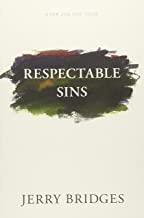
“Have we become so focused on ‘major’ sins that we’ve grown apathetic about our subtle sins? Renowned author Jerry Bridges takes you into a deep look at the corrosive patterns of behavior that we often accept as normal, in this established and impactful book. Practical, thought-provoking, and relevant at any stage of life, Respectable Sins addresses a dozen clusters of specific ‘acceptable’ sins that we tend to tolerate in ourselves, such as: jealousy, anger, judgementalism, selfishness, pride.

Writing from the trenches of his own battles with sin, Bridges offers a message of hope in the transforming grace of God to overcome our ‘respectable sins.’ Now with an added study guide for personal use or group discussion so you can dive deeper into this staple of Jerry Bridges’s classic collection.”

“Read this book―we need to―and be ready for a gentle surgeon’s sharp knife.” ―J. I. Packer, author and speaker

Providence by John Piper

“From Genesis to Revelation, the providence of God directs the entire course of redemptive history. Providence is ‘God’s purposeful sovereignty.’ Its extent reaches down to the flight of electrons, up to the movements of galaxies, and into the heart of man. Its nature is wise and just and good. And its goal is the Christ-exalting glorification of God through the gladness of a redeemed people in a new world.

Drawing on a lifetime of theological reflection, biblical study, and practical ministry, pastor and author John Piper leads us on a stunning tour of the sightings of God’s providence―from Genesis to Revelation―to discover the all-encompassing reality of God’s purposeful sovereignty over all of creation and all of history. Piper invites us to experience the profound effects of knowing the God of all-pervasive providence: the intensifying of true worship, the solidifying of wavering conviction, the strengthening of embattled faith, the toughening of joyful courage, and the advance of God’s mission in this world.”

Holiness by J.C. Ryle
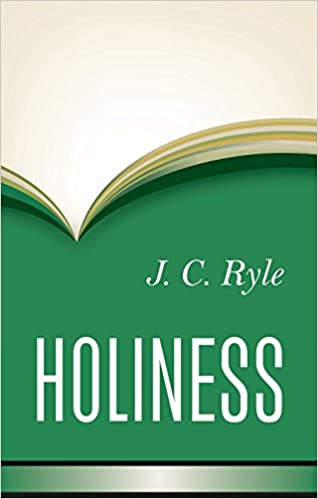
“‘Holiness: Its Nature, Hindrances, Difficulties, and Roots’ is perhaps J. C. Ryle’s best-known and, arguably, best-loved book. Although many things have changed since 1877, when this book was first published, one thing remains the same: ‘real practical holiness does not receive the attention it deserves.’

It was to remedy this attention deficit, and to counter false teaching on this most important subject, that Ryle took up his pen. The twenty-one chapters in this enlarged edition highlight: -The real nature of holiness -The temptations and difficulties which all must expect who pursue it -The life-transforming truth that union with Christ is the root of holiness -The immense encouragement Jesus Christ holds out to all who strive to be holy. Holiness, as with all of Ryle’s works, is clear and concise, penetrating and practical.”

Spurgeon the Pastor: Rediscovering a Biblical and Theological Vision for Ministry by Geoffrey Chang

“How would you get more than 5,000 people to show up at your church? Almost every pastor feels the pressure to get people in the doors. More people means more success, more stability, and more godly influence, right? Often, in their zeal for fruit and growth, pastors and church leaders adopt worldly mechanisms for church growth that end up undermining the very call God has given them.
 
Charles Spurgeon, the Prince of Preachers, was a pastor to well over 5,000 people in a day long before ‘mega-churches’ were the norm. But you might be surprised to know that Spurgeon’s vision for ministry was not pragmatic. He did not borrow ‘best practices’ from the business leaders of his day. Rather, his ministry vision was decidedly, staunchly biblical and theological in nature—and it was a ministry vision we ought to adopt more than a century later.
 
In Spurgeon the Pastor, Geoff Chang, director of the Spurgeon Library at Midwestern Seminary, shows how Spurgeon models a theological vision of ministry in preaching, baptism and the Lord’s supper, meaningful church membership, biblical church leadership, leadership development, and more. Don’t get caught up in worldly methods to pursue ministry growth. Follow the example of the Prince of Preachers, and entrust your ministry to the sovereignty of the Prince of Peace.”

Blessed: A History of the American Prosperity Gospel by Kate Bowler
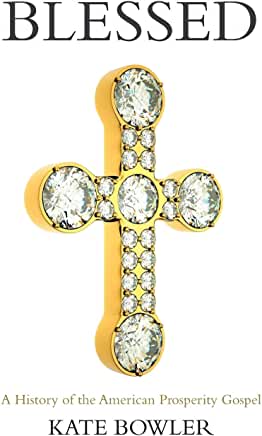
“How have millions of American Christians come to measure spiritual progress in terms of their financial status and physical well-being? How has the movement variously called Word of Faith, Health and Wealth, Name It and Claim It, or simply prosperity gospel come to dominate much of our contemporary religious landscape?

Kate Bowler’s Blessed is the first book to fully explore the origins, unifying themes, and major figures of a burgeoning movement that now claims millions of followers in America. Bowler traces the roots of the prosperity gospel: from the touring mesmerists, metaphysical sages, pentecostal healers, business oracles, and princely prophets of the early 20th century; through mid-century positive thinkers like Norman Vincent Peale and revivalists like Oral Roberts and Kenneth Hagin; to today’s hugely successful prosperity preachers.

Bowler focuses on such contemporary figures as Creflo Dollar, pastor of Atlanta’s 30,000-member World Changers Church International; Joel Osteen, known as ‘the smiling preacher,’ with a weekly audience of seven million; T. D. Jakes, named by Time magazine one of America’s most influential new religious leaders; Joyce Meyer, evangelist and women’s empowerment guru; and many others.

At almost any moment, day or night, the American public can tune in to these preachers-on TV, radio, podcasts, and in their megachurches-to hear the message that God desires to bless them with wealth and health. Bowler offers an interpretive framework for scholars and general readers alike to understand the diverse expressions of Christian abundance as a cohesive movement bound by shared understandings and common goals.”

George Whitefield: America’s Spiritual Founding Father by Thomas Kidd

Winner of Christianity Today’s 2016 Book Award for History/Biography: an engaging, balanced, and penetrating narrative biography of the charismatic eighteenth-century American evangelist George Whitefield

“The most authoritative yet readable book on the eighteenth century’s greatest preacher.”—Marvin Olasky, World Magazine

“Kidd’s theologically sympathetic approach gives the book a depth that a more detached treatment might not: He misses none of the biblical allusions that peppered Whitefield’s utterances, and he is an excellent guide through the tangled doctrinal controversies that dogged Whitefield’s career.”—Barton Swaim, Wall Street Journal

“In the years prior to the American Revolution, George Whitefield was the most famous man in the colonies. Thomas Kidd’s fascinating biography explores the extraordinary career of the most influential figure in the first generation of Anglo-American evangelical Christianity, examining his sometimes troubling stands on the pressing issues of the day, both secular and spiritual, and his relationships with such famous contemporaries as Benjamin Franklin, Jonathan Edwards, and John Wesley.
 
Based on the author’s comprehensive studies of Whitefield’s original sermons, journals, and letters, this excellent history chronicles the phenomenal rise of the trailblazer of the Great Awakening. Whitefield’s leadership role among the new evangelicals of the eighteenth century and his many religious disputes are meticulously covered, as are his major legacies and the permanent marks he left on evangelical Christian faith. It is arguably the most balanced biography to date of a controversial religious leader who, though relatively unknown three hundred years after his birth, was a true giant in his day and remains an important figure in America’s history.”

Called to Preach: Fulfilling the High Calling of Expository Preaching by Steven Lawson

“In every generation, the church stands in dire need of God-called people to preach the Word with precision and power. Preachers who will not replace sound theology with culturally palatable soundbites. Preachers who will clearly and faithfully share the gospel and inspire those in their churches to live godly lives.

Through in-depth biblical analysis and inspiring examples from church history, Steven J. Lawson paints a picture of God’s glory magnified through faithful preaching, reclaiming the high ground of biblical preaching for the next generation.

With helpful advice and practical guidance gleaned from 50 years in ministry, Lawson helps aspiring preachers know if they are called to preach; understand the qualifications for ministry; and develop, improve, and deliver strong expository sermons that illuminate the Word of God in a dark world.”

No Shortcut to Success: A Manifesto for Modern Missions by Matt Rhodes
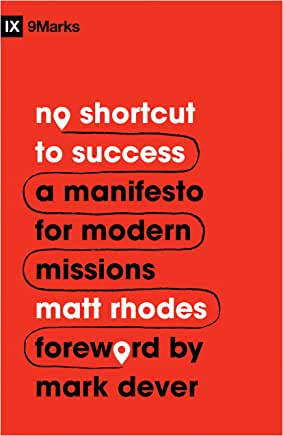
“Trendy new missions strategies are a dime a dozen, promising missionaries monumental results in record time. These strategies report explosive movements of people turning to Christ, but their claims are often dubious and they do little to ensure the health of believers or churches that remain. How can churches and missionaries address the urgent need to reach unreached people without falling for quick fixes?

In No Shortcut to Success, author and missionary Matt Rhodes implores Christians to stop chasing silver-bullet strategies and short-term missions, and instead embrace theologically robust and historically demonstrated methods of evangelism and discipleship―the same ones used by historic figures such as William Carey and Adoniram Judson. These great missionaries didn’t rush evangelism; they spent time studying Scripture, mastering foreign languages, and building long-term relationships. Rhodes explains that modern missionaries’ emphasis on minimal training and quick conversions can result in slipshod evangelism that harms the communities they intend to help. He also warns against underestimating the value of individual skill and effort―under the guise of ‘getting out of the Lord’s way’―and empowers Christians with practical, biblical steps to proactively engage unreached groups.”

The Path to Being a Pastor: A Guide to the Aspiring by Bobby Jamieson

“A man who’s been transformed by Christ and desires to preach the gospel might say he feels called to be a pastor.

This personal conviction, while heartfelt, doesn’t acknowledge important, challenging steps necessary to be a qualified leader. So where should full-time ministry begin?

In The Path to Being a Pastor, Bobby Jamieson explains why it’s better to emphasize “aspiration” over “calling” as men pursue the office of elder and encourages readers to make sure they are pastorally gifted before considering the role. He shares from his own eleven-year experience preparing to be a pastor by walking potential leaders through different stages of ministry training, from practical steps―such as cultivating godly ambition and leadership, observing healthy churches, and mastering Scripture―to personal advice on building a strong family and succeeding in seminary. Emphasizing the importance of prayer, godly counsel, and immersion in the local church, Jamieson encourages men to ask Am I qualified? instead of Am I called? when considering a life in ministry.”

Baptist in America: A History by Thomas Kidd

“The Puritans called Baptists ‘the troublers of churches in all places’ and hounded them out of Massachusetts Bay Colony. Four hundred years later, Baptists are the second-largest religious group in America, and their influence matches their numbers. They have built strong institutions, from megachurches to publishing houses to charities to mission organizations, and have firmly established themselves in the mainstream of American culture. Yet the historical legacy of outsider status lingers, and the inherently fractured nature of their faith makes Baptists ever wary of threats from within as well as without.

In Baptists in America, Thomas S. Kidd and Barry Hankins explore the long-running tensions between church, state, and culture that Baptists have shaped and navigated. Despite the moment of unity that their early persecution provided, their history has been marked by internal battles and schisms that were microcosms of national events, from the conflict over slavery that divided North from South to the conservative revolution of the 1970s and 80s. Baptists have made an indelible impact on American religious and cultural history, from their early insistence that America should have no established church to their place in the modern-day culture wars, where they frequently advocate greater religious involvement in politics. Yet the more mainstream they have become, the more they have been pressured to conform to the mainstream, a paradox that defines–and is essential to understanding–the Baptist experience in America.

Kidd and Hankins, both practicing Baptists, weave the threads of Baptist history alongside those of American history. Baptists in America is a remarkable story of how one religious denomination was transformed from persecuted minority into a leading actor on the national stage, with profound implications for American society and culture.”

Other Lists

Trevin Wax’s Favorite Reads

The Gospel Coalition 2022 Book Awards

2022 For the Church Book Awards

The 22 Top Biblical Counseling Books of 2022

I’ll update this blog as more pastors, theologians, and websites publish their favorite reads of 2022. Come back later in December if you’d like to discover more books.

Let’s Read!

Let me leave you with a quote from Charles Spurgeon:

“The man who never reads will never be read; he who never quotes will never be quoted. He who will not use the thoughts of other men’s brains, proves that he has no brains of his own. You need to read.”

Spurgeon’s Angelology: A Speculative Thought

Christians should have a healthy fascination with angels. These disembodied, spiritual beings are remarkable. They have extraordinary power and amazing intelligence. They are so radiant with the glory of God that godly men foolishly feel the need to bow down and worship them (Rev. 22:8-9). They appear all throughout the Bible, especially at major redemptive events. You will find them in the Garden of Eden, with the Patriarchs, with Moses, Joshua, and David, at Mount Sinai, all throughout the earthly ministry of the Lord Jesus Christ, in the Acts of the Apostles, and at the consummation of all things.

Spurgeon Speculated

However, within the Bible, we are not told all that we would like to know about angels. This has caused many people, even faithful students of the Bible, to speculate. And as I have read through some of Spurgeon’s sermons, it has become clear that Spurgeon was not immune to such speculation. My aim in this blog is to inform you of a particular speculative belief Spurgeon held regarding the ministry of angels. By the end of this blog, I think you will find Spurgeon’s thought fascinating and speculative, but not absurd and preposterous.

Angels Guard God’s Elect

In agreement with the Bible, Spurgeon believes that angels are “ministering spirits sent out to serve for the sake of those who are to inherit salvation” (Heb. 1:14). Angels rejoice over sinners that repent (Luke 15:7, 10). They “love us and bear us up in their hands lest we dash our feet against the stones.”[1] Spurgeon teaches that every Christian has a guardian angel “who flies about him, and holds the shield of God over his brow, keeps his foot lest he should dash it against a stone, guards him, controls him, manages him, injects thoughts into his mind, restrains his evil desires, and is the minister and servant of the Holy Ghost to keep him from sin, and lead him to righteousness.”[2] (Yes, there is some speculation in this quote as well, but our purpose is to talk about something else.)

Believers do not merely have a guardian angel, though. Spurgeon maintains that Christians have a company of angels always at their side. Indeed, if the Lord enabled us to peer into the invisible, spiritual realm where angels exist, we would see glorious cherubim walking before us.[3] From the time of our birth to the time of our death, God commissions his angels to serve and protect us.

This, however, leaves us with a question: How do angels serve us after we die? What do angels do when our spirits depart from our bodies? Sure, angels play an instrumental role at the second coming when they will separate the righteous from the unrighteous (Mt. 13:49). But what do angels do while we are absent from our bodies and spiritually present with the Lord? Do angels cease serving us until the resurrection of the just? Though most of us have not considered these questions, Spurgeon certainly did. And because Spurgeon gave thought to these questions, it led him to speculate.

Spurgeon’s Speculation: Angels Guard the Bones of the Saints

There is an ambiguous verse in the book of Jude that says, “But when the archangel Michael, contending with the devil, was disputing about the body of Moses, he did not presume to pronounce a blasphemous judgment, but said, ‘The Lord rebuke you’” (Jude 9). Spurgeon is not sure what this verse ultimately means. He does, however, notice the obvious; that the archangel Michael contended with the devil over the dead body of Moses. From this, he speculates that angels watch over the dead bodies of all the saints:

Now, this refers to the great doctrine of angels watching over the bones of the saints. Certainly, it tells us that the body of Moses was watched over by a great archangel; the devil thought to disturb that body, but Michael contended with him about it. . . From this we learn that an angel watches over every tomb.[4]

 . . . if believers die as poor as Lazarus, and as sick and as despised as he, angels shall convey their souls into the bosom of their Lord, and their bodies, too, shall be watched by guardian spirits, as surely as Michael kept the body of Moses and contended for it with the foe. Angels are both the servitors of living saints and the custodians of their dust.[5]

God has set his angels to watch over them, as he set Michael to watch over the body of Moses. . .[6]

Why Did Spurgeon Believe This?

I do not know all that went through Spurgeon’s mind as he thought through this, but from what I do know, it seems like the importance of the physical body inclined him to embrace the idea that angels guard the bones of God’s elect:

Now would there be a contention about that body if it had been of no value? Would Michael contend for that which was only to be the food of worms? Would he wrestle with the enemy for that which was to be scattered to the four winds of heaven, never to be united again into a new and goodlier fabric? No; assuredly not.[7]

There are cherubs with outstretched wings over the head of the grave-stones of all the righteous. . . in some nook o’ergrown by nettles, there an angel standeth night and day to watch each bone and guard each atom, that at the resurrection those bodies, with more glory than they had on earth, may start up to dwell for ever with the Lord.[8]

God has set his angels to watch over them, as he set Michael to watch over the body of Moses. . .Remember, then, and doubt not that the very body in which you sinned shall be the very body in which you shall suffer in hell; and the body in which you believe in Christ, and in which you yield yourselves to God, shall be the very body in which you shall walk the golden streets, and in which you shall praise the name of God for ever and ever.[9]

Unlike many Christians today, Spurgeon has a healthy view of the human body. He is fully aware that, even after death, God is not done with our bodies. When Christians are spiritually present with the Lord, God is not done redeeming them. “When our Lord Jesus died he did not redeem one half of man,” Spurgeon says, “but the whole man, and he means not to leave any part of the purchased possession in the enemy’s hands.”[10] In other words, Christ did not merely purchase the redemption of our spirits, he purchased the redemption of both our spirits and our bodies. Christ did not rise out of the grave so that our physical bodies would remain in their graves. No. He rose out the grave to guarantee that our physical bodies will one day rise as well. God fully intends to finish our salvation process by reuniting our spirits with glorious resurrection bodies. It seems like these—the value of human body, God’s intention to raise it from the dead, and the full redemption of man—are the impetus behind Spurgeon’s belief that angels are guardians and protectors of our bones.

Speculative but Not Preposterous

I mentioned at the beginning of this blog that you would find Spurgeon’s thought fascinating and speculative, but not absurd and preposterous. As for what has been said so far, you probably only think Spurgeon’s thought—angels watching over the bones of the saints—is fascinating and speculative. So let me try to convince you that this is not as absurd as it seems.

First, if the consummation of our redemption is the resurrection of our bodies, then even after we die, we are still not done being saved. Even though we will be spiritually present with the Lord of glory, we will still be waiting for the culmination of our salvation—the moment where our spirits are reunited with imperishable resurrection bodies that are raised up in glory, honor, and power. Therefore, even after we die, we are waiting for another phase of our redemption, a phase of redemption that is very much tied to a physical body on this earth were Satan and his demons continue to prowl around.

Second, until Satan and his demons are finally “thrown into the lake of fire and sulfur” where “they will be tormented day and night forever and ever,” they remain actively opposed to all that God is doing (Rev. 20:10). This is especially true when it comes to all that God is doing in the lives of His people. So, if God the Father has ordained that the consummation of our redemption is the resurrection of our bodies rather than our physical deaths, what leads us to believe that Satan and his minions will cease actively opposing us after we die? The devil, our accuser, may still believe that he can make accusations against us. He may argue that our physical bodies are his rightful possession because we’ve sinned in a myriad of ways. In other words, since God is not done saving us until the day He resurrects our physical bodies from the dead, Satan and his subordinates may see each day as a legitimate opportunity to try and thwart God’s ultimate plan and purpose for our physical bodies.

Third, it is evident from the Bible that angels are “ministering spirits sent out to serve for the sake of those who are to inherit salvation” (Hebrews 1:14). As I have already mentioned, we ultimately come into full possession of our salvation inheritance on the day the Lord Jesus Christ resurrects our physical bodies from the grave. Why should it be considered implausible that God would assign angelic beings to guard our dead, physical bodies until Christ returns to give us our full inheritance?

And finally, you have the account from Jude: “But when the archangel Michael, contending with the devil, was disputing about the body of Moses, he did not presume to pronounce a blasphemous judgment, but said, ‘The Lord rebuke you’” (Jude 9). This verse is difficult to understand, but Spurgeon’s observation is legitimate; the devil certainly takes an interest in the dead body of Moses and disputes with the archangel Michael about it. This is either a one-off event where an angelic being guards the dead body of one of God’s servants, or it is an event in redemptive history that gives us an idea of angelic activity at all our graves.

I do not think any of these reasons provide an airtight argument for angels watching over the bones of the saints. I just think these reasons make Spurgeon’s speculation a little more reasonable and plausible. To put it another way, I do not think Spurgeon is completely bonkers.

What Do I Think?

I have no idea. I love Spurgeon’s emphasis on the ministry of angels, the importance of our physical bodies, and Christ’s intent to redeem the whole man. Nevertheless, I need Spurgeon to give me more Bible verses. As a rule of thumb, I think it is wise to memorize two of the best Bible verses that substantiate each biblical doctrine you affirm. When it comes to angels watching over the bones of the saints, it seems like Spurgeon only had one ambiguous verse. It will take more than that to convince me. Let me reiterate, though, I do not think Spurgeon’s speculative thought is preposterous. He may be right.


[1] C.H. Spurgeon, “Another and a Nobler Exhibition,” in The Metropolitan Tabernacle Pulpit Sermons, vol. 8 (London: Passmore & Alabaster, 1862), 263.

[2] C.H. Spurgeon, “God’s Providence,” in The Metropolitan Tabernacle Pulpit Sermons, vol. 54 (London: Passmore & Alabaster, 1908), 495-496.

[3] C.H. Spurgeon, “The Kingly Priesthood of the Saints,” in The New Park Street Sermons, vol. 1 (London: Passmore & Alabaster, 1855), 72-73.

[4] C. H. Spurgeon, “The Resurrection of the Dead,” in The New Park Street Pulpit Sermons, vol. 2 (London: Passmore & Albaster, 1856), 100.

[5] C. H. Spurgeon, “The Lord is Risen Indeed,” in The Metropolitan Tabernacle Pulpit Sermons, vol. 19 ((London: Passmore & Albaster, 1873), 207.

[6] C. H. Spurgeon, “Resurgam,” in The New Park Street Pulpit Sermons, vol. 6 (London: Passmore & Albaster, 1860), 159-160.

[7] C. H. Spurgeon, “The Resurrection of the Dead,” in The New Park Street Pulpit Sermons, vol. 2 (London: Passmore & Albaster, 1856), 100.

[8] Ibid.

[9] C. H. Spurgeon, “Resurgam,” in The New Park Street Pulpit Sermons, vol. 6 (London: Passmore & Albaster, 1860), 159-160.

[10] C. H. Spurgeon, “The Believer in the Body and out of the Body,” in The Metropolitan Tabernacle Pulpit Sermons, vol. 22 (London, Passmore & Alabaster, 1876), 392.

An Untimely Use of a Spurgeon Story

If you know me, then you know that I can weave C.H. Spurgeon quotes or stories into just about any conversation I’m in—yes, this may be why it’s hard for me to make friends! And my goal in this blog is to amuse you with a story of how I used an account from Spurgeon’s life at the end of an interview I had at First Baptist Church Durham in Durham, North Carolina. So, this is basically a biographical blurb I wanted to put into a brief blog for the entertainment of those bored enough to read it.

A Phone Call from Andy Davis

On Monday, July 18, 2016, I received a phone call from Andy Davis, the Senior Pastor of FBC Durham. I had been attending FBC Durham for about eighteen months, and even though I had been sitting under Andy Davis’ preaching and teaching during this time, I was not accustomed to receiving phone calls from him. At this point in my life, I viewed Andy as an incredibly gifted preacher, a great author, a church historian, a seminary professor, and one of the last Puritans,[1] not someone that typically showed up in my recent calls list.

A Ministry Opportunity

As I talked to Andy on the phone, he began to inform me of a ministry opportunity. The former College Director of FBC Durham left to plant a church in Winston Salem, North Carolina. For months, the elders of FBC Durham sought to replace this guy—you can’t replace this guy; he was, and still is, an incredibly gifted servant of the Lord. The elders interviewed numerous candidates that had turned in their resumes. For various reasons, none of these candidates worked out.

Me? You’re Kidding, Right?

Before long, some of the lay-elders and staff members at FBC Durham began to mention my name as a potential candidate for the position.[2] And let me just make this clear; this was not because I put a resume in. I wrote in my journal: “I would never have put my resume in for this position because I know how unqualified I am for such a service.” At this point in my life, I was twenty-four years old, I hadn’t finished my Master of Divinity degree, and I had no college ministry experience. I practically had no ministry experience outside of teaching Sunday School classes and occasionally preaching for small, rural Southern Baptist churches. 

Seriously, from the time I was eighteen to the time I was twenty-four, I spent way more time operating a weed-eater than doing ministry. I even mentioned this in my journal: “I know that I am terribly insufficient for a role such as this. It is hard for me to see myself doing anything other than weed-eating and preaching a few times a year.”[3] In other words, I was completely unprepared for Andy’s phone call. This ministry position wasn’t even on my radar.

Apparently, though, my lack of knowledge and experience didn’t mean much to Andy and the staff. They saw certain aspects of my life that gave them sufficient reasons to interview me for the College Director position. And even though I was slightly baffled by the phone call, I agreed to come in for the interview.

An Interview with an Awkward Ending

Later that night, I found myself in Andy’s study being interviewed by a few of the staff elders.[4] A few of the elders asked me numerous questions related to doctrine, personal holiness, and college ministry. I was intimidated and nervous, but the Lord graciously allowed me to answer the questions honestly and adequately. Then Andy Davis asked me, “Well, what do you think about all this? What’s going on in your mind?” To which I responded, “I feel like a young Charles Spurgeon.”

Everyone, especially Andy Davis, looked puzzled. You see, what Babe Ruth is to the history of baseball, Charles Spurgeon is to Baptist history. Babe Ruth is the “Sultan of Swat” and C.H. Spurgeon is the “Prince of Preachers.” Babe Ruth is the “Behemoth of Bust” and C.H. Spurgeon is the Baptist Behemoth. Spurgeon is regarded as one of the most gifted preachers in all of church history. Even the greatest preachers of our day regard Spurgeon as a preaching prodigy. If there was a Mount Rushmore for preachers, Spurgeon would, by overwhelming agreement, be found on it. 

So, why in the world was I, at twenty-four years old with practically no ministry experience or extraordinary gifting, feeling like a young Charles Spurgeon? The fact that I put my name alongside Spurgeon’s name seemed like the height of arrogance. If there was such a thing as Baptist blasphemy, I had committed it. Everybody that heard it grimaced.

Well, what happened? Andy Davis did what he always does, he asked a question to give me the opportunity to clarify myself. He asked, “What do you mean?”

An Account of the Young Charles Spurgeon

As a young Spurgeon enthusiast, I knew this was my chance to salvage my job opportunity, so I quickly began to explain myself. You see, Charles Spurgeon came to faith in Christ on January 6, 1850. He was only fifteen years old when the Lord saved him. A little over a year later, Spurgeon was called to fill the pulpit of a small Baptist Church in Waterbeach. Though Spurgeon was only sixteen years old, he was already a preaching prodigy. When the good Christian folks of Waterbeach recognized this, they quickly called him to be their pastor–the Church had forty members when Spurgeon became their minister at the age of seventeen.

Spurgeon was such a phenomenon that the church at Waterbeach began to grow exponentially. And because of his consistent emphasis on the glorious gospel of Jesus Christ, the Spirit of God brought about a miraculous change to the entire village. By 1852, the Baptist Church “at Waterbeach was not only full, but crowded with outside listeners at the open windows.” Due to Spurgeon’s giftedness and the Baptist Church’s quick growth, the people of Waterbeach began to fear the very thing that most small Baptist Church’s fear; they feared a larger church was going to take away their beloved pastor.[5]

Sadly, for the faithful sheep of Waterbeach, this fear became a reality. “On the last Sabbath morning in November, 1853, I walked,” Spurgeon said, “according to my wont, from Cambridge to the village of Waterbeach, in order to occupy the pulpit of the little Baptist Chapel.” He was overwhelmed and excited about his “pulpit exercises.” In other words, he was extremely excited to herald the gospel all Sabbath Day long.

Just as he sat down, though, “a letter bearing the postmark of London” was passed to him. “It contained an invitation to preach at New Park Street Chapel, Southward, the pulpit of which had formerly been occupied by Dr. Rippon.” With that, one of the most prominent and reputable Baptist Churches in one of the most well-known cities in all of England asked him to come fill their pulpit—Spurgeon was nineteen when he received this invitation. So, what was Spurgeon’s response? What went through his mind when he read this letter?

Well, Spurgeon recounts: “I quietly passed the letter across the table to the deacon. . . , observing that there was some mistake, and that the letter must have been intended for a Mr. Spurgeon who preached somewhere down in Norfolk.”[6] To put it another way, Spurgeon responded saying, “You have the wrong Spurgeon!” He was in disbelief that the New Park Street Chapel would extend an invitation for him to fill the pulpit. He thought they sent this invitation to the wrong guy.

Back to My Interview

So, when I told Andy and the rest of the staff that I felt like a young Charles Spurgeon, I wasn’t implying that I was extraordinarily gifted. Nor was I saying that, like the young Charles Spurgeon, my ministerial future was incredibly bright, that future fame awaited me.

Rather, I was trying to tell FBC Durham: “I think you guys have made a mistake. You have the wrong guy! You have the wrong Philip McDuffie.” I wanted them to know that, just as the young Spurgeon was in disbelief that the New Park Street Chapel would reach out to him to fill their pulpit, I was in disbelief that FBC Durham would interview me for the College Director position—a full-time ministry position alongside an incredibly gifted staff in a very healthy church.[7]

At this, they no longer grimaced uncomfortably in my presence. Sure, they probably thought it was an odd time to weave a Spurgeon story into the conversation. It was perhaps the strangest way someone has ever ended an interview. But I can tell you this, shortly after the interview, they graciously offered me the position. Perhaps the unexpected Spurgeon story got me the position. Probably not. . . but maybe!


[1] I’m joking about Andy Davis being “one of the last Puritans.” But I did, and still do, have a ton of respect for Andy Davis. If you’re unfamiliar with who Andy Davis is, then you should check out TwoJourneys.org. His teaching and preaching ministry will bless you tremendously.

[2] This is a shout out to Kevin Schaub. Unbeknownst to me, Kevin was recommending me to the other elders.

[3] This comment sounds kind of sad now that I’m thinking about it. I guess you could have regarded me as a young man with relatively modest ambitions!

[4] Yes, they made me interview the same day I received the phone call. 

[5] C.H. Spurgeon, The Early Years (London: Banner of Truth Trust, 1962), 245-246.

[6] C.H. Spurgeon, The Early Years, 246.

[7] I know a College Director position doesn’t seem like a huge deal, but it was a big deal to me at this point in my life. This was my first-time interviewing for a ministerial position within a local church. I was nervous, felt woefully inadequate, and lost sleep thinking about this position.

Preach, Teach, and Talk about Christ!

For me, reading C.H. Spurgeon is like hiking up a mountain on a beautiful fall day and taking a breath of that fresh mountain air. His writings invigorate me. They stir my emotions and have a deep impact on my affections. The reason for this is because Spurgeon was so Christocentric.

With almost every sentence, you are learning something about Jesus. He was always striving to place Christ before the eyes of his hearers and readers. Everything was centered upon the person of Jesus. When it came to the law, he focused on how the law was to drive us to Christ. When it came to morality, he focused on how we are to live a life worthy of the gospel of Jesus Christ. When it came to prophesy, he focused on how Christ fulfilled it. Christ! Christ! Christ! was the theme of the Prince of Preachers. This was true at the beginning of his ministry as well as the end of his ministry.

In his first sermon at the Metropolitan Tabernacle Spurgeon said, “I would propose that the subject of the ministry of this house, as long as this platform shall stand, and as long as this house shall be frequented by worshippers, shall be the person of Jesus Christ.” Then, thirty years later, these are Spurgeons last words from the Metropolitan Tabernacle pulpit:

It is heaven to serve Jesus. I am a recruiting sergeant, and I would fain find a few recruits at this moment. Every man must serve somebody: we have no choice as to that fact. Those who have no master are slaves to themselves. Depend upon it, you will either serve Satan or Christ, either self or the Saviour. You will find sin, self, Satan, and the world to be hard masters; but if you wear the livery of Christ, you will find him so meek and lowly of heart that you will find rest unto your souls. He is the most magnanimous of captains. There never was his like among the choicest of princes. He is always to be found in the thickets part of the battle. When the wind blows cold he always takes the bleak side of the hill. The heaviest end of the cross lies ever on his shoulders. If he bids us carry a burden, he carries it also. If there is anything that is gracious, generous, kind, and tender, yea lavish and superabundant in love, you always find it in him. These forty years and more have I served him, blessed be his name! and I have had nothing but love from him. I would be glad to continue yet another forty years in the same dear service here below if so it pleased him. His service is life, peace, joy. Oh, that you would enter on it at once! God help you to enlist under the banner of Jesus even this day! Amen.

This Christocentric approach is also what he wanted other preachers to have. He wanted others to unashamedly lift up Jesus Christ in every part of their ministry. And seeing as how there is a lack of Christ centered teaching and preaching today, I think we need to hear the words of this 19th century English Baptist pastor again. Here are some examples of how Spurgeon would encourage others to preach Christ:

I would never preach a sermon – the Lord forgive me if I do – which is not full to overflowing with my Master. I know one who said I was always on the old string, and he would come and hear me no more; but if I preached a sermon without Christ in it, he would come. Ah! he will never come while this tongue moves, for a sermon without Christ in it – a Christless sermon! A brook without water; a cloud without rain; a well which mocks the traveller; a tree twice dead, plucked up by the root; a sky without a sun; a night without a star. It were a realm of death – a place of mourning for angels and laughter for devils.

Leave Christ out? O my brethren, better leave the pulpit out altogether. If a man can preach one sermon without mentioning Christ’s name in it, it ought to be his last, certainly the last that any Christian ought to go hear him preach.

That sermon which does not lead to Christ, or of which Jesus Christ is not the top and the bottom, is the sort of sermon that will make the devils in hell to laugh, but might make the angels of God to weep.

The Spirit of God bears no witness to Christless sermons. Leave Jesus out of your preaching, and the Holy Spirit will never come upon you. Why should he? Has he not come on purpose that he may testify of Christ? Did not Jesus say, “He shall glorify me: for he shall receive of mine, and shall shew it unto you”? Yes, the subject was Christ, and nothing but Christ, and such is the teaching which the Spirit of God will own.

You do not really preach the gospel if you leave Christ out; if he be omitted, it is not the gospel. You may invite men to listen to your message, but you are only inviting them to gaze upon an empty table unless Christ is the very centre and the substance of all that you set before them.

The motto of all true servants of God must be, “We preach Christ, and him crucified.” A sermon without Christ in it is like a loaf of bread without any flour in it. No Christ in your sermon, sir? Then go home, and never preach again until you have something worth preaching.

The best way to preach sinners to Christ is to preach Christ to sinners.

Yes, it is Christ, Christ, Christ whom we have to preach; and if we leave him out, we leave out the very soul of the gospel. Christless sermons make merriment for hell. Christless preachers, Christless Sunday-school teachers, Christless class-leaders, Christless tract-distributors – what are all these doing? They are simply setting the mill to grind without putting any grist into the hopper, so all their labour is in vain. If you leave Jesus Christ out, you are simply beating the air, or going to war without any weapon with which you can smite the foe.

Of all I would wish to say this is the sum; my brethren, preach CHRIST, always and evermore. He is the whole gospel. His person, offices, and work must be our one great, all-comprehending theme. The world needs still to be told of its Saviour, and of the way to reach him.

It has been over a hundred years since Spurgeon said all of these things. Though this may lead some of us to think these are time-bound statements, they are in fact timeless statements. The chief objective of every preacher and teacher should be to preach Jesus Christ in all of his glory. He is a most rare jewel that must be looked at and pondered from every precious facet. The apostles understood this, and so did every faithful preacher and teacher throughout all of church history. We would do well to imitate them.