Technology is in its proper place when it helps us bond with the real people we have been given to love. It’s out of its proper place when we end up bonding with people at a distance, like celebrities, whom we will never meet.
Technology is in its proper place when it starts great conversations. It’s out of its proper place when it prevents us from talking with and listening to one another.
Technology is in its proper place when it helps us take care of the fragile bodies we inhabit. It’s out of its proper place when it promises to help us escape the limits and vulnerabilities of those bodies together.
Technology is in its proper place when it helps us acquire skill and mastery of domains that are the glory of human culture (sports, music, the arts, cooking, writing, accounting; the list could go on and on). When we let technology replace the development of skill with passive consumption, something has gone wrong.
Technology is in its proper place when it helps us cultivate awe for the created world we are part of and responsible for stewarding. . . It’s out of its proper place when it keeps us from engaging the wild and wonderful natural world with all our senses.
Technology is in its proper place only when we use it with intention and care. If there’s one thing I’ve discovered about technology, it’s that it doesn’t stay in its proper place on its own; much like my children’s toys and stuffed creatures and minor treasures, it finds its way underfoot all over the house and all over our lives. If we aren’t intentional and careful, we’ll end up with a quite extraordinary mess.
I love when well-known Christian pastors, theologians, and websites begin posting their favorite reads of the year. Many of these books eventually end up on my shelf or in my hands.
In this blog, I’ll post my ten favorite reads of 2022 (in no particular order), and then I’ll post a link to other people’s favorite reads. My list will include books published in various years (the book descriptions are from Amazon). Other people’s lists will usually pertain to books published in 2022.
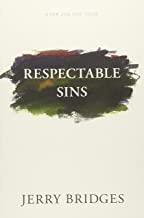
“Have we become so focused on ‘major’ sins that we’ve grown apathetic about our subtle sins? Renowned author Jerry Bridges takes you into a deep look at the corrosive patterns of behavior that we often accept as normal, in this established and impactful book. Practical, thought-provoking, and relevant at any stage of life, Respectable Sins addresses a dozen clusters of specific ‘acceptable’ sins that we tend to tolerate in ourselves, such as: jealousy, anger, judgementalism, selfishness, pride.
Writing from the trenches of his own battles with sin, Bridges offers a message of hope in the transforming grace of God to overcome our ‘respectable sins.’ Now with an added study guide for personal use or group discussion so you can dive deeper into this staple of Jerry Bridges’s classic collection.”
“Read this book―we need to―and be ready for a gentle surgeon’s sharp knife.” ―J. I. Packer, author and speaker
“From Genesis to Revelation, the providence of God directs the entire course of redemptive history. Providence is ‘God’s purposeful sovereignty.’ Its extent reaches down to the flight of electrons, up to the movements of galaxies, and into the heart of man. Its nature is wise and just and good. And its goal is the Christ-exalting glorification of God through the gladness of a redeemed people in a new world.
Drawing on a lifetime of theological reflection, biblical study, and practical ministry, pastor and author John Piper leads us on a stunning tour of the sightings of God’s providence―from Genesis to Revelation―to discover the all-encompassing reality of God’s purposeful sovereignty over all of creation and all of history. Piper invites us to experience the profound effects of knowing the God of all-pervasive providence: the intensifying of true worship, the solidifying of wavering conviction, the strengthening of embattled faith, the toughening of joyful courage, and the advance of God’s mission in this world.”
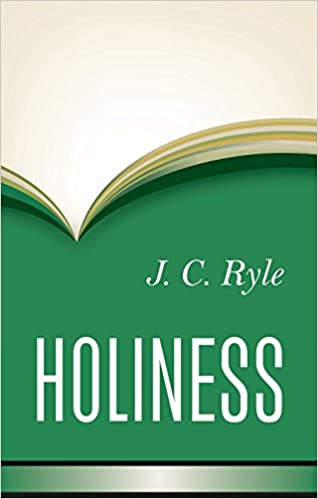
“‘Holiness: Its Nature, Hindrances, Difficulties, and Roots’ is perhaps J. C. Ryle’s best-known and, arguably, best-loved book. Although many things have changed since 1877, when this book was first published, one thing remains the same: ‘real practical holiness does not receive the attention it deserves.’
It was to remedy this attention deficit, and to counter false teaching on this most important subject, that Ryle took up his pen. The twenty-one chapters in this enlarged edition highlight: -The real nature of holiness -The temptations and difficulties which all must expect who pursue it -The life-transforming truth that union with Christ is the root of holiness -The immense encouragement Jesus Christ holds out to all who strive to be holy. Holiness, as with all of Ryle’s works, is clear and concise, penetrating and practical.”
“How would you get more than 5,000 people to show up at your church? Almost every pastor feels the pressure to get people in the doors. More people means more success, more stability, and more godly influence, right? Often, in their zeal for fruit and growth, pastors and church leaders adopt worldly mechanisms for church growth that end up undermining the very call God has given them.
Charles Spurgeon, the Prince of Preachers, was a pastor to well over 5,000 people in a day long before ‘mega-churches’ were the norm. But you might be surprised to know that Spurgeon’s vision for ministry was not pragmatic. He did not borrow ‘best practices’ from the business leaders of his day. Rather, his ministry vision was decidedly, staunchly biblical and theological in nature—and it was a ministry vision we ought to adopt more than a century later.
In Spurgeon the Pastor, Geoff Chang, director of the Spurgeon Library at Midwestern Seminary, shows how Spurgeon models a theological vision of ministry in preaching, baptism and the Lord’s supper, meaningful church membership, biblical church leadership, leadership development, and more. Don’t get caught up in worldly methods to pursue ministry growth. Follow the example of the Prince of Preachers, and entrust your ministry to the sovereignty of the Prince of Peace.”
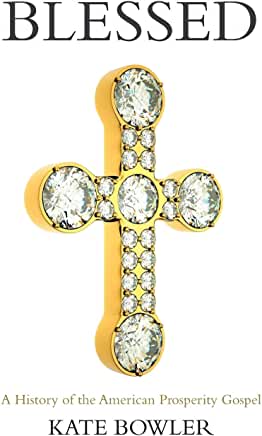
“How have millions of American Christians come to measure spiritual progress in terms of their financial status and physical well-being? How has the movement variously called Word of Faith, Health and Wealth, Name It and Claim It, or simply prosperity gospel come to dominate much of our contemporary religious landscape?
Kate Bowler’s Blessed is the first book to fully explore the origins, unifying themes, and major figures of a burgeoning movement that now claims millions of followers in America. Bowler traces the roots of the prosperity gospel: from the touring mesmerists, metaphysical sages, pentecostal healers, business oracles, and princely prophets of the early 20th century; through mid-century positive thinkers like Norman Vincent Peale and revivalists like Oral Roberts and Kenneth Hagin; to today’s hugely successful prosperity preachers.
Bowler focuses on such contemporary figures as Creflo Dollar, pastor of Atlanta’s 30,000-member World Changers Church International; Joel Osteen, known as ‘the smiling preacher,’ with a weekly audience of seven million; T. D. Jakes, named by Time magazine one of America’s most influential new religious leaders; Joyce Meyer, evangelist and women’s empowerment guru; and many others.
At almost any moment, day or night, the American public can tune in to these preachers-on TV, radio, podcasts, and in their megachurches-to hear the message that God desires to bless them with wealth and health. Bowler offers an interpretive framework for scholars and general readers alike to understand the diverse expressions of Christian abundance as a cohesive movement bound by shared understandings and common goals.”
Winner of Christianity Today’s 2016 Book Award for History/Biography: an engaging, balanced, and penetrating narrative biography of the charismatic eighteenth-century American evangelist George Whitefield
“The most authoritative yet readable book on the eighteenth century’s greatest preacher.”—Marvin Olasky, World Magazine
“Kidd’s theologically sympathetic approach gives the book a depth that a more detached treatment might not: He misses none of the biblical allusions that peppered Whitefield’s utterances, and he is an excellent guide through the tangled doctrinal controversies that dogged Whitefield’s career.”—Barton Swaim, Wall Street Journal
“In the years prior to the American Revolution, George Whitefield was the most famous man in the colonies. Thomas Kidd’s fascinating biography explores the extraordinary career of the most influential figure in the first generation of Anglo-American evangelical Christianity, examining his sometimes troubling stands on the pressing issues of the day, both secular and spiritual, and his relationships with such famous contemporaries as Benjamin Franklin, Jonathan Edwards, and John Wesley.
Based on the author’s comprehensive studies of Whitefield’s original sermons, journals, and letters, this excellent history chronicles the phenomenal rise of the trailblazer of the Great Awakening. Whitefield’s leadership role among the new evangelicals of the eighteenth century and his many religious disputes are meticulously covered, as are his major legacies and the permanent marks he left on evangelical Christian faith. It is arguably the most balanced biography to date of a controversial religious leader who, though relatively unknown three hundred years after his birth, was a true giant in his day and remains an important figure in America’s history.”
“In every generation, the church stands in dire need of God-called people to preach the Word with precision and power. Preachers who will not replace sound theology with culturally palatable soundbites. Preachers who will clearly and faithfully share the gospel and inspire those in their churches to live godly lives.
Through in-depth biblical analysis and inspiring examples from church history, Steven J. Lawson paints a picture of God’s glory magnified through faithful preaching, reclaiming the high ground of biblical preaching for the next generation.
With helpful advice and practical guidance gleaned from 50 years in ministry, Lawson helps aspiring preachers know if they are called to preach; understand the qualifications for ministry; and develop, improve, and deliver strong expository sermons that illuminate the Word of God in a dark world.”
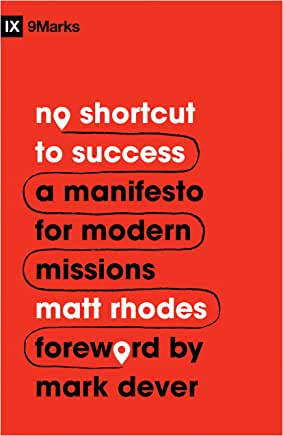
“Trendy new missions strategies are a dime a dozen, promising missionaries monumental results in record time. These strategies report explosive movements of people turning to Christ, but their claims are often dubious and they do little to ensure the health of believers or churches that remain. How can churches and missionaries address the urgent need to reach unreached people without falling for quick fixes?
In No Shortcut to Success, author and missionary Matt Rhodes implores Christians to stop chasing silver-bullet strategies and short-term missions, and instead embrace theologically robust and historically demonstrated methods of evangelism and discipleship―the same ones used by historic figures such as William Carey and Adoniram Judson. These great missionaries didn’t rush evangelism; they spent time studying Scripture, mastering foreign languages, and building long-term relationships. Rhodes explains that modern missionaries’ emphasis on minimal training and quick conversions can result in slipshod evangelism that harms the communities they intend to help. He also warns against underestimating the value of individual skill and effort―under the guise of ‘getting out of the Lord’s way’―and empowers Christians with practical, biblical steps to proactively engage unreached groups.”
“A man who’s been transformed by Christ and desires to preach the gospel might say he feels called to be a pastor.
This personal conviction, while heartfelt, doesn’t acknowledge important, challenging steps necessary to be a qualified leader. So where should full-time ministry begin?
In The Path to Being a Pastor, Bobby Jamieson explains why it’s better to emphasize “aspiration” over “calling” as men pursue the office of elder and encourages readers to make sure they are pastorally gifted before considering the role. He shares from his own eleven-year experience preparing to be a pastor by walking potential leaders through different stages of ministry training, from practical steps―such as cultivating godly ambition and leadership, observing healthy churches, and mastering Scripture―to personal advice on building a strong family and succeeding in seminary. Emphasizing the importance of prayer, godly counsel, and immersion in the local church, Jamieson encourages men to ask Am I qualified? instead of Am I called? when considering a life in ministry.”
“The Puritans called Baptists ‘the troublers of churches in all places’ and hounded them out of Massachusetts Bay Colony. Four hundred years later, Baptists are the second-largest religious group in America, and their influence matches their numbers. They have built strong institutions, from megachurches to publishing houses to charities to mission organizations, and have firmly established themselves in the mainstream of American culture. Yet the historical legacy of outsider status lingers, and the inherently fractured nature of their faith makes Baptists ever wary of threats from within as well as without.
In Baptists in America, Thomas S. Kidd and Barry Hankins explore the long-running tensions between church, state, and culture that Baptists have shaped and navigated. Despite the moment of unity that their early persecution provided, their history has been marked by internal battles and schisms that were microcosms of national events, from the conflict over slavery that divided North from South to the conservative revolution of the 1970s and 80s. Baptists have made an indelible impact on American religious and cultural history, from their early insistence that America should have no established church to their place in the modern-day culture wars, where they frequently advocate greater religious involvement in politics. Yet the more mainstream they have become, the more they have been pressured to conform to the mainstream, a paradox that defines–and is essential to understanding–the Baptist experience in America.
Kidd and Hankins, both practicing Baptists, weave the threads of Baptist history alongside those of American history. Baptists in America is a remarkable story of how one religious denomination was transformed from persecuted minority into a leading actor on the national stage, with profound implications for American society and culture.”
I’ll update this blog as more pastors, theologians, and websites publish their favorite reads of 2022. Come back later in December if you’d like to discover more books.
Let’s Read!
Let me leave you with a quote from Charles Spurgeon:
“The man who never reads will never be read; he who never quotes will never be quoted. He who will not use the thoughts of other men’s brains, proves that he has no brains of his own. You need to read.”
Have you ever met a fellow Christian that showed an indefatigable zeal in their pursuit of church membership? I didn’t think so. However, if you had lived near a teenage boy named C.H. Spurgeon in the 19th century, you may have answered that question differently. Because, if you had run across this young boy named Spurgeon, you would have witnessed a freshly converted Christian that was tireless in his pursuit of membership within a local church.
After Spurgeon was born again, he desired to become a member of a local church. When he reached out to the minister, though, he never received a reply. Spurgeon sought to contact the lackadaisical minister three to four more times, still to no avail. So, Spurgeon reached out again. This time he informed the minister that, as a follower of Christ, he had done his Christian duty. If the minister continued to ignore him, Spurgeon vouched to call a church meeting himself where he would notify the church that he had believed in Christ and then ask if they would receive him as a member. As you can see, Spurgeon, even at a young age, saw it as his Christian duty and privilege to be a healthy member of a local church.[1]
In the same sermon that Spurgeon recounted this somewhat humorous story—I don’t know if Spurgeon intended for it to be humorous, but I couldn’t help but laugh as I read the account—he addressed certain excuses that kept many Christians from pursuing membership within a local church. And though this sermon was preached in the 1800s, we hear the same excuses today. With that said, in the remainder of this blog, you’ll discover how Spurgeon addressed these apparently timeless excuses with wisdom and boldness.
Excuse #1: I do not need to join a church “because I can be a Christian without it.”
Now, are you quite clear about that? You can be as good a Christian by disobedience to your Lord’s commands as by being obedient? Well, suppose everybody else did the same, suppose all Christians in the world said, “I shall not join the Church.” Why there would be no visible Church, there would be no ordinances. That would be a very bad thing, and yet, one doing it—what is right for one is right for all—why should not all of us do it? Then you believe that if you were to do an act which has a tendency to destroy the visible Church of God, you would be as good a Christian as if you did your best to build up that Church? I do not believe it, sir! nor do you either. You have not any such a belief; it is only a trumpery excuse for something else. There is a brick—a very good one. What is the brick made for? To help to build a house with. It is of no use for that brick to tell you that it is just as good a brick while it is kicking about on the ground as it would be in the house. It is a good-for-nothing brick; until it is built into the wall, it is no good. So you rolling-stone Christians, I do not believe that you are answering your purpose; you are living contrary to the life which Christ would have you live, and you are much to blame for the injury you do.
Excuse #2: “If I were to join the Church, I should feel it such a bond [i.e., heavy commitment] upon me.”
Just what you ought to feel. Ought you not to feel that you are bound to holiness now, and bound to Christ now? Oh! those blessed bonds! If there is anything that could make me feel more bound to holiness than I am, I should like to feel that fetter, for it is only liberty to feel bound to godliness, and uprightness, and carefulness of living.
Excuse #3: “If I were to join the Church, I am afraid that I should not be able to hold on.”
You expect to hold on, I suppose, out of the Church—that is to say, you feel safer in disobeying Christ than in obeying him! Strange feeling that! Oh! you had better come and say, “My Master, I know thy saints ought to be united together in church-fellowship, for churches were instituted by thine apostles: and I trust I have grace to carry out the obligation: I have no strength of my own, my Master, but my strength lies in resting upon thee: I will follow where thou leadest, and leave the rest to thee.”
Excuse #4: “I cannot join the Church; it is so imperfect.”
You, then, are perfect, of course! If so, I advise you to go to heaven, and join the Church there, for certainly you are not fit to join it on earth, and would be quite out of place.
Excuse #5: I do not want to join the Church because “I see so much that is wrong about Christians.”
There is nothing wrong in yourself, I suppose! I can only say, my brethren, that if the Church of God is not better than I am, I am sorry for it. I felt, when I joined the Church, that I should be getting a deal more good than I should be likely to bring into it, and with all the faults I have seen in living these twenty years or more in the Christian Church, I can say, as an honest man, that the members of the Church are the excellent of the earth, in whom is all my delight, though they are not perfect, but a long way from it. If, out of heaven, there are to be found any who really live near to God, it is the members of the Church of Christ.
Excuse #6: I do not want to join the Church because “there are a rare lot of hypocrites.”
You are very sound and sincere yourself, I suppose? I trust you are so, but then you ought to come and join the Church, to add to its soundness by your own. I am sure, my dear friends, none of you will shut up your shops to-morrow morning, or refuse to take a sovereign when a customer comes in, because there happen to be some smashers about who are dealing with bad’ coins. No, not you, and you do not believe the theory of some, that because some professing Christians are hypocrites, therefore all are, for that would be as though you should say that, because some sovereigns are bad, therefore all are bad, which would be clearly wrong, for if all sovereigns were counterfeits, it would never pay for the counterfeiter to try to pass his counterfeits; it is just the quantity of good metal that passes off the bad. There is a fine good quantity of respectable golden Christians still in the world and still in the Church, rest assured of that.
Excuse #7: I do not want to join the Church because “it is so looked down upon.”
Oh! what a blessed look-down that is! I do think, brethren, there is no honour in the world equal to that of being looked down upon by that which is called “Society” in this country. The most of people are slaves to what they call “respectability.” Respectability! When a man puts on a coat on Sunday that he has paid for, when he worships God by night or by day, whether men see him or not: when he is an honest, straightforward man—I do not care how small his earnings are, he is a respectable man, and he need never bend his neck to the idea of Society or its artificial respectability.[2]
Conclusion
As you can see, from the time Spurgeon tirelessly pursued membership within that local church to the time he preached this sermon, he regarded church membership as both the duty and privilege of every Christian. Since the visible church, the church on earth, is not optional, church membership is not optional. Until the return of Christ, church membership makes the distinction—a legitimate but imperfect distinction—between the church and the world visible.[3] Therefore, every Christian should visibly make themselves distinct from the world by becoming a healthy member of a healthy local church.
[1] C. H. Spurgeon, “Joining the Church,” in The Metropolitan Tabernacle Pulpit Sermons, vol. 60 (London: Passmore & Alabaster, 1914), 294-295.
“When words are many, transgression is not lacking,
but whoever restrains his lips is prudent.”
Proverbs 10:19
If you are anything like me, and I am confident that I am not the exception here, then you love to hear yourself talk. According to the Bible though, this is not a good thing. Lately, this particular sin pattern of mine has been at the forefront of my thinking—it has caused me to examine myself. And I figured one of the best ways to examine myself was to ponder and meditate on Proverbs 10:19. In this blog, I’ll just mention a few of my thoughts on this popular but poorly applied, at least in my case, verse.
The Untamed Tongue
It should not surprise us, biblically or experientially, that our hearts are evil (Gen. 6:5). And when we consider that our words flow from our evil and wicked hearts (Matt. 12:34), “we cannot conceive of words, much less a multitude of words, without sin.”[1] It is as though our tongue is a “restless evil, full of deadly poison” (Jas. 3:8). Sure, the tongue is a small member of our body, but it is a small member that has catastrophic affects—much like a small spark that causes a devastating wildfire (Jas. 3:5). Even though the tongue is a slender portion of flesh, it contains a whole world of iniquity[2], defiles and stains the whole body, sets our lives on fire, and is fueled by the very flames of hell (Jas. 3:6).
Therefore, proverbial wisdom concludes that the increase of words inevitably leads to the increase of transgressions. In other words, the more we talk the more we sin! And I am sure that by now, if we are honest, we have come to realize that no other “member” of our body wreaks more havoc to our Christian lives as our tongues do.[3]
Godly Restraint
Thankfully, this verse does not just teach us that the increase of words leads to an increase of transgressions. The Spirit of God goes on to tell us that “whoever restrains his lips is prudent” (Prov. 10:19). To restrain means to keep back, withhold, or hold off. Prudence is simply the God given wisdom that enables us to live a life that magnifies the Lord. And it is the one who has enough self-control to restrain his lips that is prudent. So godly wisdom reveals that it is far better to largely keep our mouths shut than it is to incessantly open our mouths and multiply transgressions against our good and gracious God.
But how come so many Christians, including myself, do not restrain their lips? Well, I believe it is because we are not nearly as spiritually mature as we think we are. We think that if we put away sexual immorality, impurity, sensuality, drunkenness, murder, and things like these, then we are spiritually mature—and to an extent this may be true. We forget, though, that few things clearly reveal the credibility and maturity of our Christian faith like how we manage our tongues (Mt. 12:33-37; Jas. 1:26; 3:1-4).
So do some self-examination. Evaluate your spiritual maturity based on how you govern your tongue. How are you doing with these sins: grumbling, complaining, lying, crude joking, quarreling, degrading humor, gossip, slander, flattery, destructive sarcasm, and irritable responses? And do not just evaluate your spiritual maturity based on how you speak to co-workers and strangers; evaluate it based on how you speak to those closest to you, i.e., your friends, family, and spouse.
Gospel Comfort
This type of self-examination is helpful. Regarding sins of speech, self-examination enables us to see that these sins are not trivialities—they are treasonous acts against our Sovereign Lord that deserve a sentence of condemnation. Self-examination alone, though, is never good. It must also be paralleled with an examination of the grace of God in Christ.
If the Lord counted these sins of speech against us, who could stand on the day when we must give an account of every careless word we have ever spoken (Ps. 130:3; Mt 12:36)? None of us. Thankfully, in Christ, the Lord does not count these sins against us. Christ, with His single and efficacious sacrifice for sins, has made complete atonement for our sins, even our sins of speech (Heb. 10:11-13). Now we can exclaim with the Psalmist, “As far as the east is from the west, so far does he remove our transgressions from us” (Ps. 103:12). Praise the Lord!
Gospel Obedience
Gospel obedience is an obedience that is rooted in God’s love for us in Christ. Well, what does gospel obedience look like regarding Proverbs 10:19? Let me mention four ways this may look in the lives of Christians.
First, we need to have a biblical view of the seriousness of speech sins. We must never think of these sins “as anything less than the nails that pierced” Christ’s hands and feet. This will lead us to pray for an increase of “refraining wisdom.”[4] Second, we should be prudent and restrain our lips, “not indeed in silence, but in caution; to weigh our words before uttering them; never speaking, except when we have something to say; speaking only just enough; considering the time, circumstances, and person; what is solid, suitable, and profitable.”[5] Third, we must exercise the same level of refraining wisdom on social media, email, text, and any other medium we use to communicate these days. And fourth, when we hastily open our lips and use our tongues in destructive ways, we need to repent and cry out with Paul, “Wretched man that I am! Who will deliver me from this body of death? Thanks be to God through Jesus Christ our Lord” (Rom. 7:24).
[1] Charles Bridges, Proverbs, Geneva Series of Commentaries (Edinburgh: The Banner of Truth, 2008), 102.
[2] John Calvin and John Owen, Commentaries on the Catholic Epistles (Bellingham, WA: Logos Bible Software, 2010), 320.
[3] Douglas Moo, The Letter of James, The Pillar New Testament Commentary (Grand Rapids: Eerdmans Publishing Company, 2000), 159.
If you’re reading this, I’m assuming you’re a novice reader of Christian books. That’s okay! Seriously, The Hatchet is the only book I recall reading before I came to faith in Christ. This means I read a total of ONE book from the time I was born to the time I was eighteen years old (that’s kind of humiliating. . . . I know!). But I wasn’t interested in reading. I was all about myself, baseball, working out, television, and Call of Duty.
This all changed about eleven years ago during my freshmen year of college. In 2010, while I was at Faulkner State Community College in the little town of Bay Minette, Alabama, God decided to graciously call me to Himself through faith in Christ. In other words, I became a Christian. And as a new and ignorant follower of Christ, I began reading books.
I read ten to twelve books the first couple of years of my Christian life (some of which were really bad—I remember reading Heaven is for Real and The Shack—praise the Lord for increased discernment!). And for the last nine years or so, I’ve read anywhere between thirty to fifty books a year. So, even though I’m not a very impressive reader of Christian books, I’ve consistently read a decent number of books over the last eleven years. And my aim in this blog is to give novice readers of Christian books some helpful advice.
1st – Read Good Books
We “are a mist that appears for a little time and then vanishes” (James 4:14). We have a limited amount of time here on this vast, beautiful earth, so we don’t have time to read everything that’s been written. To be honest, with the ample responsibilities that we have, it’s really not even a good idea to spend most of our time reading books.
So, if we’re going to spend some of our brief lives reading books, and we should, then we need to make sure that we read good books. As a matter of fact, we should carefully choose the books we read like we choose the friends we hang out with. Here’s a few easy ways to do this:
Read books that are recommended by trustworthy Christians.
Read books that reputable Christian scholars wrote in their field of expertise.
Read books that have impacted Christians for centuries.
Read books that are historically proven.
Read books by a Christian author you’ve grown to love.
2nd – Don’t Finish Bad Books
You may not have thought about this, but books have been published every single day. . . . for thousands of years! It’s mind boggling to think about how many books are out there. I remember walking into the library at Southeastern Baptist Theological Seminary and being overwhelmed by the amount of Christian literature shelved in there. I was dumbfounded when I thought about the small percentage of Christian books I’d be able to read in my life. Just imagine how I’d feel if I walked into the Library of Congress—a library containing over 170 million works!
And trust me, all these books aren’t good. As you strive to strictly read good books, you’ll discover that some of the books you thought would be good are actually bad. When this happens, don’t try to muster through it so that you can check that book off your list. Just put the bad book down and start another book that you think will be good. Honestly, why waste countless hours reading a bad book when there are so many good ones out there?!
3rd – Quality over Quantity
For a long time, I thought that the quantity of books I read was more important than the quality. I’d finish any book I started because I wanted to make sure I read a certain number of books in a year. I’d also gravitate away from larger books because I knew it would take me longer to read them . . . which would then cause me to read less books throughout the year. This was spiritually immature thinking (looking back, I was being pretty legalistic—as though God’s approval of me increased based on the number of books I read)!
I no longer have this thought process. I’ve learned that the quality of the books we read far outweighs the quantity of the books we read. The return of perusing a lengthy, historically proven book is way better than the return of reading many short, unproven books. For example, reading Spurgeon’s Lecture to My Students and Charles Bridges The Christian Ministry is more valuable that reading every present-day book on pastoral ministry out there (and there are some really good contemporary books on pastoral ministry out there!).
4th – Read to Learn
It’s so easy to think that a well-stocked library leads to a well-furnished mind—that a vast amount of reading entails vast amounts of learning. This, though, couldn’t be further from the truth. Simply reading a book doesn’t necessarily mean that you’ve learned what the author is teaching.
Instead, it is important to digest the material we read so that we can really wrestle with the information the author is trying to teach us. We don’t simply want to be parrots that repeat what the writer says. We want to think and meditate on the material to such an extent that we’d be able to converse with the author about the arguments he’s making. Essentially, we want to read to learn, not read to read. And as we do this, let us keep in mind that one book mastered is better than a hundred books skimmed. Here are some ways to do this:
Pause and reflect on profound sentences, paragraphs, and chapters.
Write reviews on what you read.
Evaluate the authors arguments with the Bible.
Read numerous books on the same topic.
Don’t be obsessed with finishing books. Let your curiosity push you to read all types of material on the same topic.
5th – Use What You Read
All learning, especially the accumulation of Christian knowledge, should lead to application. Some books will lead us to thank God. Others will encourage us to begin practicing a discipline that we’ve long forgotten. Others will motivate us to strengthen our marriages and our parenting. And other books will help us have rock solid biblical arguments against unbiblical teachings. So don’t just let the knowledge you gain through reading lie dormant in your mind. Insofar as the author is using biblical truth to impact you, make good use of what you read. Here’s how this might look practically:
Read books with other people.
Teach, if you have an avenue to teach, on what you read.
Talk about what you read with other people throughout the week.
Neatly summarize what the author was hoping to get his/her readers to do, and, insofar as it’s Biblical prudent, strive to do it.
If the book is really good, buy an extra copy and give it to a friend.
A Final Word
As you become more intentional in reading good Christian books, never forget to spend time mastering the Bible. The Word of God is more valuable than gold. The fact that most of us have it within arm’s reach is astounding. With that said, be sure to visit all kinds of good Christian books, but make sure you live in the Bible.
is like a city broken into and left without walls.”
Proverbs 25:28
The Bible teaches that we have three great enemies: the world, the flesh, and the devil. These three adversaries have done more damage to the human race than all the communist regimes throughout history. The world, this godless age that we live in, is a prostitute constantly seeking to allure and entice us to commit spiritual adultery on the Lord (James 4:1-5). The flesh, our sin nature that rages against all that’s godly, is consistently seeking the fleeting pleasures of sin (Romans 8:5-8; Hebrews 11:25). And the devil, that fierce nemesis of our souls, is actively tempting us to rebel against God. These enemies are forcefully trying to infiltrate our souls, to corrupt every aspect of our being, and to leave us desolate before God.
A City Without Walls
And the proverb above teaches us how instrumental self-control is when these adversaries rage against us. You see, when we possess self-control, we can exercise control over our sinful desires and passions. On the other hand, when we lack self-control, we cannot exercise control over our sinful desires and passions. As you can see, without self-control we lie open to our enemies’ every attack. We are “like a city broken into and left without wall” (Proverbs 25:28). A city without walls is a city without a defense. It is easily taken, plundered, and conquered. This is how it is when we lack self-control. We have no line of defense against the world, the flesh, and the devil.
Perfect For Conquering
When we cannot control our sinful passions and desires, every worldly enticement can lead us into spiritual adultery, every fleshly desire can lead us into heinous sin, and every temptation can lead us to rebel against God. Periods of anger have potential to lead to murder (Genesis 4:8). Moments of inward lust can lead to acts of adultery (2 Samuel 11:2-5). Envy and jealousy can lead to gossip, slander, and false accusations (Matthew 27:18). Desire for worldly glory, honor, and power can lead to genocide (Esther 3:1-6). Unrestrained sensual passions can lead to incestuous rape (2 Samuel 13:11-14). A desire for continual pleasure can lead to poverty (Proverbs 21:17). Though more examples could be given, it should be apparent by now that without self-control, the world, the flesh, and the devil arrive at the city of our souls to find it lacking walls and ready to be easily taken over!
Where Do I Find Self-Control?
But how are we to get self-control? And we are not talking about the self-control it takes to wake up early in the morning to go to the gym. We are talking about the self-control it takes to say “no” to sin and “yes” to God — to say “no” to worldly enticements, the lust of the flesh, and the temptations of the evil one, and to say “yes” to righteousness, holiness, purity, and godliness! How are we to get this kind of self-control?
The Spirit of God
First, the Bible teaches that we must be born again by the Spirit of God. Apart from the new birth, we are in the flesh, and we live in accordance with our fleshly desires (John 3:6; Romans 6:5-7). And to be in the flesh and living in accordance with our fleshly desires is to be hostile to God (Romans 6:7), enslaved to sin (Romans 6:15-19), and under the dominating power of sin (Romans 6:6-11).
However, once we are born again by the Spirit, we are in the Spirit, liberated from slavery to sin, and released from the dominating power of sin (Romans 8:1-11). By the Spirit of God, we are enabled to say “no” to sin and “yes” to God. Simply put, we are enabled to have self-control when it comes to saying “no” to worldly enticements, the lust of the flesh, and the temptations of the evil one, and “yes” to righteousness, holiness, purity, and godliness.
Secondly, as the Spirit of God leads us, we are to “walk by the Spirit,” and to “keep in step with the Spirit” (Galatians 5:16, 18, 25). As we do this, the Spirit of God will increasingly produce the fruit of the Spirit in our lives. And “the fruit of the Spirit is love, joy, peace, patience, kindness, goodness, faithfulness, gentleness, self-control” (Galatians 5:22). So, as we “walk by the Spirit,” and “keep in step with the Spirit,” we will progressively have the Spirit empowered ability to exercise control over our sinful desires and passions. Rather than being like a city without walls, we will be like fortified city with impenetrable walls.
Thirdly, we must know what it means to “walk by the Spirit,” and to “keep in step with the Spirit.” I mean, how are we to live in such a way that the Spirit will increasingly produce His fruit in our lives? And I think J.I. Packer is particularly helpful here, so I am just going to let him teach us:
The Spirit works through means—through the objective means of grace, namely, biblical truth, prayer, fellowship, worship, and the Lord’s Supper, and with them through the subjective means of grace whereby we open ourselves to change, namely, thinking, listening, questioning oneself, examining oneself, admonishing oneself, sharing what is in one’s heart with others, and weighing any response they make. . . . Habit forming is the Spirit’s ordinary way of leading us on in holiness. . . . Love, joy peace, patience, kindness, goodness, faithfulness, gentleness, self-control are all of them habitual. . . . ways of thinking, feeling and behaving.
Packer goes on to emphasize that, “Holiness by habit forming is not self-sanctification by self-effort, but simply a matter of understanding the Spirit’s method and then keeping in step with Him.” Essentially, Packer is teaching us that the Spirit works through means. The more we make use of these means, the more the Spirit produces His fruit in our lives. Therefore, if we want to grow in self-control, lets habitually make use of the means the Spirit has promised to bless.
A City With Walls
This is the key to having ever increasing self-control in the Christian life. And if we are faithful to do this, the world, the flesh, and the devil will show up at the city of our souls to find unscalable, impenetrable, and sturdy walls built around it. These ancient foes will not find a city without a defense. They will find a city aware of their schemes, defended on every side, and ready to make an offensive attack by the power of the Spirit of God.
“Let your foot be seldom in your neighbor’s house,
lest he have his fill of you and hate you.”
Proverbs 25:17
Just the other day I was meditating on this proverb while I was sitting in my office. As one of our custodians came in to straighten up, I mentioned it to her to see what she thought about this bit of proverbial wisdom. Let’s just say that she was tickled by it. She had no idea that the Bible directed us in such small and seemingly insignificant matters of the Christian life. But this is an amazing aspect of the Bible, isn’t it? The Word of God expounds great and glorious doctrines like the Trinity, and it also give us seemingly insignificant instructions that aid us in our relationships with others.
Enjoyment to Hatred
When the proverb above tells us that our foot should “be seldom in our neighbor’s house,” it is telling us that we shouldn’t frequent our neighbor’s house too regularly. Solomon then gives us the reason for this when he says, “lest he have his fill of you and hate you.” And this idea of having one’s “fill” of something was just used in the prior verse when Solomon said, “If you have found honey, eat only enough for you, lest you have your fill of it and vomit” (Proverbs 25:16). The idea is simple — eating just enough honey brings sweet contentment, while eating too much honey brings disgust. Considering verse 16, it is evident that verse 17 is teaching us not to overstay our welcome.
Though we may think spending significant amounts of time with ourselves is a foretaste of heaven on earth, our neighbor may not think so! In fact, overstaying our welcome may lead our neighbor out of the realm of love and into the realm of hatred. Just as too much honey may lead out of the land of enjoyment and into the land of to vomit, so too much Philip may lead my neighbor from delightful enjoyment of me to an utter hatred for me.
Considering our Neighbor
This wisdom, however, was not given to keep us out our neighbor’s house. God would never instruct us to do something that would halt the flow of neighborly love. Instead, God is teaching us that, in all our interactions, we must show consideration for those whom we are interacting with.
Our neighbors typically have a spouse that needs to be loved, children that need to be cared for, business that needs to get done, and a good night’s sleep that needs to be enjoyed. Aside from these, our neighbors may simply want to enjoy the creaturely comforts of being in their home without hosting a guest. Moreover, even the godliest of neighbors still have a sin nature that rears its head from time to time.
If we frequently enter our neighbor’s house without due consideration of these things, then they may become weary of us —perhaps even degusted with us! However, if we enter our neighbor’s house giving due consideration to these aspects of our neighbor’s life, then we won’t overstay our welcome.
Frequently Come Before God
Though our neighbors may have their fill of us, God will not. Our neighbors have a sin nature and creaturely limitations, but God is a perfectly pure being that has no creaturely restrictions. While God causes the grass to grow, provides food for the birds of the air, and sustains the life of every human being, He can still give undivided attention to all who enter the throne room of grace. Though millions pray to Him at the same time, He can give wholehearted attention to each one with loving care. This led Charles Bridges to say:
Blessed be God! There is no need of this caution and reserve in our approach unto him. Once acquainted with the way of access, there is no wall of separation. Our earthly friend may be pressed too far. Kindness may be worn out by frequent use. But never can we come to our heavenly Friend unseasonably….The more frequent the visits, the more welcome, and the more fruitful.
What an incredible thought! May we never forget that this kind of access to God the Father is only possible through faith in Jesus Christ (Ephesians 3:12; Hebrews 4:16).