March & April in Books

My goal in doing this type of blog every two months is to give you, the readers, an opportunity to look at certain books that you may like to read. So, here are the books that I have read throughout March and April.

41BVBHa89VL._SX312_BO1,204,203,200_

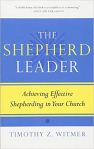
The Shepherd Leader by Timothy Witmer

This is a book that I had to read for one of my classes this semester. I thoroughly enjoyed it and found it immensely helpful. Needless to say, the work of a shepherd, when done properly, is tasking but overwhelmingly worth it. This book makes this evident. If you are a pastor, or are aspiring to be a pastor, then I would encourage you to read this. Below is the description that is on Amazon:

Leaders in the church are called to be shepherds, not a board of directors. This requires involvement in a personal shepherding ministry among the people. The Shepherd Leader unpacks the four primary ministries of shepherds — knowing, feeding, leading, and protecting — on macro (churchwide) and micro (personal) levels, providing seven elements to be incorporated into an effective shepherding plan.

51o2fmNDfjL._SX322_BO1,204,203,200_

The Power of Christian Contentment by Andrew Davis

I serve under Andy Davis (the author of this book) so I have been looking forward to reading this! I would encourage any and every Christian to read this book. Here is the review that I wrote for this book on Amazon:

Andy Davis uses Jeremiah Burrough’s definition of contentment: “Christian contentment is that sweet, inward, quiet, gracious frame of spirit, which freely submits to and delights in God’s wise and fatherly disposal in every condition” (40-41). And Andy Davis sees biblical warrant for us to pursue this contentment every day of our lives.

He says, “It is the duty of all Christians to strive after contentment every single day for the rest of their lives on earth. We owe this to Christ. A convicting question stands over all our moments of complaining discontent: Has Christ, crucified and resurrected on your behalf, done enough to make you content today. . .or must he do a little more” (40).

However, if we are going to pursue Christian contentment, then we are going to have to learn it the same way the Apostle Paul learned it (Phil. 4:11-13). Paul learned to live on God alone in the midst of suffering and prosperity. Andy Davis then teaches us a great deal about God so that we might learn how to live in Him alone.

The most breathtaking chapters are the ones on God’s providence, the evils and excuses of a complaining heart, contentment in suffering, and contentment in prosperity. With that said, here is a quote from the chapter on the evils and excuses of a complaining heart: “All of us underestimate how much evil complaining reveals in our hearts. We have spent much of our lives complaining about our surroundings-too hot, too cold, too loud, too soft, too spicy, too bland. We don’t think it matters if we voice our frustrations on a regular basis. But actually Scripture teaches the truth: complaining reveals much corruption in the soul” (111).

This book will help you fight for contentment in Christ in any and every circumstance!

41tntVtzpbL._SX309_BO1,204,203,200_

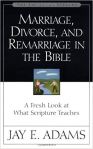
Marriage, Divorce, and Remarriage in the Bible by Jay E. Adams

This past semester, I taught the college students what the Bible says in regards to divorce and remarriage. I used numerous resources as I prepared for this teaching, but the one resource that I read in its entirety was this short book. Jay Adams is concise and dogmatic (some people may not like the dogmatic aspect). Nevertheless, he was helpful for thinking through the topic. This will serve as a nice introductory read to the topic of marriage, divorce, and remarriage.

41j05k5vIKL._AC_UL872_QL65_

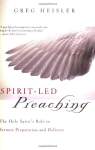
Spirit-Led Preaching by Greg Heisler

This is another book that I had to read for school. I enjoyed the read. Heisler speaks about how essential the Holy Spirit is to the preaching ministry. Heisler’s own words are below:

Spirit-Led Preaching is a call issued to preachers, pastors, and teachers of homiletics to recover the Holy Spirit for expository preaching in the same way we have recovered the biblical text. . . . My plan for doing this is to recover the doctrine of pneumatology (the study of spiritual beings/phenomena) for our theology of preaching, resulting in a renewed emphasis on the powerful combination of Word and Spirit working together as the catalyst for powerful expository preaching.

51CmPxnB3oL._SX331_BO1,204,203,200_

The Reformed Pastor by Richard Baxter

Every book that I have ever read on pastoral ministry quotes extensively from The Reformed Pastor. After having read it, it is obvious as to why this would be the case! Baxter lays out a charge to ministers to be faithful in the charge to shepherd the flock that the Holy Spirit has made them overseers of. Philip Doddridge said, “The Reformed Pastor is an extraordinary book. . .many good men are but shadows of what (by the blessing of God) they might be, if the maxims and measures laid out in that incomparable treatise were strenuously pursued.” I concur!

Kevin DeYoung

The 10 Commandments by Kevin DeYoung

I read this book because I am going to be doing a series with the college students on the 10 Commandments over the summer. I found this book informative. It definitely serves as an introductory work to studying the 10 Commandments.

51izK4A27uL._SX358_BO1,204,203,200_

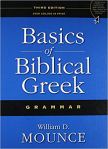
Basics of Biblical Greek by William Mounce

I am finishing up Greek 2 this semester. I would say the most beneficial aspect of taking Greek 2 is that this lower Alabamian has finally learned some English grammar!

611DYc3INEL._SX316_BO1,204,203,200_

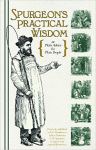
Spurgeon’s Practical Wisdom by Charles Spurgeon

I always like reading something written by Spurgeon or something written about Spurgeon. This was something written by Spurgeon. In this book, Spurgeon writes under the pseudonym John Ploughman. He seeks to give extremely practical advice on certain topics such as marriage, drunkenness, debt, laziness, hypocrisy, unhealthy spending, etc. He gives this advice in a witty way that is filled with humor. Here is a sample:

Ever since that early sickening I have hated debt as Luther hated the Pope, and if I say some fierce things about it, you must not wonder. To keep debt, dirt, and the devil out of my cottage has been my greatest wish ever since I set up housekeeping; although the last of the three has sometimes got in by the door or the window, for the old serpent will wriggle through the smallest crack, yet, thanks to a good wife, hard work, honesty, and scrubbing brushes, the two others have not crossed the threshold.

January & February in Books

My goal in doing this type of blog every two months is to give you, the readers, an opportunity to look at certain books that you may like to read. So, here are the books that I have read throughout January and February.

honest evangelism

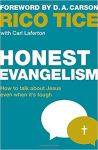
Honest Evangelism by Rico Tice

I try to read one book on evangelism every six months or so. There are numerous reasons for this. One reason is because it is so easy to lose sight of the discipline of evangelism. If we are not mindful of it then we simply won’t do it. Reading a book on evangelism helps me to be mindful! Another reason is because each individual says something different about evangelism. Everybody has a different technique that they use. For Rico, it is Jesus’ identity, Jesus’ mission, and Jesus’ call. So, in a conversation, find a way to talk about Jesus’ identity as the Son of God, His mission in rescuing sinners, and His call for individuals to repent and place their faith in Him. I found this to be helpful and will seek to put it in my evangelism tool kit. The last reason I read books on evangelism relatively often is because I want to be more faithful as a Christian. These little Christian living books on evangelism teach me how to be more faithful.

pastoral theology

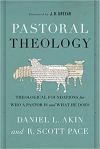
Pastoral Theology by Daniel Akin and Scott Pace

This was a book that I had to read for a seminary class. This is not a ground breaking book when it comes to pastoral ministry. It reads somewhat like a miniature systematic theology with brief sections on the practical implications of certain doctrines in regards to the pastorate.

on pastoring

On Pastoring by H.B. Charles Jr.

I also had to read this book for a seminary class. Though this book was not theologically deep, it was really entertaining to read. H.B. Charles Jr. was the son of a pastor, he began pastoring when he was seventeen years old, and he has many friends that are pastors. So, inevitably, he has made some mistakes, he has done a lot of things well, and he has innumerable stories to tell. This allows him to write this book that is filled with practical pastoral wisdom for young pastors.

the betrayal

The Betrayal: A Novel on John Calvin by Douglas Bond

This is a fictional work by Douglas Bond that lets you in on the life and times of John Calvin. Bond’s aim was to write an intriguing book from the view point of one of Calvin’s enemies that debunks all the negative modern caricatures (and there are a lot) that people have of Calvin. It is a very interesting read and I found myself admiring this theological giant even more by the way that Bond presents him throughout this novel.

Also, there are two reasons that I am reading this book. The first reason is because my wife gave this to me as a Christmas present. The second reason is because a brother of mine in Christ thought that reading some fiction would help me be more creative in my transitions, illustrations, and word choices during the preaching moment. I am taking heed to this counsel in hopes that reading fiction will help me to be a better preacher.

the temple and the church's mission

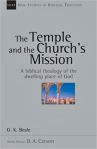
The Temple and the Church’s Mission by G.K. Beale

This is a biblical theology book that I picked up because I have a desire to become a better theologian. Often times, our theology is a little off because we misunderstand the overall message of the Bible. Books like these help us to see broad sweeping biblical themes (in this case the Temple) which, in turn, help us to better interpret particular passages of Scripture.

In this books G.K. Beale argues this (I am just going to quote him at length):

God created the cosmos to be his great temple, in which he rested after his creative work. His special revelatory presence, nevertheless, did not yet fill the entire earth because his human vice-regent was to achieve this purpose. God had installed this vice-regent in the garden sanctuary to extend the boundaries of God’s presence there worldwide. Adam disobeyed this mandate, so that humanity no longer enjoyed God’s presence in the small Garden. As a result, all humanity and all creation became contaminated with sin. Therefore, in view of the storyline of the Bible, the assertions about God’s inability to exist in any building on earth include allusion to the old earth and temple not being an adequate abode for him because of being polluted with sin and the need for purification and restoration before God’s Shekinah presence, limited to heaven and the holy of holies, could dwell everywhere throughout the cosmos. All human attempts to extend God’s presence throughout a sinful earth met with, at best, limited success. The successful fulfillment of the Adamic commission awaited the presence – and obedience – of the last Adam, Jesus Christ.

Susie

Susie: The Life and Legacy of Susanna Spurgeon by Ray Rhodes Jr.

While many people know of Charles Spurgeon, very few know much about Susanna Spurgeon. This biography allows you to walk back into the 19th century to look at this godly wife, mother, author, editor, book distributor, and church planter. She persevered through affliction. She honored Christ with both her life and her death. She abounded in the work of the Lord. She did this even when she was bed ridden because of chronic illness. You will not regret reading about this woman. Moreover, you will not regret seeking to imitate many of the ways she imitated Christ.

51GZB-QC1iL._SX338_BO1,204,203,200_

How Shall We Then Live? By Francis Schaeffer

This book was first published in 1975. Schaeffer sought to reveal to his readers that how we think directly impacts how we live. He says, “What we are in our thought world directly determines how we act.” This is the thesis of this book. He then walks through 2000 years of history (from the time of Ancient Rome to our modern day) to reveal the effects of certain world views (pagan gods, emperor worship, renaissance humanism, modern humanism, a belief in an infinite personal God, the enlightenment, etc.). Schaeffer studied this so much that the end of his book is prophetic. For example, after diagnosing the world view that lead to the passing of Roe vs. Wade, he writes, “In regard to the fetus, the courts have arbitrarily separated ‘aliveness’ from ‘personhood,’ and if this is so, why not arbitrarily do the same with the aged? So the steps move along, and euthanasia may well become increasingly acceptable.” This is just one example of how Schaeffer foresaw the trajectory of our western culture.

91OvH9q4lKL._AC_UL872_QL65_

Christianity at the Crossroads by Michael Kruger

When we think about the history of Christianity, we often think that it was Jesus, Paul, the reformers, and then Billy Graham! This is not the case though. After the death of the apostles, churches were gathering, men were preaching the gospel, people were fighting for orthodoxy, the Scriptures were being copied and circulated, apologists were defending the validity of the Christian religion to the Roman elite, and theologians were writing major works. This book will really help you to appreciate what our brothers and sisters in Christ did throughout the second century. It will also open up your eyes to the historicity of the Christian faith!

What are you Reading?

Let me know what books that you have been reading!

College Students – Read These 7 Books in 2019

Over the past two and a half years, I have spent and still spend a lot of time with Christian college students. So, from my own personal walk with Christ (throughout college and into my mid 20s) and from seeing many college students following Christ, I would recommend these 7 books for Christian college students to read throughout 2019.

The Seven

  1. The Bible (Lots of Pages)
    1. Most Christian college students have never read through the entire Bible. Now, I say that knowing that most professed Christians in general have probably never read through the Bible. . . . so do not frown on college students for this! With that said, Christians students should seek to read through the Bible this year. You can try a reading plan. You can try to read through it at your own pace. Just try to make your way through the Bible. You will be challenged, stretched, encouraged, and built up in the faith as you seek to do this. My first time doing this was when I was a senior in college. Convicted by the fact that I had never read through the entire Bible, I read it in three months (yes, to my shame, I skipped the genealogies)! Since then, I have consistently read the Bible every year. I am currently on my sixth time through the Bible and I am enjoying it more than I previously did the first five times because I am understanding it so much better. So, take up the Bible and read. Seek to be as acquainted with the Bible as you possibly can be!
  2. Knowing God by J.I. Packer (288 pages)
    1. Every college student is a theologian. Each college student has a particular belief about who God is. And, in all honesty, each student believes dogmatically about what he or she believes. Once you say something contrary to what they believe about Jesus, salvation, the Spirit, spiritual gifts, etc., then they will argue with you. So, each student is a passionate theologian. However, that does not mean that each person is a good theologian. Just because we have a belief about God that we are passionate about does not mean that it is right. Therefore, we need to seek to be good theologians. Knowing God will help you with this. J.I. Packer will teach you what it is like to think carefully about who God is and how He has revealed himself in the Bible.
  3. The Work of Christ by R.C. Sproul (224 pages)
    1. Most students that I have talked to focus primarily on the death and resurrection of Christ. They focus on the cross, the blood, the death, and the resurrection. The problem with this is that it is not the whole story. The work of Christ in his life is just as important as the work of Christ in his death. Jesus being born in Bethlehem, being a descendent of David, being circumcised on the eight day, being baptized to fulfill all righteousness, etc., are all important to our salvation. Had Jesus not been blameless, he would have not been a sufficient sacrifice. Had he not been righteous, there would be no righteousness for us to be gifted with through faith in Jesus. Thus, the work of Christ in his life is of immense important. R.C. Sproul will show you this.
  4. The Truth of the Cross by R.C. Sproul (167 pages)
    1. So, whereas The Work of Christ will show you the importance of Christ’s earthly ministry, The Truth of the Cross will keen in on the significance of Christ’s work on the cross. And, let’s be honest, it would be of great value to become experts in all that happened on the cross. I mean what does it mean that the wrath of our just God was satisfied in the death of Christ? What does it mean that Christ made atonement for us? What does it mean that He was our substitute? What does it mean that he bore our sin in his body on the cross? What does it mean that he was made a curse for us? Sproul will show you the answers to these questions.
  5. Tactics by Gregory Koukl (208 Pages)
    1. Evangelism is hard. It is hard to navigate conversations to specific points where we can proclaim the good news about Jesus Christ’s life, death, and resurrection. This is most certainly hard in a day where there is increasing hostility to a Christian worldview. . . .especially on college campuses. It is not abnormal for somebody to bombard you with things that they have heard from others (their highly educated liberal professors) once they hear you say that you are a Christian. How can the Bible be true if it is written by men? How can you believe abortion is wrong? How come you don’t think a woman has the right to choose how she uses her own body? Doesn’t it say that homosexuals ought to be stoned in the Bible? The Jesus of history is different from the Jesus of faith. The historical Jesus was just some Jew. The Jesus of faith is some mythological deity that early Christians made up. How can you fall for believing in this mythological deity? The questions abound! Gregory Koukl will give you a neat way to navigate these questions in a gentle way. He will help you turn these types of conversations into something that is very beneficial. Ultimately, he will help you to expose unbeliever’s faulty thinking, and to navigate these types of conversations to Jesus Christ and him crucified.
  6. The Story of Reality by Gregory Koukl (208 Pages)
    1. We, as Christians, do not believe in a myth. When we speak about the creation of the heavens and the earth, the depravity of man, the person of Jesus, the death and resurrection of Jesus, etc., we are talking about reality. This is what has really happened. Therefore, everything else that is contrary to the Christian faith is false. It simply isn’t reality. Gregory Koukl, throughout The Story of Reality, articulates how the Christian worldview makes the most sense. This will be of great help to a Christian college student.
  7. Spiritual Disciplines for the Christian Life by Donald Whitney (352 Pages)
    1. Most college students do not know what it looks like to progressively grow in holiness. They have an understanding of believing in Christ and being saved, but they do not have an understanding of what it looks like to work out their salvation with fear and trembling. Therefore, they don’t. This isn’t good. If we remain ignorant of this facet of the Christian life we will remain spiritual babes. This is why this book is so important. Donald Whitney will show us how God uses these ordinary disciplines (Bible reading, meditation, prayer, evangelism, etc.) to help Christians grow and conform into the image of Jesus.

I am sure that others would recommend a different seven books, but from what I have seen throughout my years in college and in college ministry, these seven books will be beneficial for college students. They are easy to read, pretty short, and address particular areas of thought that are largely neglected.