On My Shelf: July-September

Here’s a behind-the-scenes glance at what I’ve been reading over the past few months. I’ve added a brief book description from Amazon to give you a taste of each book. Perhaps one of these books will garner your attention and compel you to add it to your cart! But let me mention a few things before you start scrolling:

  • I don’t agree with everything in every book I read
  • I’ve found all of these books helpful
  • I’ve found some of these books more helpful than others
  • These books are listed in the order I read them

Glorification: An Introduction by Graham A. Cole

Facing sin, suffering, and an uncertain future, it’s easy to become pessimistic, but believers in Christ know the best is yet to come. God promises that one day he will redeem his image bearers and renew the earth. Few books are written on the doctrine of glorification, but its promise of restoration brings urgent hope for Christ followers.

In this addition to the Short Studies in Systematic Theology series, Graham A. Cole examines the concept of divine glory as well as God’s plan for redeeming individual believers, the church, and the universe. Identifying two phases of glorification―one in this life and a final transformation into Christlikeness―Cole defines the role of the Father, Son, and Holy Spirit in the sanctification process. Through careful study of Scripture, he shows Christians how their future identity as glorified beings should impact their perspective today.

  • Thoughtful and Theological: Walks through the plotline of Scripture to explain redemptive history, the Trinitarian work of glorification, and the future of unbelievers
  • Thorough Introduction: Studies the Old and New Testaments to explain God’s divine glory, including the stories of Moses, Isaiah, and Ezekiel, as well as the topics of creation, the incarnation, transfiguration of Jesus, and the picture of the new earth in Revelation
  • Great for Theologians, Pastors, and Students: This concise study dives deep into an overlooked area of eschatology and includes suggested resources for further reading

From Adam and Israel to the Church: A Biblical Theology of the People of God by Benjamin L. Gladd

What does it mean to be created in God’s image? How has the fall affected this image? Who are the people of God?
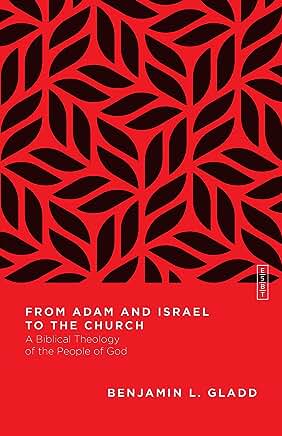
Addressing these core questions about spiritual identity, From Adam and Israel to the Church examines the nature of the people of God from Genesis to Revelation through the lens of being created and formed in God’s image. Benjamin Gladd argues that living out God’s image means serving as prophets, priests, and kings, and he explains how God’s people function in these roles throughout Scripture―from Adam and Eve to the nation of Israel, from Jesus to the church. The consistent call of the people of God is to serve as God’s image-bearers in the world.

This first volume in Essential Studies in Biblical Theology lays a foundation for subsequent volumes, introducing key biblical-theological themes such as temple, king, priest, prophet, creation, and redemption.

Essential Studies in Biblical Theology (ESBT), edited by Benjamin L. Gladd, explore the central or “essential” themes of the Bible’s grand storyline. Taking cues from Genesis 1-3, authors explore the presence of these themes throughout the entire sweep of redemption history. Written for students, church leaders, and laypeople, the ESBT offers an introduction to biblical theology.

How to Raise an Adult: Break Free of the Overparenting Trap and Prepare Your Kid for Success by Julie Lythcott-Haims

In How to Raise an Adult, Julie Lythcott-Haims draws on research, on conversations with admissions officers, educators, and employers, and on her own insights as a mother and as a student dean to highlight the ways in which overparenting harms children, their stressed-out parents, and society at large. While empathizing with the parental hopes and, especially, fears that lead to overhelping, Lythcott-Haims offers practical alternative strategies that underline the importance of allowing children to make their own mistakes and develop the resilience, resourcefulness, and inner determination necessary for success.

Relevant to parents of toddlers as well as of twentysomethings-and of special value to parents of teens-this book is a rallying cry for those who wish to ensure that the next generation can take charge of their own lives with competence and confidence.

Short of Glory: A Biblical and Theological Exploration of the Fall by Mitchell L. Chase
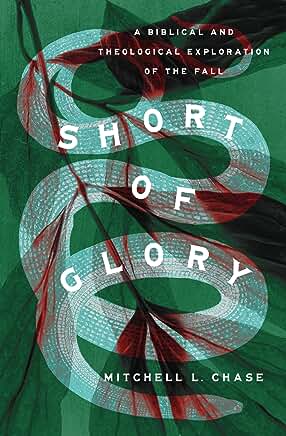
When looking around at the world, it is easy to see that all is not as it should be. This brokenness within the world and humanity finds its roots in mankind’s rebellion against God. The fall, as recorded in Genesis 3, sets the stage for creation’s need for redemption―ultimately found in Jesus Christ.

In this book, pastor and professor Mitchell Chase argues that in order to understand the fall and recognize its profound impact on later Scripture and the world today, Christians must first understand Genesis 3. Chase identifies themes found in Genesis 3―temptation, shame, messianic hope, and more―and shows how they reverberate throughout the rest of the storyline of Scripture. Understanding Adam and Eve’s fall is crucial to understanding the world as it currently is and the need for redemption through Jesus. 

  • Accessible: Clear and concise writing on one of the most vital chapters in Scripture
  • For Those Interested in Biblical Theology: Ideal for students, thoughtful lay people, and pastors looking to grow in their knowledge of inner-biblical exegesis and connections
  • Identifies Biblical Themes in Genesis 3: Including temptation, shame, and messianic hope
  • Written by Mitchell L. Chase: Professor at the Southern Baptist Theological Seminary and the author of Resurrection Hope and the Death of Death

Impossible Christianity: Why Following Jesus Does Not Mean You Have To Change The World, Be An Expert In Everything, Accept Spiritual Failure, And Feel Miserable Pretty Much All The Time by Kevin DeYoung

The apostle Paul described the Christian life as a race, but to many believers it feels more like a punishing obstacle course. Fearing they’ll never be able to do enough or give enough or be enough, they see themselves as spiritual failures. But Scripture offers good news: even in ordinary life, Christians can be faithful, fruitful, and pleasing to God.

Impossible Christianity reassures readers that they don’t need to feel a collective sense of guilt for sins in the past and solve every societal problem in the present. Through biblical wisdom and engaging personal stories, Kevin DeYoung challenges the misconception that we need 40 hours in the day just to be good Christians. By reflecting on what Jesus actually taught about Christian discipleship, readers will be newly encouraged to pursue single-minded devotion to God and find lasting joy in a life of sincere and simple obedience.

  • By Bestselling Writer Kevin DeYoung: Author of books including The Biggest StoryJust Do Something; and Crazy Busy
  • Applicable: Written in a conversational tone, this book addresses Christian life issues including guilt, corporate responsibility, personal disciplines, assurance of salvation, and righteousness
  • Offers Strength for Weary Christians: Helps believers answer the question, Can we please God and live a happy life in this anxious age?

The Doctrine of Good Works: Reclaiming a Protestant Teaching by Thomas H. McCall, Caleb T. Friedeman, and Matt T. Friedeman

In Titus, Paul says Christ redeemed a people “zealous for good works.” Despite this declaration and others like it, the doctrine of good works has fallen on hard times in contemporary Protestant theology and practice. At best, it’s neglected–as in most systematic theologies and in too much church teaching. At worst, it’s viewed with suspicion–as a threat to salvation by grace alone through faith alone.

In this important work addressing a significant gap in current theological literature, the authors argue that by jettisoning a doctrine of good works, the contemporary church contradicts historical Protestantism and, more importantly, biblical teaching. They combine their areas of expertise–exegesis, systematic and historical theology, and practical theology–to help readers recover and embrace a positive doctrine of good works. They survey historical Protestant teaching to show the importance of the doctrine to our forebears, engage the scriptural testimony on the role of good works, formulate a theology of salvation and good works, and explore pastoral applications.

Rescuing the Gospel: The Story and Significance of the Reformation by Erwin Lutzer

The Reformation unfolded in the cathedrals and town squares of Europe–in Wittenberg, Worms, Rome, Geneva, and Zurich–and it is a stirring story of courage and cowardice, of betrayal and faith. 

The story begins with the Catholic Church and its desperate need for reform. The dramatic events that followed are traced from John Wycliffe in England, to the burning of John Hus at the stake in Prague, to the rampant sale of indulgences in the cities and towns of Germany, to Martin Luther nailing the Ninety-Five Theses to the door of the Castle Church in 1517, to John Calvin’s reform of Geneva. 

Erwin Lutzer captures the people, places, and big ideas that fueled the Reformation and explains its lasting influence on the church and Western Civilization.

On My Shelf: April-June

Here’s a behind-the-scenes glance at what I’ve been reading over the past few months. I’ve added a brief book description from Amazon to give you a taste of each book. Perhaps one of these books will garner your attention and compel you to add it to your cart! But let me mention a few things before you start scrolling:

  • I don’t agree with everything in every book I read
  • I’ve found all of these books helpful
  • I’ve found some of these books more helpful than others
  • These books are listed in the order I read them

Conception Control: Avoiding Antinomianism and Legalism by Phillip Kayser

“Is conception control part of the Dominion Mandate? If so, are there limits to man’s dominion? In what ways did the Fall impact the conception portion of the Dominion Mandate? In what ways does Redemption impact conception? May a couple seek medical help in order to conceive? Are there limits to what medicine can ethically achieve in conception? Are there sexual practices within marriage that the Bible prohibits? How does one’s view of conception control and birth control impact other areas of life?”

Defending Shame: Its Formative Power in Paul’s Letters by Te-Li Lau

2020 Center for Biblical Studies Book Award (New Testament)

“Our culture often views shame in a negative light. However, Paul’s use of shame, when properly understood and applied, has much to teach the contemporary church. Filling a lacuna in Pauline scholarship, this book shows how Paul uses shame to admonish and to transform the minds of his readers into the mind of Christ. The author examines Paul’s use of shame for moral formation within his Jewish and Greco-Roman context, compares and contrasts Paul’s use of shame with other cultural voices, and offers a corrective understanding for today’s church. Foreword by Luke Timothy Johnson.”

The Wolf In Their Pockets: 13 Ways the Social Internet Threatens the People You Lead by Chris Martin

“We can hardly remember a time when we didn’t feel the influence of that back pocket device. The average social media user spends about two-and-a-half hours a day using social media. That’s more than enough time to shape our values and desires. Pastors, teachers, and parents feel their influence slipping away. We’re seeing increased loneliness, disunity, and self-absorption. But where do we go from here?

In The Wolf in Their Pockets, Internet expert Chris Martin examines the many ways we are being changed by social media. With a biblically informed voice, Martin both exposes the ways the Internet is distorting our life in Christ and shows us how to faithfully respond. Martin teaches us how to care for people who are obsessed with followers, views, and likes—and how to love those whose online influences have filled them with cynicism and contempt. Martin looks at how the social Internet is changing how we understand sex and beauty—what to do about the epidemic levels of anxiety—and how to redirect our hearts to worship Jesus Christ.

Shepherding and leading people has never been easy, but the social Internet has brought new challenges. We need the miraculous work of the Holy Spirit and a powerful prayer life. Martin provides the biblical wisdom, direction, and hope necessary to combat The Wolf in Their Pockets.”

Reclaiming Conversation: The Power of Talk in a Digital Age by Sherry Turkle

“Renowned media scholar Sherry Turkle investigates how a flight from conversation undermines our relationships, creativity, and productivity – and why reclaiming face-to-face conversation can help us regain lost ground.

We live in a technological universe in which we are always communicating. And yet we have sacrificed conversation for mere connection.

Preeminent author and researcher Sherry Turkle has been studying digital culture for over 30 years. Long an enthusiast for its possibilities, here she investigates a troubling consequence: At work, at home, in politics, and in love, we find ways around conversation, tempted by the possibilities of a text or an email in which we don’t have to look, listen, or reveal ourselves.

We develop a taste for what mere connection offers. The dinner table falls silent as children compete with phones for their parents’ attention. Friends learn strategies to keep conversations going when only a few people are looking up from their phones. At work, we retreat to our screens although it is conversation at the water cooler that increases not only productivity but commitment to work. Online, we only want to share opinions that our followers will agree with – a politics that shies away from the real conflicts and solutions of the public square.

The case for conversation begins with the necessary conversations of solitude and self-reflection. They are endangered: These days, always connected, we see loneliness as a problem that technology should solve. Afraid of being alone, we rely on other people to give us a sense of ourselves, and our capacity for empathy and relationship suffers. We see the costs of the flight from conversation everywhere: Conversation is the cornerstone for democracy and in business it is good for the bottom line. In the private sphere, it builds empathy, friendship, love, learning, and productivity.

But there is good news: We are resilient. Conversation cures.

Based on five years of research and interviews in homes, schools, and the workplace, Turkle argues that we have come to a better understanding of where our technology can and cannot take us and that the time is right to reclaim conversation. The most human – and humanizing – thing that we do.

The virtues of person-to-person conversation are timeless, and our most basic technology, talk, responds to our modern challenges. We have everything we need to start, we have each other.”

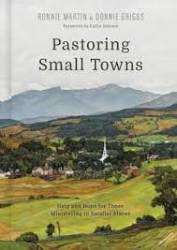
Pastoring Small Towns: Help and Hope for Those Ministering in Smaller Places by Ronnie Martin and Donnie Griggs

“Small town life is quite different from life in a big city. There is not as much traffic. People recognize each other at the grocery store. Local sporting events carry a different cultural weight, and it may not be out of the ordinary to wait behind a tractor or get used to the smell of a nearby factory. These communities are unique, and pastoring here is an extraordinary task.

Ronnie Martin and Donnie Griggs are well-aware of this reality. In Pastoring Small Towns, their hope is to equip pastors and ministry leaders to take on the different nuances that come with pastoring smaller communities. They point out the cultural realities of these places and give pastors the tools to effectively engage their people with the Gospel.”

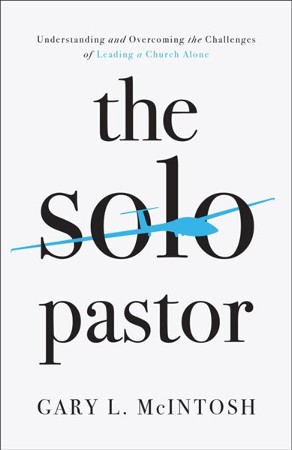
The Solo Pastor: Understanding and Overcoming the Challenges of Leading a Church Alone by Gary L. McIntosh

“Being a pastor is a complex and demanding role, especially for someone leading alone. The majority of pastors find themselves in this position, leading their smaller church with no additional professional assistance. The challenges are many, including loneliness, isolation, self-doubt, overwhelm, feelings of inadequacy, and a constant search for additional resources and volunteers. Where does a solo pastor turn for help and encouragement?

With compassion and plenty of proven, practical strategies, church consultant and former solo pastor Gary L. McIntosh steps in to fill the void.”

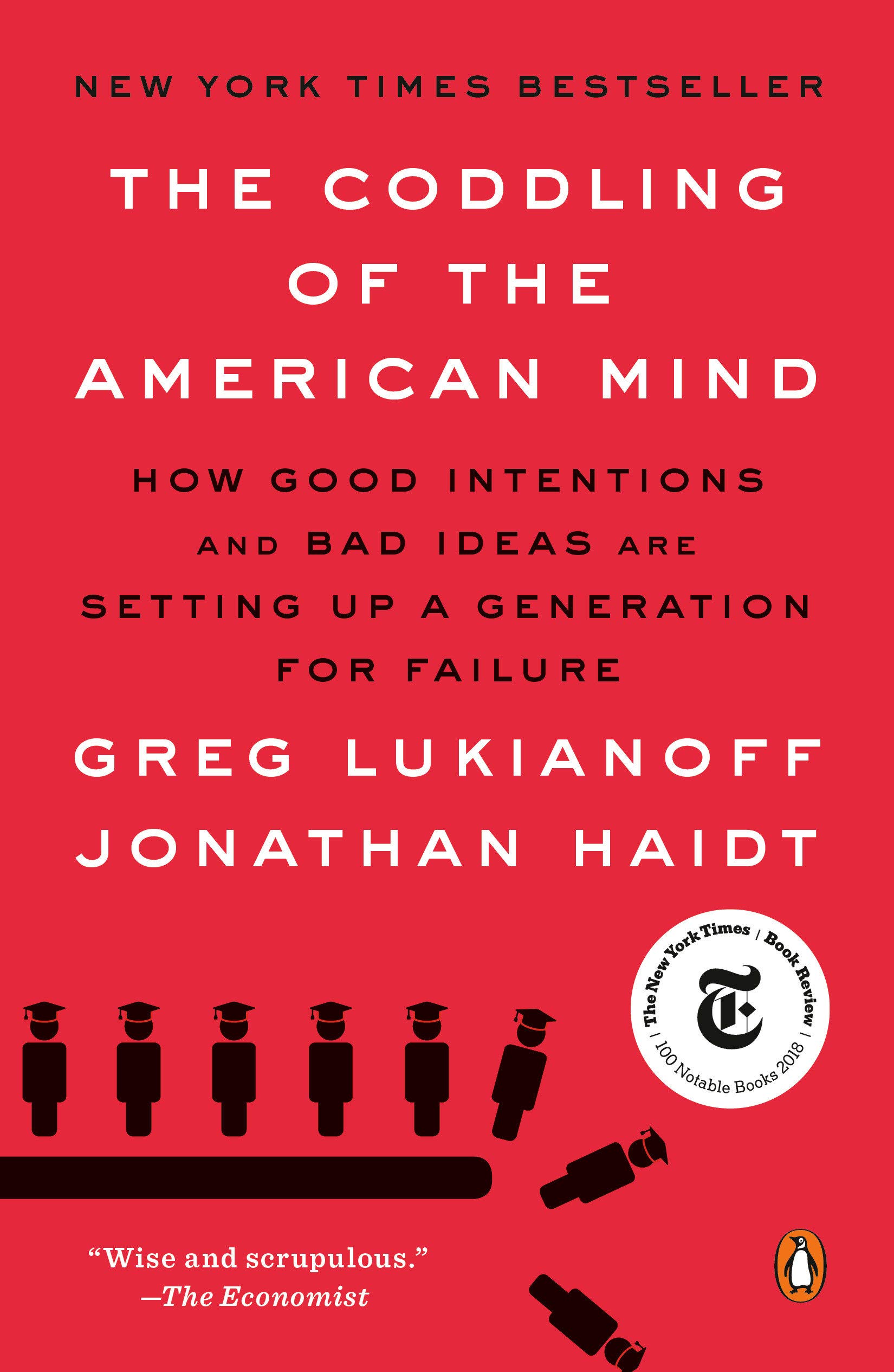
The Coddling of the American Mind: How Good Intentions and Bad Ideas Are Setting Up a Generation for Failure by Jonathan Haidt

“Something has been going wrong on many college campuses in the last few years. Speakers are shouted down. Students and professors say they are walking on eggshells and are afraid to speak honestly. Rates of anxiety, depression, and suicide are rising—on campus as well as nationally. How did this happen?

First Amendment expert Greg Lukianoff and social psychologist Jonathan Haidt show how the new problems on campus have their origins in three terrible ideas that have become increasingly woven into American childhood and education: What doesn’t kill you makes you weakeralways trust your feelings; and life is a battle between good people and evil people. These three Great Untruths contradict basic psychological principles about well-being and ancient wisdom from many cultures.  Embracing these untruths—and the resulting culture of safetyism—interferes with young people’s social, emotional, and intellectual development. It makes it harder for them to become autonomous adults who are able to navigate the bumpy road of life.

Lukianoff and Haidt investigate the many social trends that have intersected to promote the spread of these untruths. They explore changes in childhood such as the rise of fearful parenting, the decline of unsupervised, child-directed play, and the new world of social media that has engulfed teenagers in the last decade. They examine changes on campus, including the corporatization of universities and the emergence of new ideas about identity and justice. They situate the conflicts on campus within the context of America’s rapidly rising political polarization and dysfunction.

This is a book for anyone who is confused by what is happening on college campuses today, or has children, or is concerned about the growing inability of Americans to live, work, and cooperate across party lines.”

Resurrection Hope and the Death of Death by Chase Mitchell

“Death is a powerful and sobering reality. While everyone must face death, it is not the end for those united with Christ. Followers of Jesus Christ have resurrection hope―the proclamation that Christ has defeated death and the promise that believers shall share in his victory. The resurrection is essential to the Christian faith and is rooted in the faithfulness of God. 

With scholarly insight, Mitchell L. Chase traces the theme of resurrection hope throughout Scripture, walking through each section of the Bible from the Law to Revelation. Having a proper understanding of death and resurrection will not only stir up our soberness for the reality of sin and death, but it will also motivate our praise to God.”

Christ-Centered Preaching: Redeeming the Expository Sermon by Bryan Chapell

“In this complete guide to expository preaching, Bryan Chapell teaches the basics of preparation, organization, and delivery–the trademarks of great preaching. This new edition of a bestselling resource, now updated and revised throughout, shows how Chapell’s case for expository preaching reaches twenty-first-century readers.”

The Vanishing American Adult: Our Coming-of Age Crises and How to Rebuild a Culture of Self-Reliance by Ben Sasse

“In an era of safe spaces, trigger warnings, and an unprecedented election, the country’s youth are in crisis. Senator Ben Sasse warns the nation about the existential threat to America’s future.

Raised by well-meaning but overprotective parents and coddled by well-meaning but misbegotten government programs, America’s youth are ill-equipped to survive in our highly-competitive global economy. 

Many of the coming-of-age rituals that have defined the American experience since the Founding: learning the value of working with your hands, leaving home to start a family, becoming economically self-reliant―are being delayed or skipped altogether. The statistics are daunting: 30% of college students drop out after the first year, and only 4 in 10 graduate. One in three 18-to-34 year-olds live with their parents. 

From these disparate phenomena: Nebraska Senator Ben Sasse who as president of a Midwestern college observed the trials of this generation up close, sees an existential threat to the American way of life.

In The Vanishing American Adult, Sasse diagnoses the causes of a generation that can’t grow up and offers a path for raising children to become active and engaged citizens. He identifies core formative experiences that all young people should pursue: hard work to appreciate the benefits of labor, travel to understand deprivation and want, the power of reading, the importance of nurturing your body―and explains how parents can encourage them.

Our democracy depends on responsible, contributing adults to function properly―without them America falls prey to populist demagogues. A call to arms, The Vanishing American Adult will ignite a much-needed debate about the link between the way we’re raising our children and the future of our country.”