Some of the best sermons I’ve ever heard have been preached by men who were disqualified to even be in the pulpit. “Years ago, an older pastor warned me that giftedness is not godliness. It stuck with me. It is true but easily ignored when someone’s oratory skill sweeps us away. Learning how to communicate and deliver a powerful sermon is not holiness. Sometimes, it is the effective cover utilized to pursue a life of ungodliness and rebellion.”
A right understanding of the doctrines of justification and sanctification is absolutely essential to a healthy Christian life. “In the end, there is no conflict between Paul and James. It is right to say we are justified by faith alone apart from works of the law, provided we understand, as James reminds us, that the faith that justifies will always work itself out in love.”
Our churches need more parlor preachers. We need church members wielding the sword of the Spirit in casual conversations. “Some of the most shaping words spoken in the Christian assembly come not from the pulpit above but from the pew below. A church taught to make the most of the time together, to come to speak and not just to listen, to fill the building with holy conversation, experiences a foretaste of that country where we shall speak forever of all that God has done.”
As one pastor said, “Sunday morning church is a decision made on Saturday night.” This article will help you prepare for corporate worship in a healthy manner. “The way we schedule our days relates significantly to how we prepare for many different events in life, and such planning can similarly help us to prepare for Lord’s Day worship.”
Time is more valuable than money. If we lose money, we can always earn it back. However, when we lose time, it is gone forever. As followers of Christ, let us strive to make the best use of our time! “Too many Christians go about life without proper self-examination and neglect to seize the opportunities right in front of them. Time is precious and must be treated with the utmost care for holy living. It must be redeemed.”
Our church has been in the process of nominating deacons, which is something we do every year. With that said, I put together some questions for our congregation to consider as they prayerfully think about whom the Lord would have them nominate to serve as deacons.
The Qualifications for Deacons
1 Timothy 3:8-13:“8Deacons likewise must be dignified, not double-tongued, not addicted to much wine, not greedy for dishonest gain. 9They must hold the mystery of the faith with a clear conscience. 10And let them also be tested first; then let them serve as deacons if they prove themselves blameless. 11Their wives likewise must be dignified, not slanderers, but sober-minded, faithful in all things. 12Let deacons each be the husband of one wife, managing their children and their own households well. 13For those who serve well as deacons gain a good standing for themselves and also great confidence in the faith that is in Christ Jesus.”
Helpful Questions As You Prepare to Nominate Men to Serve as Deacons
In Regard to the Church
Does he truly love the church and its mission and vision?
Does he attend corporate worship regularly?
Does he regularly attend the church’s ministries?
Does he show respect for the pastors?
Does he protect and promote unity?
Mark Dever: “You don’t want people serving as deacons who are unhappy with your church. The deacons should never be the ones who complain the loudest or jar the church with their actions or attitudes. Quite the opposite. . . You don’t want to nominate deacons who don’t recognize the importance of the ministry of preaching and teaching, but people who are anxious to protect it. More broadly, you want the most supportive people in the church to serve as the deacons. So when you’re considering who might serve as a deacon, look for the people with gifts of encouragement.”
In Regard to Service
In what ways does he currently serve?
Does he serve on a regular basis?
Does he take the initiative to serve others?
Does he spot and meet tangible needs?
Alexander Strauch: “Deacons also need to be diligent in their work and follow through with their responsibilities. If they discourage the very people they are supposed to help, relationships will be strained. But if they do their work well, they will be an enormous help to the elders and to the health of the local church body.”
Dignified
Is he a person of honor?
Is he deserving of respect?
Alexander Strauch: “In the Lord’s work, a leader’s moral character and public reputation are essential to the task of leading God’s people.”
Not Double Tongued
Does he have a reputation for keeping his word?
Does he communicate consistently with different parties?
Does he talk to people rather than about them?
Is he a people-pleaser?
Is he someone who flatters, gossips, or slanders?
Does he communicate with love, or is he harsh in his words?
Matt Smethurst: “Being double-tongued is not a minor flaw or personality quirk; it is a symptom of hypocritical pride. It’s consciously saying one thing to one group—and then saying or insinuating something else to a different group.”
Not Addicted to Much Wine
Does he drink alcohol?
Does he exercise self-control when it comes to his consumption of alcohol?
Do his close friends and family believe he controls his alcohol consumption?
Robert Yarbough: “All members of the church should lay hold of the grace of the gospel so as to rise above substance abuse; this behavior is all the more imperative for church-sanctioned figures like deacons.”
Not Greedy for Dishonest Gain
What is his attitude toward wealth and material possessions?
Does he give generously toward the ministries of the church, the needs of fellow Christians, and the needs of the poor?
Does he prioritize kingdom giving?
Is he honest in his financial dealings?
Matt Smethurst:“While these virtues mark any mature believer, the specific nature of diaconal work will sometimes put deacons in contact with church money. So Paul warns against installing anyone known for being deceptive, cutting moral corners, or obsessing over money. A worldly, materialistic person will struggle with greed, which will in turn fuel temptation toward dishonest gain. This should be an area, then, where a deacon displays unimpeachable self-control.”
Knowing and Holding to the Faith
Does he give a credible profession of saving faith?
Is he able to articulate the gospel of Jesus Christ?
Have you seen him grow in knowledge and godliness in the past year?
Robert Yarbough: “Paul’s counsel to Timothy assumes that deacons are not just busy activists but also capable and informed in matters pertaining to Christian teaching, experience, and to some extent the Scriptures (OT and any then-recognized NT) themselves.”
Juan Sanchez: “That’s why deacons must not only be equipped to offer physical care, they also need to be able to minister the truth of God’s word. I don’t mean that they need to be able to preach a 30-minute sermon. But they need to be able to pray biblically informed prayers. They need to be able to make biblically informed decisions. To do that, they ‘must hold the mystery of the faith.’”
Alexander Strauch: “A deacon must know the beliefs of the Christian faith, possess the faith, hold firmly to the faith, and live life consistently with ‘the mystery of the faith.’”
Tried and Proven Blameless
Is he blameless before man?
Is there any aspect of his character that would disqualify him?
Is there anything in his theology or doctrine that would disqualify him?
Alexander Strauch: “Being examined and shown to be “blameless” does not imply that the deacon is free of faults! All of us have character flaws, idiosyncrasies, and character traits that annoy others. Being proved “blameless” or “above reproach” relates specifically to the qualifications for office. A deacon who is found “blameless” in this regard is worthy of respect, truthful in speech, self-controlled in the use of wine, sound in doctrine and life, and a faithful husband, good father, and competent household manager.”
The Deacon’s Wife
If married, does he have a godly wife?
Is she a woman worthy of respect?
Is she likely to engage in slander or gossip?
Is she a devoted wife and mother?
Is she a faithful church member?
Does she go to church with him regularly?
Alexander Strauch: “Every aspect of the life of a deacon’s wife is to be marked by faithfulness, dependability, and reliability, so that she is worthy of respect and is a blessing to the whole church.”
The Deacon’s Household
Does he manage his household well?
Does he love his wife and serve her as Christ served the church?
Does he love his children and raise them in the discipline and instruction of the Lord?
Does the home he nurtures look significantly different from the home the world creates?
Alexander Strauch: “An elder or deacon must be above reproach in his marriage relationship as defined by the teachings of the whole of Scripture on sexuality and marriage.”
Alexander Strauch: “A Christian father is to be a teaching father who seizes every opportunity to instruct his children in the gospel and the Christian way of life.”
A Final Exhortation
In a Baptist church, one of the most crucial responsibilities of a church member is to elect godly men who meet the qualifications outlined in Scripture to serve as pastors and deacons. Therefore, strive to serve your local church well when you elect certain men to these positions, as this contributes to the overall health of your local church.
IVF is the Wild Wild West these days, especially in the United States. And the more you read about it, the more you realize the whole process reduces a human being to an expensive commodity. “Christians have good reason to call all IVF into question, not only because of the downstream possibilities of genetic selection and engineering but because the procedure itself undermines the integrity and dignity of human reproduction.”
I really enjoyed reading this article. Local churches would benefit if more Christians arrived at church a bit earlier and stayed a bit later. “Christianity is not a spectator sport. So, let’s get in the game — and stay there, side by side, Sunday after Sunday — until Jesus our King brings us safely home.”
Pastors experience the highs and lows of church life. We see people come to know Christ, and we see people apostatize. We observe individuals serving one another, and we see fellow Christians sin against each other. We see people join the church, and we see people leave the church. We receive words of encouragement, but we also encounter slanderous accusations. Amid all this, there is a temptation to focus on the negative aspects of church life. Tim Counts argues that we must resist this temptation.
Around this time last year, Conrad Mbewe lost his son. You’ll find this article heart-wrenching and edifying. “Thursday, November 16, 2023 — one year ago today — will be etched in my memory as the night that started the journey of my worst fears: losing a family member to the cold hand of death.”
I found this article to be very helpful. “In the past, many churches required people to make a pledge of total abstinence in order to join the church, or else expected total abstinence for church officers. In my childhood, my family attended a Baptist church where the “Church Covenant” was pasted inside the back cover of the church hymnal, and it included a promise to abstain from the “sale and use of intoxicating drinks as a beverage” (if I remember the wording correctly). Anyone who wanted to become a member of the church had to agree to abide by that promise. But I would not favor or support such a requirement. It is requiring a standard of conduct stricter than the Bible itself. Neither Jesus (John 2:6–11) nor Paul (1 Tim. 5:23) could have joined such a church.” For those of you wondering, I agree with Wayne Grudem on this issue.
Evangelical Christians often focus heavily on the tribulation and the millennium. While these subjects are important, it would benefit many Christians to reflect more on the resurrection of the body and the New Earth. “We mustn’t miss this point: God created the world to function as his sanctuary—for heaven and earth to be one location—but this intention never came to pass. It’s like building a dream house and never moving in; God’s desire to dwell fully with humanity and creation never transpired in the way Genesis anticipated. On account of sin and disobedience, a great gulf separated heaven from earth. Yet God promised he would, at the end of history, bridge this gulf (see Isa. 40:1–5; 65:17; 66:22).”
Carl Trueman discusses the tragedy of IVF, an issue that Christians should pay much more attention to. “While I do not deny the humanity of the child born by IVF or surrogacy, the procedures do. The child in the womb is treated not as a person but as a thing, not as a subject but as an object, not as intrinsically valuable but as having value only as instrumental to some other end. This is something that many Christians fail to see.”
The Bible frequently uses physical maladies to illustrate spiritual maladies. Mitch Chase delves into how Scripture uses physical blindness to reveal spiritual blindness. “A person’s spiritual perception—or lack thereof—is revealed in how they respond to Jesus. The man who confessed Jesus is the one who truly sees. And these Pharisees, these teachers and leaders in Israel, are blind.”
The Bible is crucial for effective, fruitful, and productive ministry. Andreas Kostenberger provides a brief overview of why this is the case. “The Bible is unlike any other book. It is a library of 66 books. And it is not just an ancient artifact; it is alive! Through the Bible, God still speaks today. At the same time, the Bible contains diverse literary genres and thus requires careful interpretation. Yet the Bible is not a law book but a story about God’s love in Christ. The Bible is sufficient for all of life and espouses the life-giving truth of God.”
I knew there was always a need for more missionaries, but I was unaware that many of those who are sent do not stay in the field for very long. “Although the lack of workers for the harvest has been a persistent problem since the time of Christ, nowadays there is a new and noticeable trend in missions: those who go don’t necessarily stay. The definition of what it means “to stay” will differ from one person to the next. I won’t attempt to argue that point since I don’t have a concrete answer myself. What I’m pondering is the noticeable shift in less missionaries staying for an entire career or even a lifetime, compared to our predecessors throughout history.”
Many people lack understanding about the eternal state, particularly concerning what glorified saints will do for all of eternity on the New Earth. Thankfully, Benjamin Gladd provides us with some clarity. “According to a recent survey, roughly 73 percent of adults in the United States believe in heaven. Drilling down further, about 60 percent believe the afterlife entails a future free of suffering where we’ll have “perfectly healthy bodies.” But I suspect the majority have thought little about what they’ll do in these bodies for all eternity. This article considers what activities the church will perform for eternity as described in Revelation 22.”
Kevin DeYoung goes over 10 theories of the atonement. I was unaware of half of them! “Over the centuries, theologians have articulated several different theories or models of the atonement. Most of the models get something right, though some are much closer to the mark than others. We will look at ten models, concluding with penal substitution, which is at the heart of the atonement and the “theory” that holds all the biblical insights of the other theories together.”
Here’s a behind-the-scenes glance at the books I’ve read since April. (I usually post an On My Shelf blog every three months, but I’ve been slacking.) I’ve added a brief book description from Amazon to give you a taste of each book. Perhaps one of these books will garner your attention and compel you to add it to your cart! But let me mention a few things before you start scrolling:
I don’t agree with everything in every book I read
I’ve found all of these books helpful
I’ve found some of these books more helpful than others
In Pastor, Jesus Is Enough, Jeremy Writebol invites pastors to hear the words of the risen Jesus in the seven letters within Revelation 2–3:
Pastors love Jesus most
Pastors suffer
Pastors teach and tell the truth
Pastors become like Jesus
Pastors abide in Jesus
Pastors find their value in Jesus
Pastors repent
The exhortations in Revelation 2–3 are directed to churches. But they also exhort pastors. In these letters, Jesus draws near to pastors―whether hurting or straying―and reminds them of his sufficiency. In these warnings and promises, Jesus has hard words for pastors. But they are words of life. Most of all, Jesus urges pastors to keep their focus on him. Being enough is exhausting. But pastor, the good news is that you cannot be enough. Because only Jesus is enough.
What does a community that testifies to God’s power look like? God’s people are called to a togetherness and commitment that transcends all natural boundaries―whether ethnic, generational, or economic. But such a community can be enjoyed only when it relies on the power of God in the gospel.
In The Compelling Community, pastors Mark Dever and Jamie Dunlop cast a captivating vision for authentic fellowship in the local church that goes beyond small groups. Full of biblical principles and practical advice, this book will help pastors lead their congregations toward the kind of community that glorifies God, edifies his people, and attracts the lost.
America’s Religious History is an up-to-date, narrative-based introduction to the unique role of faith in American history. Moving beyond present-day polemics to understand the challenges and nuances of our religious past, leading historian Thomas S. Kidd interweaves religious history and key events from the larger story of American history, including:
The Great Awakening
The American Revolution
Slavery and the Civil War
Civil rights and church-state controversy
Immigration, religious diversity, and the culture wars
Useful for both classroom and personal study, America’s Religious History provides a balanced, authoritative assessment of how faith has shaped American life and politics.
Imagine . . . an interconnected group of people who entrust themselves to each other. You can speak of your pain, and someone responds with compassion and prayer. You can speak of your joys, and someone rejoices with you. You can ask for help with sinful struggles, and someone prays with you.
The goal of this book is that these meaningful relationships will become a natural part of daily life in your church. With short chapters and discussion questions meant to be read in a group setting, Ed Welch guides small groups through eight lessons that show what it looks like when ordinary, needy people care for other ordinary, needy people in everyday life.
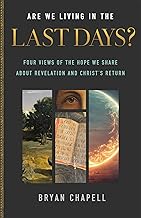
Will Jesus’s return be preceded by a single world government? Will every person have a government-issued ID or mark? Does Christ return once or twice? Will believers go through a Great Tribulation? Will there be a literal battle of Armageddon? Does it even matter what we believe about future events?
Biblical prophecies about the end times have confused, confounded, and even divided God’s people for centuries. But the reason Scripture gives us hints about the future is to provide the encouragement we need to endure the present, confident that God keeps his promises.
In this balanced look at four major views of the end times, bestselling author Bryan Chapell explains the primary ways Christians have interpreted biblical prophecy about the last days, not so that we might pick a hill to die on but so that we can cling to what unites us in Christ. No matter what end times view we find most compelling, in God’s plans we can find strength for today and hope for tomorrow.
How we get reliable guidance is always a hot topic for Christians. Should we wait for a personal ‘word’ from the Lord, perhaps delivered by some mysterious process? Does God have anything to say about the daily matters that concern his people? Can the Bible be involved in our understanding the will of God for our lives, considering that it was written when so much that is familiar to us was not dreamt of? Perhaps most importantly of all, the dangers of personal decision and guidance without considering our relationship with others, particularly the believing community, are raised. Tim Chester addresses the issues and provides clear, thoughtful biblical answers. Reflections on each section and a final decision-making checklist make this a truly practical and readable guide.
What’s the big deal about baptism? Jesus commands his disciples to be baptized, and it’s a glorious picture of a person’s union with Jesus’ death, burial, and resurrection. Still, many Christians feel unclear about the topic, having more questions than answers. This short work provides a biblical explanation of baptism. What is it? Who should be baptized? Why is it required for church membership? And how should churches practice baptism?
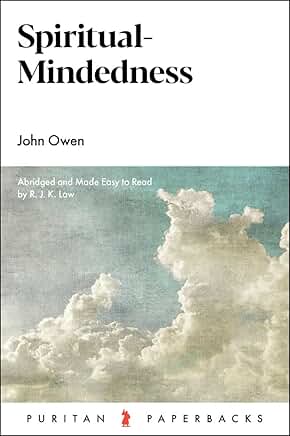
Thomas Chalmers wrote that Owen’s book on Spiritual-Mindedness holds ‘a distinguished rank among the voluminous writings of this celebrated author’. For him three features made it very special: -The force with which it applies truth to the conscience. -The way Owen plumbs the depths of Christian experience as a skillful physician of the soul. -The uncovering of the secrets of the mind and heart so that the true spiritual state of the reader is discovered. This book began life as a collection of meditations on Romans 8:6, which were written for the author’s own benefit during a time of illness. Alarmed by the subtle power the world exercises over the mind, Owen shows us how to really live by raising our thoughts above all earthly objects and setting them on ‘things above, where Christ is’ (Col. 3:1) A favorite book of William Wilberforce, it contains some passages which are not surpassed in all of Owen’s writings. It comes from the pen of a tender-hearted pastor whose only purpose is to encourage the believer in the ongoing battle against sin. So if you feel overwhelmed by the power of worldliness then this is definitely the book for you!
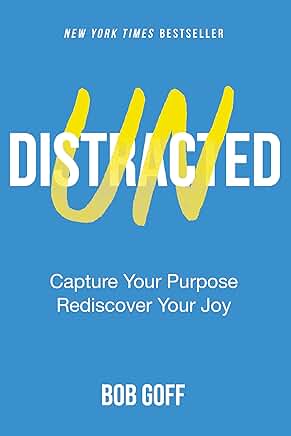
The world has never been more distracting—joy has never been more possible.
You live with a massive amount of distraction:
desperate headlines
smartphone scrolling
an endless to-do list
Not to mention the nagging questions of your heart:
Am I making the right decision?
Am I with the right person?
Will my past mistakes keep me from my best future?
Through the pithy and inspiring storytelling that has endeared him to millions, New York Times bestselling author Bob Goff invites you to laugh with more gusto, dream with more confidence, and love with more intention in this disarming call to live Undistracted. Bob’s stories are like the rumble strips on the road that make you suddenly alert to how far you have drifted from your lane. From visiting friends in San Quentin to accidentally getting into a stalker’s car at the airport to establishing Uganda’s first space program, Bob shows you the way back to an audaciously attentive life. Your undistracted life is an adventure waiting to happen. What stories will you live with undistracted purpose and unstoppable joy?
Poverty is much more than simply a lack of material resources, and it takes much more than donations and handouts to solve it. When Helping Hurts shows how some alleviation efforts, failing to consider the complexities of poverty, have actually (and unintentionally) done more harm than good.
But it looks ahead. It encourages us to see the dignity in everyone, to empower the materially poor, and to know that we are all uniquely needy—and that God in the gospel is reconciling all things to himself.
Focusing on both North American and Majority World contexts, When Helping Hurts provides proven strategies for effective poverty alleviation, catalyzing the idea that sustainable change comes not from the outside in, but from the inside out.
Chosen by God by Dr. R. C. Sproul is a contemporary classic on predestination, a doctrine that isn’t just for Calvinists. It is a doctrine for all biblical Christians. In this updated and expanded edition of Chosen by God, Sproul shows that the doctrine of predestination doesn’t create a whimsical or spiteful picture of God, but rather paints a portrait of a loving God who provides redemption for radically corrupt humans.
We choose God because he has opened our eyes to see his beauty; we love him because he first loved us. There is mystery in God’s ways, but not contradiction.
Pastor, it’s time to turn down the noise and focus on what matters.
Today’s pastoral world is packed with books, conferences, and seminars teaching you different techniques for being an all-star pastor, growing your church quickly, and changing the world. But the key to true success is much harder and much simpler. Pastors are called to be faithful, to have exemplary character, and to love Jesus. Without faithfulness, their ministry ends up harming others rather than helping them. Churches need pastors with sound doctrine and a sound life.
Character Matters was written to help you slow down, cut through the noise and distractions, and focus on what matters—the fruit of the Spirit. Each chapter is a guided, biblical meditation on one aspect of each piece of the fruit of the Spirit. As you reflect and focus on the simple things that matter, you’ll see your heart change and your ministry follow, slowly, surely, and by the power of the Spirit.
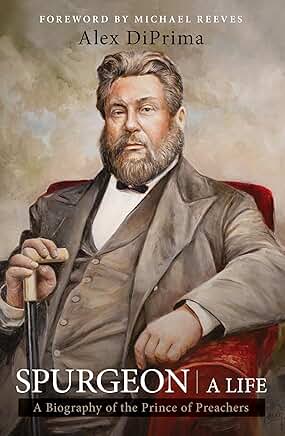
“In this book, Alex DiPrima has produced what many others have failed to deliver: a one-volume biography of Spurgeon that tells the story with power, insight, and due recognition of his historical significance.”
—R. Albert Mohler Jr., president, The Southern Baptist Theological Seminary
Alex DiPrima paints a fresh portrait of Charles Haddon Spurgeon, the most well-known gospel minister of the nineteenth century. By providing social, historical, and religious context, DiPrima helps us comprehend the scope of Spurgeon’s ministry in London. Combining academic expertise with popular presentation, this short biography of the famed Prince of Preachers will be the go-to introduction to Spurgeon for years to come.
How to build a culture of truly effective gospel-sharing in your church.
Your church’s sermons often include a call to evangelize. You’ve held evangelism training events. You give out invites to your Christmas and Easter services. So… where are all the new Christians? Is your church actually reaching the lost with the gospel?
For many of us, despite having the best intentions our churches struggle to reach out with the gospel effectively. J.A. Medders and Doug Logan Jr. have decades of experience in leading churches and mentoring pastors, and here they outline six principles for cultivating a genuine evangelistic culture throughout your church.
Includes case studies from a variety of different cultures and contexts to give you practical ideas for implementing these six principles.
How deeply have leftist billionaires infiltrated America’s churches?
In Shepherds for Sale, Megan Basham of the Daily Wire documents how progressive powerbrokers —from George Soros, to the founder of eBay, to former members of the Obama administration— set out to change the American church. Their goal: to co-opt evangelicals for political purposes. She exposes:
The left-wing billionaires, foundations, and think tanks that deliberately target Christian media, universities, megachurches, nonprofits, and even entire denominations
The left-wing billionaires, foundations, and think tanks that deliberately target Christian media, universities, megachurches, nonprofits, and even entire denominations
The celebrity megachurch pastor who secretly encouraged a group of pastors to change their views on sexuality
The revered Presbyterian theologian who backed a congregation rebelling against his own denomination
These are just a glimpse into the compromises and astroturf campaigns Basham uncovers. Many evangelical leaders are pushing their members to “whisper” about sexual sins, reconsider the importance of abortion, lament the effects of climate change, and repent of “perpetuating systemic racism.” And in exchange for toeing a left-wing line, many of those church leaders and institutions have received cash, career jumps, prestige, and praise. Basham brings the receipts, and names names.
A rigorously reported exposé, Shepherds for Sale is a warning of what happens when the church trusts the world’s wisdom instead of Scripture.
Commentaries on the Sermon on the Mount
Back in August, I began a sermon series on Matthew 5-7, The Sermon on the Mount. Here are some of the commentaries I am using:
A spiritual classic, this detailed and comprehensive study by one of the greatest expository preachers of our time explains Christ’s teaching in the Sermon on the Mount and incisively applies it to the Christian life.
With characteristic vigor and emotional vitality Dr. Lloyd-Jones presents a brilliant and detailed exposition of one of the best known but most frequently misunderstood passages of Scripture. Here is a comprehensive and exhaustive study of our Lord’s words as recorded in Matthew chapter five. This beautiful portion of the Sermon on the Mount is carefully analysed, its contents outlined and thoughtfully arranged, and vastly rich and abundant truths are gleaned for the reader’s spiritual nurture.
The author brought a wealth of devoted study as well as a profound spiritual appreciation to the work of interpreting this greatest address of our delightful experience in meditation. It presents depth of thought in simple language and beauty of style and contains a veritable thesaurus of spiritual truths drawn from the entire Bible.
Matthew 5-7, popularly known as the Sermon on the Mount, has been described as “the essence of Christianity” and inspired many commentaries. However, New Testament professor Charles Quarles believes a fair number of those volumes either present Christ’s sermon as containing an impossible spiritual ethic or instead dilute its message so much that hardly any ethical challenge remains. Also concerning, a recent Gallup poll indicated only onethird of American adults recognize Jesus as the source of this teaching that has often inspired people who do not even embrace evangelical Christianity.
Quarles’ new analysis, part of the New American Commentary Studies in Bible & Theology series, aims to fill the gap between these extremes by dealing with the important questions of whether believers can live by the Sermon on the Mount today, and, if so, how. Looking at the Beatitudes, what it means to be salt and light, and the demand for superior righteousness, he writes to restore this crucial section of our Lord’s teaching to its proper place in His church.
The Beatitudes, written by Thomas Watson, is an exposition of Matthew 5:1-12. Thomas Watson was a prominent Nonconformist Puritan and religious author. Watson was born and raised in England and was a popular preacher until the Restoration. He is now best remembered for his many popular Christian books such as A Body of Divinity, The Godly Man’s Picture, and The Doctrine of Repentance.
The three chapters of Matthew known as the Sermon on the Mount contain truths so rich and powerful that even a lifetime of study could not exhaust their depths. For centuries, Jesus’s majestic portrait of the kingdom of heaven and his unparalleled instructions for godliness have captivated Christians and non-Christians alike. In this classic commentary, now revised with a fresh look and ESV Bible references, seasoned pastor R. Kent Hughes guides readers through this glorious portion of the Bible with exegetical precision, expositional clarity, and practical sensitivity. Whether used by preachers, small group leaders, or individual laypersons, this resource will prove invaluable for illuminating the Sermon on the Mount’s enduring power to enliven hearts and transform minds.
The Old Testament looked forward to the final King of kings who would bring everlasting salvation and peace. In his Gospel, Matthew demonstrates that Jesus Christ is that King, perfect in His eternal glory and majesty. As the King’s ambassadors, Christians today will find in Matthew great motivation for heartfelt worship and service.
Join John MacArthur as he explains each verse of Matthew 1–7 in a way that is both doctrinally precise and intensely practical. Taking into account the cultural, theological, and Old Testament contexts of each passage, MacArthur tackles interpretive challenges and fairly evaluates differing views, giving the reader confidence in his conclusions.
The MacArthur New Testament Commentary series comes from the experience, wisdom, and insight of one of the most trusted ministry leaders and Bible scholars of our day. Each volume was written to be as comprehensive and accurate as possible, dealing thoroughly with every key phrase and word in the Scripture without being unnecessarily technical. This commentary will help to give a better, fuller, richer understanding of God’s Word, while challenging the reader to a vibrant personal spiritual walk.
Sermons on the Beatitudes
I began my sermon series on the Sermon on the Mount with a mini-series on the Beatitudes. I have attached links to the audio recordings of each sermon.
The theme of good works is a dominant theme in the book of Titus (Titus 1:16; 2:7, 14; 3:1, 8, 14). “The fundamental teaching of the epistle is that the redemptive work of God in Christ must lead to changed lives,” William Mounce argues, “that Christ sacrificed himself to ‘redeem us from all lawlessness and cleanse for himself a special people, zealots for good works.’” And in this blog, I want to examine what Paul says about good works so we can develop a proper theology of good works.
Before I get started, though, let me give you a brief definition of a good work: a good work is any action or speech that honors our Lord and helps our neighbor. With good works defined, we are ready to look at a couple foundation stones for our theology of good works.
Foundation Stone #1: We Are Not Saved because of our Good Works
To properly understand good works, we must start here: God did not save us because of our good works. Before God saved us, we were dead in sin. We were not spiritually unconscious and waiting for a spiritual awakening. No! We were spiritually dead and buried in the muck and mire of sin. We were “foolish, disobedient, led astray, slaves to various passions and pleasures, passing our days in malice and envy, hated by others and hating one another” (Titus 3:3). We were spiritually lifeless, and we needed God to resurrect us.
Thankfully, at God’s appointed time and in accordance with God’s immeasurable grace in Christ, He gave us life. God illuminated our minds, replaced our hearts of stone with hearts of flesh, and drew us to Christ. “But when the goodness and loving kindness of God our Savior appeared,” Paul says, “He saved us” (Titus 3:3-5). While we were spiritually dead and buried in the muck and mire of sin, God graciously breathed new life into us and resurrected us from our spiritual graves.
This had nothing to do with our works, our futile and defective religious deeds. Paul makes this clear: God “saved us, not because of works done by us in righteousness, but according to his own mercy” (Titus 3:5; emphasis added). In other words, our salvation in Christ is not because of our works, it is because of God’s work. God is the giver of our salvation, and we are the recipients. God is the subject of our salvation, and we are the objects. A proper theology of good works must start here.
Foundation Stone #2: We Are Saved for Good Works
How would you answer this question: “Why did Jesus die as a substitute for sinners?” You could answer this in various ways: 1) to save us, 2) to deliver us from the penalty of sin, 3) to give us eternal life, or 4) to reconcile us to God. These are great answers. But how many of you would also say, “One reason Jesus died was to save a people for Himself who are zealous for good works”? Based on my conversations with Christians, not many.
Here is the problem, though, this theme—divine deliverance for the sake of God-honoring service—is a major theme in the Bible. “Go into Pharaoh and say to him, ‘thus says the Lord, ‘Let my people go that they may serve me’” (Exodus 8:1; emphasis added). And this theme is found in the book of Titus. Paul says that Jesus gave himself for us “to redeem us from all lawlessness and to purify for himself a people for his own possession who are zealous for good works” (Titus 2:13-14; emphasis added). Paul is clear, Jesus died to create a people who are zealous and enthusiastic for good works. So, Jesus did not hang on a Roman cross because of our good works, but He did hang on a Roman cross to create a people for Himself who have an unquenchable zeal for good works. Our theology of good works must include this.
The Role of Good Works: They Help Our Neighbors
We are not saved for good works because God needs our good works. God does not need anything, especially our good works. He does not sleep or slumber, eat or drink, or wear out or rust out. He does not need clothing, nor does He need advancements in modern medicine. This is the“God who made the world and everything in it.”He is Lord of heaven and earth. He “does not live in temples made by man, nor is he served by human hands” (Acts 17:24-26).
Well, why are we saved for good works? It is because our neighbors need our good works. We live in a fallen world wrecked with the inevitable consequences of sin. Death leaves people childless and spouseless. Disease leaves people hurt and in despair. Disasters leave communities ravaged and desolate. Involuntary unemployment leaves families anxious and in need. Divorce leaves families fractured and splintered. Sexual sin leaves people worn out and ruined. Rebellious children leave parents discouraged and in anguish. We can go on and on. This fallen world leaves people with a variety of urgent needs.
And God saved us for good works so we could demonstrate our love for Him by aiding our neighbors: “And let our people learn to devote themselves to good works, so as to help cases of urgent need, and not be unfruitful” (Titus 3:14; emphasis added). We are commanded to spend ourselves doing good to meet our neighbor’s urgent needs.
The Role of Good Works: They Increase Our Fruitfulness
Good works increase our fruitfulness. You probably noticed this in the verse I previously referenced: “And let our people learn to devote themselves to good works, so as to help cases of urgent need, and not be unfruitful” (Titus 3:14; emphasis added). God is glorified in us when we bear much fruit. One way we become increasingly fruitful in the Christian life is by selflessly devoting ourselves to good works for Christ’s namesake.
Paul prayed for this type of increased fruitfulness for other Christians: “And so, from the day we heard, we have not ceased to pray for you, asking that you may be filled with the knowledge of his will. . . bearing fruit in every good work and increasing in the knowledge of God” (Colossians 1:9-10; emphasis added). Paul’s prayer teaches us two things: 1) spiritual fruit springs from good works, and 2) God is the one who ultimately enables us to bear fruit in every good work. So, let us selflessly devote ourselves to good works, and let us eagerly petition God to bless our labors and enable us to bear more and more fruit.
The Role of Good Works: They Adorn the Gospel
Above all, good works adorn the gospel. Just think about the gospel of Jesus Christ. The gospel is a message about how God has acted in the person of Jesus Christ to save sinners. When we proclaim the gospel, we proclaim words, sentences, and paragraphs about what Jesus Christ has done. And the clear proclamation of the gospel is the most beautiful proclamation of all.
The message of the gospel, though, can be adorned with our good works. Paul makes this clear when he says, “Bondservants are to be submissive to their own masters in everything; they are to be well-pleasing, not argumentative, not pilfering, but showing all good faith, so that in everything they may adorn the doctrine of God our Savior” (Titus 2:9-10; emphasis added). When we adorn something, we make it attractive. The Jewish temple was “adorned with noble stones” (Luke 21:5). Women should “adorn themselves in respectable apparel” (1 Timothy 2:9). It is what a bride does on her wedding day. She is already gorgeous, but she becomes even more eye-popping when she adorns herself in a radiant wedding dress.
So, when slaves submit to their masters instead of arguing with and stealing from their masters, they adorn the gospel of Jesus Christ, they make it attractive to their masters. And when we, as blood-bought Christians, devote ourselves to good works, we adorn the gospel to the outside world, we make it eye-popping to unbelievers.
We proclaim the good news of the gospel with words, but we adorn the good news of the gospel with good works.
Application: Be Ready for Good Works
Paul tells us to be ready for every good work: “Remind them to be submissive to rulers and authorities, to be obedient, to be ready for every good work. . .” (Titus 3:1; emphasis added). To “be ready” means we need to be prepared. This is why Jesus tells us to be ready for His Second coming: “Therefore you also must be ready, for the Son of Man is coming at an hour you do not expect” (Matthew 24:44; emphasis added). Because Jesus will return at an unexpected hour, He wants us to live in a constant state of readiness. He wants us to be prepared.
And Paul wants us to have this same mindset when it comes to every good work. Since God has prepared good works for us to walk in (Ephesians 2:10), Paul commands us to be ready, to live in a constant state of preparedness to walk in these good works.
Application: Be Carefully Devoted to Good Works
Paul also tells us to be carefully devoted to good works: “The saying is trustworthy, and I want you to insist on these things, so that those who have believed in God may be careful to devote themselves to good works” (Titus 3:8; emphasis added). The phrase “be careful” means to pay close attention to something. Just think about a teacher who instructs her students to carefully read the instructions before answering the questions on their exams. She wants them to pay close attention to the instructions.
And the term “devote” means to seriously apply yourself to something. I constantly tell the youth in our church to devote themselves to the study of God’s word. I want them to seriously apply themselves, to employ their time and energy, to the study God’s word.
Let us put these together. When the Bible tells us to carefully devote ourselves to good works, God is telling us to have a thoughtful approach to the continuation of good works, and to seriously apply ourselves to the completion of good works.
Warning: Good Works Display the Authenticity of our Faith
The Bible clearly teaches these two truths: 1) a living faith in Christ is evidenced by good works, and 2) a false faith is evidenced by ungodly works. Jesus teaches this. “Whoever has my commandments and keeps them, he it is who loves me” (John 14:21). He goes on to say, “Whoever does not love me does not keep my words” (John 14:24). Our love for Christ evidences itself by our obedience to His commands. Our lack of love for Christ evidences itself by our disobedience to His commands.
The book of Titus teaches this as well. If Christ’s death secured His people’s zeal for good works, then our zeal for good works will show that we are truly among His people. On the other hand, if Christ’s death secured His people’s zeal for good works, then the absence of good works will evidence that we are not among his people.
Paul even alludes to this after he commands Titus to rebuke false teachers. He says the false teachers “profess to know God, but they deny him by their works. They are detestable, disobedient, unfit for any good work” (Titus 1:16; emphasis added). The false teachers are phonies—their works make this evident. And since they are phonies who remain dead in sin, they are unfit for any good work. As you can see, good works display the authenticity, or inauthenticity, of our faith.
Applying God’s Word
First, and perhaps most importantly, we must remember this, God’s love for us does not wax and wane based on the amount of good works we do. Because we are in Christ, God has loved us with an everlasting love. He loved us while we were dead in sin, and He most certainly loves us now that we are alive in Christ. This means He loves us when we fumble in bumble throughout the Christian life, even when we neglect to carefully devote ourselves to good works.
Second, we must strive to eliminate time-consuming activities that hinder us from a life of good works. God has generously given us many good gifts such as T.V., movies, social media, sports, and certain hobbies. We are supposed to master these good gifts and use them to maximize our joy in Christ. Sadly, though, these good gifts often end up mastering us. These things begin to consume too much of our time, energy, and money. And when these good gifts take up too much of our precious resources, we end up with fewer resources that we can utilize to carry out good works—works that honor our Lord, aid our neighbor, and increase our fruitfulness.
Third, make a list of good works you want to fulfil throughout a day, week, or month. Sure, many of the good works God has prepared for us appear out of nowhere and require our spur-of-the-moment obedience. Some good works, though, can be planned out. Because of this, try to plan out some good works: 1) list out a few people you desire to encourage when you gather with your church on a Sunday morning, 2) write down a couple widows or widowers you desire to visit, or 3) plan a discipleship date with one of your children. I believe this discipline, planning out good works, will enable us to live a purposeful and fruitful Christian life.
Fourth, we need to understand that most of our good works will take place at home, church, and work. The average Christian spends most of their time in these places. So, to be maximally fruitful, we need to strategically devote ourselves to good works in these places. This means the people who will benefit most from our good works are our families, fellow church members, and co-workers.
And lastly, we need to have a war-time mentality. A little over two years ago, the region I live in was dismantled by a category four hurricane. The destruction was catastrophic. It looked like a massive shrapnel grenade blew up and damaged everything in sight. This whole area looked like a region ravaged by war. At this point, amid the destruction, our beaten and bruised church became a base of operations for disaster relief efforts.
We immediately began to process and fulfill hundreds of work orders. We had a chainsaw crew devoted to clearing roads, driveways, and yards. We had a tarp crew dedicated to tarping damaged roofs. We set up a supply and distribution center to distribute goods to those with urgent needs. And, as we did all this, we sought to encourage and pray for those we served. In other words, we were devoted to good works. And I think we were so careful to devote ourselves to good works—to the continuation and completion of good works—because we, as a church, had a war-time mentality.
Well, how can we develop a war-time mentality when it does not feel like a time of war? We need to understand the spiritual war we are currently in. Satan and his demons wreak more havoc on a day-to-day basis than any category four hurricane could inflict in a lifetime. We are definitely in a time of war, an unseen and spiritual war, but a real war! And since we are in a time of war, we, as followers of Christ, should urgently and strategically do good works, works that honor the Lord Jesus Christ and aid our neighbors.
“When words are many, transgression is not lacking,
but whoever restrains his lips is prudent.”
Proverbs 10:19
If you are anything like me, and I am confident that I am not the exception here, then you love to hear yourself talk. According to the Bible though, this is not a good thing. Lately, this particular sin pattern of mine has been at the forefront of my thinking—it has caused me to examine myself. And I figured one of the best ways to examine myself was to ponder and meditate on Proverbs 10:19. In this blog, I’ll just mention a few of my thoughts on this popular but poorly applied, at least in my case, verse.
The Untamed Tongue
It should not surprise us, biblically or experientially, that our hearts are evil (Gen. 6:5). And when we consider that our words flow from our evil and wicked hearts (Matt. 12:34), “we cannot conceive of words, much less a multitude of words, without sin.”[1] It is as though our tongue is a “restless evil, full of deadly poison” (Jas. 3:8). Sure, the tongue is a small member of our body, but it is a small member that has catastrophic affects—much like a small spark that causes a devastating wildfire (Jas. 3:5). Even though the tongue is a slender portion of flesh, it contains a whole world of iniquity[2], defiles and stains the whole body, sets our lives on fire, and is fueled by the very flames of hell (Jas. 3:6).
Therefore, proverbial wisdom concludes that the increase of words inevitably leads to the increase of transgressions. In other words, the more we talk the more we sin! And I am sure that by now, if we are honest, we have come to realize that no other “member” of our body wreaks more havoc to our Christian lives as our tongues do.[3]
Godly Restraint
Thankfully, this verse does not just teach us that the increase of words leads to an increase of transgressions. The Spirit of God goes on to tell us that “whoever restrains his lips is prudent” (Prov. 10:19). To restrain means to keep back, withhold, or hold off. Prudence is simply the God given wisdom that enables us to live a life that magnifies the Lord. And it is the one who has enough self-control to restrain his lips that is prudent. So godly wisdom reveals that it is far better to largely keep our mouths shut than it is to incessantly open our mouths and multiply transgressions against our good and gracious God.
But how come so many Christians, including myself, do not restrain their lips? Well, I believe it is because we are not nearly as spiritually mature as we think we are. We think that if we put away sexual immorality, impurity, sensuality, drunkenness, murder, and things like these, then we are spiritually mature—and to an extent this may be true. We forget, though, that few things clearly reveal the credibility and maturity of our Christian faith like how we manage our tongues (Mt. 12:33-37; Jas. 1:26; 3:1-4).
So do some self-examination. Evaluate your spiritual maturity based on how you govern your tongue. How are you doing with these sins: grumbling, complaining, lying, crude joking, quarreling, degrading humor, gossip, slander, flattery, destructive sarcasm, and irritable responses? And do not just evaluate your spiritual maturity based on how you speak to co-workers and strangers; evaluate it based on how you speak to those closest to you, i.e., your friends, family, and spouse.
Gospel Comfort
This type of self-examination is helpful. Regarding sins of speech, self-examination enables us to see that these sins are not trivialities—they are treasonous acts against our Sovereign Lord that deserve a sentence of condemnation. Self-examination alone, though, is never good. It must also be paralleled with an examination of the grace of God in Christ.
If the Lord counted these sins of speech against us, who could stand on the day when we must give an account of every careless word we have ever spoken (Ps. 130:3; Mt 12:36)? None of us. Thankfully, in Christ, the Lord does not count these sins against us. Christ, with His single and efficacious sacrifice for sins, has made complete atonement for our sins, even our sins of speech (Heb. 10:11-13). Now we can exclaim with the Psalmist, “As far as the east is from the west, so far does he remove our transgressions from us” (Ps. 103:12). Praise the Lord!
Gospel Obedience
Gospel obedience is an obedience that is rooted in God’s love for us in Christ. Well, what does gospel obedience look like regarding Proverbs 10:19? Let me mention four ways this may look in the lives of Christians.
First, we need to have a biblical view of the seriousness of speech sins. We must never think of these sins “as anything less than the nails that pierced” Christ’s hands and feet. This will lead us to pray for an increase of “refraining wisdom.”[4] Second, we should be prudent and restrain our lips, “not indeed in silence, but in caution; to weigh our words before uttering them; never speaking, except when we have something to say; speaking only just enough; considering the time, circumstances, and person; what is solid, suitable, and profitable.”[5] Third, we must exercise the same level of refraining wisdom on social media, email, text, and any other medium we use to communicate these days. And fourth, when we hastily open our lips and use our tongues in destructive ways, we need to repent and cry out with Paul, “Wretched man that I am! Who will deliver me from this body of death? Thanks be to God through Jesus Christ our Lord” (Rom. 7:24).
[1] Charles Bridges, Proverbs, Geneva Series of Commentaries (Edinburgh: The Banner of Truth, 2008), 102.
[2] John Calvin and John Owen, Commentaries on the Catholic Epistles (Bellingham, WA: Logos Bible Software, 2010), 320.
[3] Douglas Moo, The Letter of James, The Pillar New Testament Commentary (Grand Rapids: Eerdmans Publishing Company, 2000), 159.













 Doctrine & Devotion