We’ve become familiar with the phrase ‘Mighty God’ as a reference to the Christ child. This article invites us to exult in the true meaning of this incredible phrase. “This ‘God’ of Isaiah 9:6 paired with ‘might’ brings us to the battlefield. The “Wonderful Counselor” guides his people with wisdom at a fork in the road; the “God of might” stands before them in battle. David had his mighty men for war. God’s people, forecasts Isaiah, will have a Mighty God with them in combat.”
In this article, Piper connects Jesus’s command “to let our light shine” with Jesus’s last Beatitute. “Jesus’s command for all the world is that all human beings find in him the all-satisfying glory for which we were made. Then he commands that we turn from trusting in anything else, and bank our hope on the “great reward” of everlasting joy in him. And then, in that hope and joy, he commands that we let that light shine in sacrificial good deeds of love, so that others will see and savor and spread the glory of God.”
Kirk Cameron recently denied the clear biblical teaching on hell as eternal conscious torment. Because this has garnered so much attention, Mohler addresses several of Cameron’s statements and arguments. “The New Testament evidence for hell as eternal conscious punishment is clear, as Jesus declared in Matthew 25:46: “And these will go away unto eternal punishment, but the righteous into eternal life.” Note carefully that eternal punishment and eternal life are presented as parallel destinies—both are eternal and both are final. The wicked, without Christ, go to eternal conscious torment, described in the Bible with graphic intensity. The redeemed, bearing the imputed righteousness of Christ Himself, enter into eternal life. Annihilation is not part of the picture. Hell is not a passage into non-existence, but the torment of the wicked. The truth is horrible, so the warnings are stark.”
In a similar vein, Ryan Denton pleads with unbelievers to flee from hell and to flee to Christ, the only safe refuge from the wrath to come. “Here’s another way to think about it. The real monstrosity is not God’s justice that damns the sinner to hell for eternity. It’s the sinner who turns against his Creator while breathing the air God gives, basking under God’s sunlight, eating the food God provides with the miracle of tastebuds that cover his tongue, all while walking and living on the earth God made. These very gifts are used to defy Him. The creature depends on God every moment for life, breath, and being—and yet lives as if God is unnecessary. This is the height of treason and ingratitude. This is why hell is not excessive.“
Sam Emadi gives us four diagnostic questions to help determine whether someone’s baptism was genuine. This article is particularly helpful for pastors as they interview prospective members. “In these circumstances, determining whether a baptism was true, even if irregular, can be complicated. In my own ministry, I’ve used the following four questions as a grid for determining true baptisms. If you can answer each of the following four questions affirmatively then I think you’re looking at a true baptism.”
A dead faith inevitably reveals itself. In this article, Plummer lists five signs of a dead faith from the book of James. “Thus, James instructs us that there are two categories of faith—(1) faith that has works and is thus living and (2) faith that does not have works and is thus dead. Works and faith are not the same thing. Rather, works are produced by a genuine faith and are, therefore, evidence of it. In fact, James’s explicit language would even call into question my use above of the verb “produced.” Genuine faith has works. Works are inherent and organic to living, saving faith.”
I always enjoy looking through Kevin DeYoung’s top 10 books of any given year. Here are his top 10 books of 2025. “This list is not meant to assess the thousands of good books published in the past year. This is simply a list of the books—Christian and non-Christian, but all non-fiction—that I thought were the best in the past year. “Best” doesn’t mean I agreed with everything in them; it means I found these books—all published in 2025—a strong combination of thoughtful, useful, helpful, insightful, and challenging. Undoubtedly, the list each year reflects my own interests and tends to be heavy on history and theology.”
On a similar note, the TGC staff listed out their book awards as well. “The Gospel Coalition’s annual book awards offer help identifying “sound theological works” for your enrichment. We work hard to identify some of the best evangelical books published each year. This announcement is the culmination of months of hard work by a big team of book lovers. We receive nominations from publishers in 11 categories. Then our editors work together to recommend finalists in each category. Finally, a panel of judges reads each one carefully before casting their votes.”
“You need to read. Renounce as much as you will all light literature, but study as much as possible sound theological works, especially the Puritanic writers, and expositions of the Bible. We are quite persuaded that the very best way for you to be spending your leisure, is to be either reading or praying.” Spurgeon
Erik reminds young men, really all of us, that we must discipline ourselves for the purpose of godliness. “A Christian’s life of discipline mostly looks mundane and unimpressive. We devote ourselves to the word, worship, prayer, proclamation, fellowship, service, suffering, giving, missions, and other basic means of grace that lead to growing intimacy with God and kingdom fruitfulness. Apart from such seemingly mundane discipline, however, we will drift toward despair rather than deeper delight.“
Randy Alcorn shares an excerpt from J. I. Packer’s Knowing God that describes what it means to have the Christmas spirit. It’s a powerful quote. Here’s a taste: “The Christmas spirit does not shine out in the Christian snob. For the Christmas spirit is the spirit of those who, like their Master, live their whole lives on the principle of making themselves poor–spending and being spent–to enrich their fellow humans, giving time, trouble, care and concern, to do good to others–and not just their own friends–in whatever way there seems need.”
On Sunday evenings throughout the summer, a few men in our church have been leading our congregation through a teaching series called “Biblical Foundations for Baptist Churches,” an introductory look at Baptist ecclesiology. A month ago, I taught on “The Church’s Shepherd Leaders: Elders,” which has sparked numerous conversations among our church members. I imagine this was because I used the term “elder” throughout my teaching.
To some in our congregation, the term “elder” is shrouded in mystery. Many lifelong Baptists are unfamiliar with the term. One pastor said mentioning “elders” in a contemporary Baptist church was like mentioning the phrase “College of Cardinals.” To others, the term “elder” reeks of Presbyterianism rather than Congregationalism. And to others, the term “elder” is somehow linked with Reformed soteriology, so any mention of elders is a covert attempt to “Calvinize” the church.
Because of this confusion, I wanted to take a moment to clarify my thoughts in writing, with the desire that this would bring clarity to those interested in this topic. Essentially, I just want to make a historical, biblical, and practical case for a plurality of elders shepherding a local church. Then, I’ll conclude by mentioning what all this means for our church family.
The Historical Case for a Plurality of Elders
What if I told you that W.B. Johnson (1782-1862), the first president of the Southern Baptist Convention, advocated for a plurality of elders in a local church? In his book, The Gospel Developed Through The Government and Order of the Churches of Jesus Christ, Johnson stated, “It is worthy of particular attention, that each church had a plurality of elders, and that although there was a difference in their respective department of service, there was a perfect equality of rank among them.”
I imagine a single quote from one man isn’t entirely convincing, so allow me to present a historical survey of Baptist Confessions stemming from the 1600s to the 1900s. This survey will show that: 1) from the earliest beginnings, Baptists have held to the view that there are two ongoing church offices presented in the New Testament: elders and deacons; 2) Baptists have held to the view of plural eldership; 3) Baptists have used the terms elder, overseer (bishop), and pastor interchangeably; and 4) it is only in more modern developments that plural eldership has largely disappeared.
A Short Confession of Faith in Twenty Articles, by John Smyth, 1609
Article 16: The ministers of the church are, not only bishops (“Episcopos”), to whom the power is given of dispensing both the word and the sacraments, but also deacons, men and widows, who attend to the affairs of the poor and sick brethren.
A Declaration of Faith of English People Remaining at Amsterdam, 1611
Article 20: That the Officers of every Church or congregation are either Elders, who by their office do especially feed the flock concerning their souls (Acts 20:28, 1 Peter 5:2,3) or Deacons, men and women, who by their office relieve the necessities of the poor and impotent brethren concerning their bodies, Acts 6:1-4.
Propositions and Conclusions Concerning the Christian Religion, 1612-1614
Proposition 76: That Christ hath set in His outward church two sorts of ministers: viz., some who are called pastors, teachers or elders, who administer in the word and sacraments, and others who are called Deacons, men and women: whose ministry is to serve tables and wash the saints’ feet (Acts 6:2-4; Phil. 1:1; 1 Tim. 3:2,3,8,11; and chap.5).
The London Confession, 1644
Article 36: That being thus joined, every Church has power given them from Christ for their better well-being, to choose to themselves meet persons into the office of Pastors, Teachers, Elders, Deacons, being qualified according to the Word, as those which Christ has appointed in his Testament, for the feeding, governing, serving, and building up of his Church, and that none other have power to impose them, either these or any other.
Second London Confession, 1677, 1688
Article 26, Paragraph 8: A particular Church gathered, and completely Organized, according to the mind of Christ, consists of Officers, and Members; And the Officers appointed by Christ to be chosen and set apart by the Church (so called and gathered) for the peculiar Administration of Ordinances, and Execution of power, or Duty which he entrusts them with, or calls them to, to be continued to the end of the World, are Bishops or Elders and Deacons.
The Philadelphia Confession of Faith, 1742
Chapter 27, Paragraph 8: A particular church, gathered and completely organized according to the mind of Christ, consists of officers and members; and the offices appointed by Christ to be chosen and set apart by the church, for the peculiar administration of ordinances, and execution of power or duty, which he instructs them with, or calls them to, to be continued to the end of the world, are bishopsor elders, and deacons.
The New Hampshire Confession, 1833
Paragraph 13: Of a Gospel Church We believe that a visible Church of Christ is a congregation of baptized believers (66), associated by covenant in the faith and fellowship of the gospel; observing the ordinances of Christ (68); governed by his laws, and exercising the gifts, rights, and privileges invested in them by his Word; that its only scriptural officers are Bishops, or Pastors, and Deacons, whose qualifications, claims, and duties are defined in the Epistles to Timothy and Titus.
Swedish Baptist Confession of Faith, 1861
Article 9: We believe that a true Christian church is a union of believing and baptized Christians, who have covenanted to strive to keep all that Christ has commanded, to sustain public worship, under the guidance of the Holy Spirit to choose among themselves shepherds or overseers and deacons, to administer baptism and the Lord’s supper. . .
Articles of the Baptist Bible Union of America, 1923
Article 13: We believe that a church of Christ is a congregation of baptized believers. . . that its officers of ordination are pastors, elders and deacons, whose qualifications, claims, and duties are clearly defined in the Scriptures.
Statement of Faith of the Southern Baptist Convention, 1925, 1963
Article 6: This church is an autonomous body, operating through democratic processes under the Lordship of Jesus Christ. In such a congregation members are equally responsible. Its Scriptural officers are pastors and deacons.
Confession of Faith and Ecclesiastical Principles of the Evangelical Association of French-Speaking Baptist Churches
Part 2, Article 2: In addition to pastors or elders, the local church may have other responsible servants, for example deacons and deaconesses, whose role it is to assist the pastors or elders in their ministry, by assuming special responsibility for everything that relates to the material interests of the congregation.
The Baptist Faith and Message 2000
Article 6: In such a congregation each member is responsible and accountable to Christ as Lord. Its two scriptural offices are that of pastor/elder/overseer and deacon. While both men and women are gifted for service in the church, the office of pastor/elder/overseer is limited to men as qualified by Scripture.
Interpreting Scripture is enriched by the community of the redeemed, both past and present. This historical survey of Baptist Confessions shows that our Baptist forefathers used the terms elder, overseer (bishop), and pastor interchangeably, and they were comfortable with the idea of plural eldership. Therefore, plural eldership is not un-Baptistic. Instead, its absence is a modern development. And let me say this: I believe its resurgence in Southern Baptist Churches is a breath of fresh air.
“The recovery of biblical eldership is one of the most important developments in ecclesiology in our time. And it is happening for a very important reason: churches are turning to the New Testament once again to determine how congregations are to be organized and led.” Albert Mohler
Ultimately, the Word of God, not tradition, is our final authority for faith and practice. So, what do the Scriptures say?
The Biblical Case for a Plurality of Elders
The strongest argument for a church to be led by a plurality of elders is the clear evidence in the New Testament of churches having elders. With the historical precedent for plural eldership in Baptist churches now established, I will make a biblical case. My main goal is to show that the terms elder, overseer, and pastor are used interchangeably throughout the New Testament, and then to demonstrate that each local church was led, pastored, and cared for by a plurality of leaders.
Elders (Presbuteros)
This term is used regularly in the New Testament. Generally speaking, an elder was “a person who, by virtue of position in the family, clan, or tribe; or by reason of personality, prowess, stature, or influence; or through a process of appointment and ordination, exercised leadership and judicial functions in both religious and secular spheres in the ancient world, both among biblical and nonbiblical peoples.” In the gospels, it refers to men who were involved in the Jewish community’s leadership structure. These men are often portrayed negatively because they rejected Jesus as the Christ. Throughout the rest of the New Testament, the term elder primarily refers to those appointed by God to lead, oversee, govern, steward, and pastor local churches.
Overseer (Episkopos)
This term is used periodically in the New Testament. Generally speaking, Greeks used this term “to define an office that had superintending functions, whether in political or religious circles.” An overseer was “to look upon, to consider, to have regard to, something or those in need.” Throughout the New Testament, the term overseer also refers to those appointed by God to lead, oversee, govern, steward, and pastor local churches.
Elders And Overseers Are Used Interchangeably
In Acts 20, Paul summons the elders of the church in Ephesus: “Now from Miletus he sent to Ephesus and called the elders of the church to come to him. And when they came to him, he said to them. . .” (Acts 20:17-18). Later on, when he’s addressing them, he refers to the elders as overseers: “Pay careful attention to yourselves and to all the flock, in which the Holy Spirit has made you overseers, to care for the church of God, which he obtained with his own blood” (Acts 20:28). So, an elder is an overseer and an overseer is an elder.
In Titus 1, Paul reminds Titus of the important task of appointing elders in local churches throughout Crete: “This is why I left you in Crete, so that you might put what remained into order, and appoint elders in every town as I directed you. . .” (Titus 1:5). As Paul goes on to list out the qualifications for elders, he refers to elders as overseers: “For an overseer, as God’s steward, must be above reproach. He must not be arrogant or quick-tempered or a drunkard or violent or greedy for gain. . .” (Titus 1:7). Once again, an elder is an overseer and an overseer is an elder.
Pastor/Shepherd (Poimen)
This term is used numerous times throughout the New Testament. In the ancient world, a pastor was a shepherd, someone who looked after and cared for sheep. “The task of the shepherd was to care for the flock, to find grass and water, to protect it from wild animals (Amos 3:12), to look for and restore those that strayed (Ezekiel 34:8; Matthew 18:12), to lead the flock out each day going before it and to return the flock at the close of the day to the fold (John 10:2–4).” Throughout the New Testament, this term is largely used in reference to Jesus Christ, the Good Shepherd. It is used only once as a noun in reference to a church leader (Ephesians 4:11). So, a pastor is someone who feeds, nurtures, and protects the sheep who make up a local church.
Elder, Overseer, and Pastor Are Used Interchangeably
Even though the term “pastor” is used only once as a noun in reference to a church leader, the term is used numerous times as a verb to describe the work of an elder/overseer. We see this in Acts 20, the passage where Paul referred to elders as overseers: “Pay careful attention to yourselves and to all the flock, in which the Holy Spirit has made you overseers, to care for (poimaino: to shepherd) the church of God, which he obtained with his own blood (Acts 20:28).” So, the task of an elder/overseer is to shepherd the church of God.
We see the same truth in 1 Peter 5:1-3. In verse 1, Peter exhorts the elders of the churches. Then, in verse 2, he admonishes them to “shepherd (poimaino) the flock of God that is among you, exercising oversight (episkopeo), not under compulsion, but willingly, as God would have you. . .” Peter goes on to talk about Jesus Christ as the Chief Shepherd. So, the task of an elder/overseer is to shepherd the flock in a manner that honors the Chief Shepherd. Thus, throught the New Testament, the terms elder, overseer, and pastor are used interchangeably and refer to the same office within a local church.
The Plurality Principle
Plural leadership within a local church is all throughout the New Testament. It’s so pervasive that one pastor said, “It’s difficult to build a scriptural argument against elder plurality in the early church.” Because of this, I just want to reference a handful of Bible verses. These verses will make the case that God desires a team of elders to shepherd and oversee a local church.
The Book of Acts: The church in Jerusalem was led by the apostles and elders (Acts 11:30; 15:2, 4, 6; 16:4; 21:18). The apostles appointed elders in every church, from Lystra to Iconium to Antioch (Acts 14:21-23). The church in Ephesus was led by elders, who were also called overseers (Acts 20:17, 28). None of these passages suggests that a local church had one elder. They suggest that each local church had plural eldership.
The Book of Philippians: In Paul’s greeting, he addresses the church in Philippi, as well as the officers: “To all the saints in Christ Jesus who are at Philippi, with the overseers and deacons” (Philippians 1:1). The church in Philippi was led by a plurality of elders and served by a plurality of deacons.
The Book of 1 Thessalonians: Paul asks the church in Thessalonica to respect and esteem the leaders who minister the Word of God to them. In other words, he asks them to respect and esteem the team of elders/overseers/pastors who are shepherding them: “We ask you, brothers, to respect those who labor among you and are over you in the Lord and admonish you, and to esteem them very highly in love because of their work” (1 Thessalonians 5:12-13). Once again, multiple elders were laboring for the spiritual health of this church.
The Book of 1 Timothy: Paul lists the qualifications for overseers/elders/pastors. In the latter part of the letter, he instructs the church to honor and pay elders who lead and govern well, especially those who dedicate themselves to the ministry of the Word. “Let the elders who rule well be considered worthy of double honor, especially those who labor in preaching and teaching. For the Scripture says, ‘You shall not muzzle an ox when it treads out the grain,’ and, ‘The laborer deserves his wages’” (1 Timothy 5:17-18). Thus, a team of elders led the church in Ephesus, and on the elder team, some men especially devoted themselves to the ministry of the Word.
The Book of Titus: Paul reminds Titus of his objective in Crete, to appoint elders in local churches. “This is why I left you in Crete, so that you might put what remained into order, and appoint elders in every town as I directed you. . .” (Titus 1:5-6). The churches in Crete were a mess. They needed plural eldership to arrive at greater spiritual health.
The Book of Hebrews: The author of Hebrews commands the church to obey and submit to their leaders because of the weighty responsibility the Lord has given them. “Obey your leaders and submit to them, for they are keeping watch over your souls, as those who will have to give an account. Let them do this with joy and not with groaning, for that would be of no advantage to you” (Hebrews 13:17). This passage does not suggest that God has called one man to keep watch over the souls of the flock. Rather, it suggests that God has called a team of elders to watch over the flock.
The Book of 1 Peter: Toward the end of his letter, Peter gives a powerful exhortation to the elders of the local church. “So I exhort the elders among you, as a fellow elder and a witness of the sufferings of Christ, as well as a partaker in the glory that is going to be revealed: shepherd the flock of God that is among you, exercising oversight, not under compulsion, but willingly, as God would have you; not for shameful gain, but eagerly;not domineering over those in your charge, but being examples to the flock” (1 Peter 5:1-3). Once again, there was plural leadership. A team of pastors was entrusted with exercising oversight and shepherding the local church.
“First, no passage suggests that any church, no matter how small, had only one elder. The consistent New Testament pattern is a plurality of elders ‘in every church’ (Acts 14:23) and ‘in every city’ (Titus 1:5). Second, we do not see a diversity of forms of government in the New Testament church, but a unified and consistent pattern in which every church had elders governing it and keeping watch over it (Acts 20:28; Hebrews 13:17; 1 Peter 5:2-3).” Wayne Grudem
A Summary of the New Testamenton Elders
In the apostolic age, a plurality of elders were appointed in every church. These men were designated by the terms elder, overseer, and pastor.
While the Bible does not specify the exact number of elders a local church should have, it does operate on the assumption that there will be more than one.
The early churches selected men from within their membership to serve as elders. (It seems likely that many of them would have also continued in their normal occupations.)
Elders were doctrinal guardians of the flock and overseers of the church’s life. They were responsible to God for feeding, caring for, and ministering to the people of God.
There was a division of labor among the plural eldership. While all were appointed as elders and tasked with oversight, some were particularly called to dedicate themselves to preaching the gospel, ministering the Word, and guarding doctrine.
Similarly, elders were equal in rank but distinct in their service. Thus, the elders had to meet the same qualifications and had equal rank and authority, but they would serve the church in different capacities (for example, some elders labored in the ministry of the Word while others labored in different ways).
Elders were responsible for watching over the souls of their flock because one day the Lord Jesus Christ would call them to account.
The members of the flock were commanded to respect, esteem, and obey their elders.
The members of the flock were commanded to compensate their elders, especially those who labor and toil in the ministry of the Word.
The members of the flock were required to follow and imitate the faith of their elders.
The Practical Case for a Plurality of Elders
Thus far, we have observed the historical and biblical precedent for a team of elders leading a local church. It is important to note, however, that practical benefits also exist, not only for the pastor but also for the congregation. Let me mention a handful.
Biblical Accountability: Accountability is vital, and a plurality of godly elders serves as an excellent mechanism for ensuring fellow pastors remain faithful in their living, teaching, and leading. They can lovingly oversee each other’s lives and doctrines, safeguarding one another from two persistent temptations: domineering leadership and passive, people-pleasing leadership. This mutual oversight greatly benefits both the pastors, particularly the lead pastor, and the entire congregation.
Godly Wisdom: Proverbs teaches us that wisdom is found in a multitude of counselors (Proverbs 11:14; 24:6). This principle is particularly relevant for church leadership, which involves numerous decisions. Questions arise constantly: What should be the focus of the next sermon series? What topics should we cover during Wednesday and Sunday evening gatherings? Which curriculum is best suited for our Sunday school classes? How should we guide a church member who is engaged in egregious sin?
One man will lack the comprehensive knowledge and expertise to make godly and prudent decisions in all these matters. A team of godly and mature elders, however, would offer invaluable support. Together, they could brainstorm ideas, teach and counsel one another, and provide wise advice across all these critical areas of church life.
“A plurality in the bishopric is of great importance for mutual counsel and aid, that the government and edification of the flock may be promoted in the best manner.” W.B. Johnson
Sharing Burdens: Shepherding a local church, regardless of its size, demands more than any single individual can provide. Pastors bear numerous responsibilities: they are called to preach and teach God’s word faithfully and consistently, evangelize the lost diligently, oversee church ministries effectively, manage staff and deacons competently, raise up new leaders continually, visit prospective, homebound, and sick members devotedly, officiate weddings and funerals as needed, and counsel members biblically. No matter how gifted, one person cannot consistently perform all these tasks at a high level over an extended period. However, a team of elders can work together to bear these burdens.
More Oversight: The author of Hebrews states, “Obey your leaders and submit to them, for they are keeping watch over your souls, as those who will have to give an account” (Hebrews 13:17). In a single-pastor model, the lone pastor faces significant limitations in effectively watching over the souls of the membership due to strained time and short days. A team of elders, however, can overcome this challenge by dividing the membership into groups. This allows each elder to strategically and effectively provide pastoral care and oversight to their assigned group, ultimately benefiting the membership with greater care.
More Gifts: 1 Corinthians highlights that the Holy Spirit bestows spiritual gifts upon believers, all to build up the body of Christ (1 Corinthians 12). No single individual, including the lead pastor, possesses every spiritual gift. For example, a lead pastor might excel at preaching and teaching but lack gifts in pastoral visitation. In a single-pastor model, the church will suffer in areas where the sole pastor’s gifts are insufficient.
This challenge is addressed by a team of elders. Godly, mature elders can complement the lead pastor’s deficiencies, ensuring the congregation is not only edified by a pastor skilled in preaching and teaching but also cared for by other pastors gifted in leadership, administration, and visitation.
What Does This Mean for Our Church Family?
Due to a lack of clarity on my end, I think some people walked away from my Sunday evening teaching with the idea that I’d try to implement this in the near future. That is far from the case.
“No church or pastor should rush into changing its leadership structure. Careful thought, study, and planning must precede any changes, because implementing drastic changes too quickly might do the church more harm than good.” Phil Newton
I would only lead the church to adopt a plurality of elders when I see the following:
I have established credibility.
The staff is on board with the idea.
The congregation is convinced of its importance.
There are several men in our congregation aspiring to the role and work of an elder/pastor/overseer.
The majority of the congregation understands the difference between a deacon and an elder/pastor/overseer.
The majority of the congregation is equipped to elect godly, qualified men to serve as elders/pastors/overseers.
We have revised the constitution and bylaws.
In other words, this will be a long process. Honestly, it may never happen because the ultimate decision lies with the congregation. But I do think it’s a worthwhile endeavor!
In the meantime, I hope to do the following:
Emphasize the importance of having a plurality of elders in discussions regularly.
Teach and preach on this topic periodically (when it comes up in a passage).
Pray for the Lord to raise up men who understand sound doctrine and are developing their skills in teaching and defending it.
Identify men who are faithful, available, and teachable.
Gather these men for in-depth discipleship.
As they grow, continue to seek their godly counsel and advice.
As they continue to develop, provide them with opportunities to teach and preach.
Those are just some of my thoughts! I hope this provides the members of our congregation with some clarity.
Further Reading
For those who desire to read up on this topic, here are some books. Most of them are written by Baptists. The first two books address Baptist ecclesiology as a whole. The rest address elders, a particular aspect of Baptist ecclesiology.
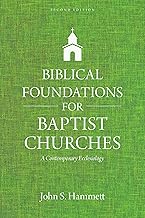
“In this useful book, professor and former pastor John Hammett helps church leaders think through foundational questions about the nature of the church. Blending biblical teaching and practical ministry experience, Hammett presents a comprehensive ecclesiology from a historic Baptist perspective, examining crucial contemporary issues such as church discipline, the role of elders, and church ministry in a post-Christian culture.”
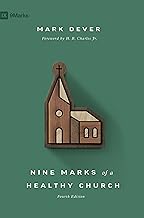
“You may have read books on this topic before but not like this one. Instead of an instruction manual for church growth, this classic text points to basic biblical principles for assessing and strengthening the health of your church. Whether you’re a pastor, a leader, or an involved member of your congregation, studying the nine marks of a healthy church will help you cultivate new life and well-being within your own church for God’s glory.”
“Paul and Barnabas made a decisive move toward the end of the first missionary journey: they appointed elders in the churches they had established, entrusting them with responsibility to shepherd the young congregations. The need for faithful shepherding has not changed since that time, yet the leadership structure of most churches no longer follows this model. The authors argue that a return to the New Testament pattern of elder plurality best serves the shepherding needs in a local church.
The authors suggest a workable process for improving a local church’s leadership structure and making the transition to elder plurality. Along the way, the stories of the authors and other church leaders provide a narrative of how faithful elder leadership has strengthened their ministries. The book also addresses a plan for leadership development in difficult international mission settings. Church leaders will find this a useful resource for building a healthy leadership structure.”
“Why Elders? A Biblical and Practical Guide for Church Members is a straightforward and readable guide concerning the bibical role of elders and deacons. Each of the four major chapters answers the question as to why elders are crucial in the church today. The elder model of church leadership is important because (1) it is the pattern of the New Testament Church; (2) it provides help and accountablity for a pastor; (3) it produces a healthier church; and (4) it promotes the biblical role of deacons.”
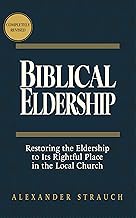
“For 35 years Biblical Eldership has been the premier book explaining the biblical teaching on church eldership, which is shared pastoral leadership by a council of scripturally qualified, Spirit-placed elders. Biblical Eldership has helped ignite a worldwide awakening to this long-neglected and misunderstood subject. This new edition is a comprehensive revision. For those who love solid Bible exposition, this is a much-welcomed volume. Every New Testament passage on eldership is carefully interpreted and expounded, allowing the biblical authors to speak for themselves. By interacting with the latest scholarship and addressing all key issues of this important topic, the author makes a significant contribution to the subjects of church government and pastoral leadership. Biblical Eldership serves as a commentary, resource tool, and textbook for developing shepherd elders. Thousands of churches worldwide have used this book for training biblical elders. With this thoroughly updated edition, Biblical Eldership will continue to be the go-to standard resource for years to come.”
“What does effective church leadership look like? In this conversational book, pastor Jeramie Rinne sets forth an easy-to-understand “job description” for elders drawn from the Bible’s teaching on church leadership.
Offering practical guidance for new elders and helping church members better understand and support their spiritual leaders, this succinct volume will encourage elders to embrace their calling with grace, wisdom, and clarity of vision.”
“Church leadership is a shared responsibility, not a solo venture. This book equips pastors and elders to lead the church together as a team, focusing not so much on what they are to be but on what they as a body are to do. Written by a former pastor, now a seminary lecturer and longtime volunteer elder, this book is a groundbreaking resource for local churches of all shapes and sizes.”
Introductory Statement: The senior pastor serves as the primary preacher and teacher within the local church. This role is essential to the spiritual health of the congregation. And, for the pastor, ministering the Word of God is not merely one task among many; it is the very lifeblood of a pastor’s calling.
“The public ministry of the word is the most responsible part of our work—the grand momentum of Divine agency—the most extensive engine of Ministerial operation.” Charles Bridges
The Context: In a typical week, I preach and teach three times. Once a month, I also visit nursing homes and assisted living centers, which adds another four messages, bringing the total to seven messages during that week. While this can be demanding, especially for a young pastor trying to figure things out, these opportunities to proclaim and teach God’s Word are important to my ministry. Each opportunity, whether in the pulpit, behind a music stand, or in care homes, represents an important aspect of my calling.
The Concern: Since I’ve been here, a few well-meaning people have suggested that I lessen my preaching and teaching load to prioritize visiting members and participating in community events, functioning like a community chaplain. While I appreciate their concern and the heart behind their counsel, this shift would ultimately detract from my central calling: the ministry of the Word.
“The supreme work of the Christian minister is the work of preaching. This is a day in which one of the great perils is that of doing a thousand little things to the neglect of one thing, which is preaching.” John Broadus
Thesis of this Blog: Because this has been suggested, I wanted to explain why I believe a pastor’s chief responsibility is the ministry of the word. While visitation and community involvement are valuable, they must flow from—and must not supersede—the ministry of the Word.
The Primacy of Preaching and Teaching in the Gospels
Beginning of Jesus’s Ministry: We see the primacy of preaching in the gospel narratives. God the Father commissioned His Son, the Lord Jesus Christ, to preach the Word. When Jesus embarked on His public ministry in Galilee, His approach was centered on preaching (Mark 1:14). Even after performing numerous healings that drew the attention of the crowds, Jesus made it clear that His primary purpose was not to carry out a healing ministry: “Let us go on to the next towns, that I may preach there also, for that is why I came out” (Mark 1:36-38). This demonstrates that Jesus traveled throughout Galilee, not primarily to heal but to preach and teach about the Kingdom of God (Luke 4:43). This pattern remained true throughout His earthly ministry.
End of Jesus’s Ministry: Toward the end of His earthly ministry, the Lord Jesus ascended a mountain in Galilee and entrusted His disciples with the Great Commission—a continuation of the sacred task He Himself had begun. Just listen to this charge that carries the full weight of divine authority: “Go therefore and make disciples of all nations, baptizing them in the name of the Father and of the Son and of the Holy Spirit, teaching them to observe all that I have commanded you” (Matthew 28:19). Here, we find an explicit mandate that prioritizes teaching and preaching as the means of extending Christ’s kingdom to the ends of the earth. From beginning to end, Jesus prioritized preaching and teaching and taught his disciples to do the same.
“Preaching was the prominent feature in the ministry methodology of Jesus, the stated reason for which He was anointed of the Spirit of God. It was the specific work to which He called His disciples, the reason for which they, too, would be clothed with the power of the Spirit.” Arturo Azurdia
The Primacy of Preaching and Teaching in The Acts of the Apostles
Preaching at Pentecost: We see the primacy of preaching and teaching throughout the book of Acts. It was through the faithful proclamation of the Word that the church was not only birthed but also nourished. On the day of Pentecost, Peter boldly “lifted up his voice” to declare the truth of Scripture (Acts 2:14–41). Following this incredible moment in redemption history, we read that the church in Jerusalem “devoted themselves to the apostles’ teaching” (Acts 2:42). This pattern—where the Word births the church and then nourishes the church—is seen throughout Acts.
What About the Widows: Also, because preaching and teaching were central to the apostles’ ministry, they refused to get sidetracked by needs, even incredibly urgent ones. Shortly after the church was birthed by the Spirit, people were complaining that Greek widows were being neglected while Hebrew widows were being cared for. Shockingly, the apostles said it would not be right to “give up preaching the word of God” to serve widows (Acts 6:2). Instead, the church needed to appoint some godly men (deacons) to minister to the widows (Acts 6:3). This would allow the apostles to devote themselves “to prayer and the ministry of the word” (Acts 6:4).
“Preaching the Word is the primary task of the Church, the primary task of the leaders of the Church, . . and we must not allow anything to deflect us from this, however good the cause, however great the need.” Martyn Lloyd Jones
Preaching Amid Persecution: Lastly, because of the paramount importance of preaching and teaching, the apostles were relentless and unwavering in this work. After they were arrested and beaten, they were told to keep their mouths shut and let go. The apostles refused: “Then they left the presence of the council, rejoicing that they were counted worthy to suffer dishonor for the name. And every day, in the temple and from house to house, they did not cease teaching and preaching that the Christ is Jesus” (Acts 5:41-42). This pattern—preaching and teaching in the face of opposition—is evident throughout the book of Acts. Consider the last verse: The apostle Paul is under house arrest with a soldier guarding him, yet he continues to preach and teach (Acts 28:30).
The Primacy of Preaching and Teaching in the Pastoral Epistles
Paul On Elders: The Pastoral Epistles reveal the priority of preaching and teaching. According to Paul, for a man to be an elder/overseer/pastor within a local church, he must “hold firm to the trustworthy word as taught, so that he may be able to give instruction in sound doctrine and also to rebuke those who contradict it” (Titus 1:9). So, pastors must not only hold firm to good, sound apostolic doctrine, they must also instruct and refute—which primarily takes place in preaching in teaching. Elders who do this well ought to be compensated for their work because “a laborer deserves his wages” (1 Timothy 5:17-18). So, preaching and teaching are considered toil and labor. It is honest work.
“Preaching and teaching is the highest calling of a minister. It is tragic that so many in our day have been diverted from that. They spend their time on nonessentials, and their people end up spiritually impoverished.” John MacArthur
Paul to Timothy: If we move beyond Paul’s instruction about elders to his instruction to Timothy, the centrality of preaching and teaching becomes even clearer. Paul commanded Timothy to give himself tirelessly “to the public reading of Scripture, to exhortation, to teaching” (1 Timothy 4:13). Paul wanted Timothy to dedicate so much time to these tasks that all would be able to see his progress (1 Timothy 4:15). As Timothy relentlessly gave himself to preaching and teaching, Paul wanted him to “rightly handle the Word of truth” (2 Timothy 2:15). He wanted him to cut it straight, showing himself to be a faithful and able herald of sacred Scripture. This was not an inconsequential task. It was so important that Paul gave Timothy a solemn charge: “I charge you in the presence of God and of Christ Jesus, who is to judge the living and the dead, and by his appearing and his kingdom: preach the word” (2 Timothy 4:1-2).
“Public and continual preaching of God’s word is the ordinary means and instrument of the salvation of mankind. . . By preaching God’s word, the glory of God is enlarged, faith is nourished, and charity is increased. By it the ignorant are instructed, the negligent exhorted and incited, the stubborn rebuked, the weak conscience comforted, and to all those that sin of malicious wickedness, the wrath of God is threatened.” Archbishop Grindal
Preaching and Teaching: God’s Ordained Means to Mature the Church
Faith Comes By Hearing: In Romans 10, Paul teaches the centrality of preaching in the justification of sinners. Throughout both the Old and New Testaments, it’s clear: “Everyone who calls on the name of the Lord will be saved” (Joel 2:32; Romans 10:13). But how can people call on the name of the Lord Jesus Christ if they have never heard of Him? “And how are they to hear without someone preaching” (Romans 10:14)? Paul’s conclusion: “So faith comes from hearing, and hearing through the word of Christ” (Romans 10:17). As you can see, God works through the preaching of the Word; it is one of the primary means He uses to draw men to Himself.
“Here Paul magnifies the office of the gospel preachers; it is God’s good pleasure by their proclamation of his amnesty to bring his mercy home to those who believe the message.” F.F. Bruce
“The great design and intention of the office of a Christian preacher is to restore the throne and dominion of God in the souls of man.” Cotton Mather
Faith is Nourished By Hearing: Once individuals are justified, preaching and teaching play a crucial role in nourishing and sustaining their faith. Just as bread is essential for physical sustenance in a dry and barren wilderness, so too is God’s Word vital for our spiritual nourishment amidst the wilderness of this world (Deuteronomy 8:3; Matthew 4:4). And consider how an infant thrives on milk, gradually maturing to handle solid food. Similarly, a diet of spiritual milk enables a new believer to grow and develop, preparing them to humbly receive the deeper truths found in the meat of God’s Word (1 Corinthians 3:1-2; Hebrews 5:12-13). These figures of speech teach us that our faith is nourished through the ministry of the Word. It is food for the soul.
“It was by the ear—by our first parents listening to the serpent, that we lost paradise; and it is by the ear—by hearing of the Word, that we get to heaven. . . God sometimes in the preaching of the Word—drops the holy oil into the ear, which softens and sanctifies the heart!” Thomas Watson
Faith Matures By Hearing. Our heavenly Father desires for us to mature in the faith and be further conformed into the image of the Lord Jesus Christ. Preaching and teaching play an instrumental role in the maturation process. One of the primary goals of God-breathed Scripture is Christian maturity and wholeness: “All Scripture is breathed out by God and profitable for teaching, for reproof, for correction, and for training in righteousness, that the man of God may be complete, equipped for every good work” (2 Timothy 3:16-17).
In His wisdom, the Lord Jesus provides the church with gifted leaders—“apostles, prophets, evangelists, shepherds, and teachers” (Ephesians 4:7-11)—to minister His Word. As these faithful servants proclaim the Scriptures, the body of Christ becomes increasingly equipped and empowered for ministry. Consequently, as each member faithfully exercises their God-given calling, the entire church grows in maturity, reflecting the character of Christ more fully (Ephesians 4:12-16).
“Our goal as pastors is not to do all the work of the ministry ourselves, but to equip our people for ministry. We can only accomplish this effectively through preaching based on thorough study. So I know that time spent in preparation will result in more sharing of my load by a maturing church.” John MacArthur
Conclusion
As I reflect on the role of the Senior Pastor and the weight of the Biblical witness, I am convinced that my chief responsibility lies in the faithful preaching and teaching of God’s Word. Church, we must stand against the troubling trends that have infiltrated some corners of evangelicalism, where the ministry of the Word is diminished in favor of lesser pursuits. Instead, let us wholeheartedly affirm and prioritize the centrality of preaching and teaching in the life of both the pastor and the local church.
“The primary task of the Church and of the Christian minister is the preaching of the Word of God.” Martyn Lloyd Jones
A Few Applications
As a church, we can take some small steps to prioritize the ministry of the word:
Pray Regularly: As a congregation, I encourage you to pray regularly for those who minister the Word of God, especially for me. Ask the Lord to fill me with His Spirit. Ask Him to give me boldness, clarity, and courage in proclaiming the truth. Ask Him to gift me with a deeper ability to exercise the spiritual gifts of preaching and teaching. And pray fervently for the salvation of souls and the edification of the church.
“Grant, Almighty God, that as thou wouldest have us to be ruled by the preaching of thy word,—O grant, that those who have to discharge this office may be really endued with thy celestial power, that they may not attempt any thing of themselves, but with all devotedness spend all their labours for thee and for our benefit, that through them we may be thus edified, so that thou mayest ever dwell among us, and that we through our whole life may become the habitation of thy Majesty, and that finally we may come to thy heavenly sanctuary, where thou daily invitest us, as an entrance there has been once for all opened to us by the blood of thy only-begotten Son. Amen.” John Calvin
Raise Up Teachers: As a church family, it is crucial for us to prioritize the cultivation of faithful preachers and teachers from within our own ranks. We must invest in the discipleship and equipping of godly men who are prepared to bear the responsibility of teaching and preaching. This will enable our church to thrive and grow. And it will also allow me, as the senior pastor, to share the preaching and teaching responsibilities among a group of qualified and capable men who can effectively minister the Word of God to the people of God.
“You then, my child, be strengthened by the grace that is in Christ Jesus, and what you have heard from me in the presence of many witnesses entrust to faithful men, who will be able to teach others also.” 2 Timothy 2:1–2
Elect Faithful Deacons: Visitation is a significant part of the church’s life. Caring for widows is a matter close to the Lord’s heart, and our local church must not overlook it. In alignment with God’s design, this responsibility should fundamentally rest upon the shoulders of deacons. Therefore, it is essential to nominate and elect deacons who have demonstrated their commitment to visitation and the care of widows, ensuring that this ministry receives the attention it deserves.
“Biblical deacons, then, are like a congregation’s offensive linemen, whose job is to protect the quarterback. They rarely get attention, much less credit, but their labors are utterly indispensable for both guarding and advancing the ministry of the Word. Without effective deacons, elders will suffer incessant distraction and get sacked by an onrush of practical demands.” Matt Smethurst
I’m the pastor of FBC Jackson in Jackson, Alabama. Each week, I post “Article Roundup: Helpful Reads,” sharing articles that I believe will benefit the saints who make up FBC Jackson and followers of Christ everywhere. Happy reading!
I’m grateful that Andrew Walker continues to address this topic. “Once it is understood that the political divide in contemporary America is, at its core, a moral divide—and that moral reasoning is inescapably shaped by underlying religious or metaphysical commitments—it follows that the fundamental distinction between the major political parties lies in the extent to which each permits itself to be guided by religiously informed moral values. While party identities may evolve over time, the modern Democratic Party has become institutionally aligned with a secular progressive framework that is, in its foundational assumptions, incompatible with a biblical moral vision.”
A stream of gratitude should flow from our hearts and mouths as we reflect on God’s work of creation. “We must never suppose that God created the cosmos out of lack—because he wanted a relationship, or he wanted someone to love. God did not create the world because he was thirsty. Rather, God created the world because it is the nature of a fountain to overflow. Creation is the super-abundance of divine goodness, beauty, mercy, love, wisdom, power, sovereignty, self-sufficiency, self-existence, justice, holiness, faithfulness, and freedom.”
When Sinclair Ferguson writes about the person of the Holy Spirit, you should read it! “So, for all the repetition of the mantra that the Holy Spirit is no longer “the forgotten person of the Godhead,” it is questionable whether we enjoy richer, more intimate communion with the Spirit himself. So, the lingering question (at least for me) remains this: Who is the Holy Spirit? How can I think what Spirit dwells within me?”
Church, we’re almost home! “Between Jesus’s first and second comings, we are in the last chapter of history. For in Jesus’s death, resurrection, and ascension, the ages have shifted. We have entered into the time when the man Jesus Christ has launched our homecoming. The major turning point of history, therefore, is not the Enlightenment, the founding of America, or the last election. It’s not your birthday or recent promotion or dismissal. It is the time in history when God entered the creation in Christ and commenced the church’s return to the presence of God—now in the church’s worship (Heb. 12:18‒25) and soon in that new creation world without end (Heb. 12:26‒27).”
Articles like this are always timely. Perhaps that’s because I often find myself misusing time. “Be intentional, believer, about your diligence unto the Lord. Make the best use of your time. We won’t be perfect, but we want to glorify God with our time. Whether it’s social media, TV, or the like, it’s not the consumption that is the problem (although it sometimes can be), but it’s the over-consumption. We replace Bible-reading with binge-watching the latest show on Netflix. We replace prayer with mindlessly scrolling through reels. We replace our spiritual disciplines with different things that distract us. God has called us to more than that.”
I’m the pastor of FBC Jackson in Jackson, Alabama. Each week, I post “Article Roundup: Helpful Reads,” sharing articles that I believe will benefit the saints who make up FBC Jackson and followers of Christ everywhere. Happy reading!
Praise the Lord for Agnes Shankle, a woman who stood up and spoke for the glory of God and the good of her local church. Also, she is an excellent example of how congregationalism can prevent a church from drifting. “A sign of a church’s health is not simply how well the church’s leaders know their Bibles but how well the members do. It should be every church’s prayer that if its leadership ever attempts to lead in a direction of unfaithfulness to God’s word, there is an Agnes Shankle in their midst who is willing to stand up and say, ‘Not in my house.'”
Let us remain faithful to good, sound apostolic doctrine, trusting that the Lord will work through it to empower us to live godly lives in this present evil age. “It is not enough to exhort people to live like Jesus. To be sure, the apostolic message exhorted people to live godly lives but only in conjunction with a robust message about sin, salvation, incarnation, resurrection, atonement, reconciliation, and eternal life. Any gospel that denies these essentials or ignores them or skips over them to get to something else or leads people to doubt them or does not deal straightforwardly with them is, in effect, a different gospel. The Christian faith is more than a doctrine to be believed, but it is never less.”
God enables Spirit-indwelt Christ-followers to put sin to death and live godly, holy lives in this present evil age. “If you believe Christ automatically does everything to make the Christian life happen, how do you understand ‘make every effort’? There is no such thing as a passive Christian life. The passive soldier is an easy target. The good news is that God makes His resurrection power available to us to walk in victory over sin. Unfortunately, many people think of this as automatic and do not take aggressive efforts to guard themselves.”
Samuel Perkins strives to show how the Beatific Vision “enriches the Christian life in one particular area: Christian fellowship, especially fellowship found in the context of our local churches.” “Not in vain does the author of Hebrews warn against the habit of skipping church (Heb. 10:25). He goes on to say that, in a very real sense, when we gather together for regular worship, we go to heaven (Heb. 12:18–29). In other words, on those frantic Lord’s Day mornings, when you are trying to get your kids out the door with pleas of ‘time to go to church!’ you would not be lying if instead you said, ‘time to go to heaven!’ This would do wonders for the way we look at our humble little churches and the relationships we forge there. The prospect of the beatific vision motivates us to redouble our efforts to press in and invest in these relationships. The deeper, more sanctifying, more intimate, more God-glorifying our relationships are here, the more they reflect our heavenly homeland and give us a taste of future glory.”
I’m thankful for how Jake Meador teaches us to show honor to whom honor is due. This also serves as a good reminder to thank God for those teachers He has used to edify and build us up in the faith. “Two of TGC’s founders, of course, are no longer involved in the work—D. A. Carson because of health reasons and Tim Keller because he has gone to his rest. The third founder, John Piper, now nearly 80, continues to speak (and, if his quip about AI at the end of his keynote is any measure, still has his fastball). But even for Piper, much of the work he will do I suspect he has done. And as I thought about these things while attending the conference, the overwhelming sense I had throughout was a feeling of profound gratitude.”
I’m the pastor of FBC Jackson in Jackson, Alabama. Each week, I post “Article Roundup: Helpful Reads,” sharing articles that I believe will benefit the saints who make up FBC Jackson and followers of Christ everywhere. Happy reading!
The Bible is amazing. God’s providential governance of all things is breathtaking. “A late Friday afternoon providence may have felt like small comfort to his shattered followers. But they did not yet know how soon this seed, sown in an unsuspecting garden, would spring with the indestructible life of Israel’s resurrection hope.”
This is such a helpful reminder. When it comes to spiritual disciplines, we must keep the end in mind! “Habits are important when they help us focus on Christ, deepen our relationship with him, and transform us through his presence. Think of habits as valuable servants but poor masters. Let them help you deepen your connection while staying focused on your relationship with the Triune God.”
This is an important point of clarification. “But sometimes this servant leadership becomes toxic. Sometimes, what people mean by servant leadership is not leadership at all. If I only understand leadership as deferring to others and not stepping on people’s toes, then I’m at risk for ignoring what God has called me to do.”
I would love to see FBC Jackson become more familiar with the Nicene Creed. I’ll probably teach through it at some point! “Here are six summary statements—or, we might say, six lessons—we can learn from this seventeen-hundred year-old confession of faith, the Nicene Creed.”
On April 14, 2025, Christianity Today published an article titled “Was Jesus Crucified with Nails? Why One Evangelical Bible Scholar Thinks the Answer Might Be No.” The article was biblically anemic. Thankfully, Benjamin Gladd published an article on the importance of nails on April 18, 2025. I don’t know if it was a response to the Christianity Today article, but it sure was timely. “By preserving the details about nails that pierced Jesus’s hands and feet, we’re reminded that at the gospel’s heart lies One who is pierced, One who bore God’s wrath, so you and I can enjoy God’s favor.”
Mohler speaks candidly about Pope Francis. “Francis will go down in history as the pope of liberal gesture—the vicar of equivocation. Just when his church needed a firm hand and intellectual firepower, he responded with a shrug. He filled critical Vatican appointments with liberal cronies and appointed as the church’s chief doctrinal protector a fellow Argentinian whose writings included materials rightly defined as sexually perverse.”
Leonardo speaks candidly about Pope Francis as well! “The change Francis brought about didn’t promote an evangelical move in the Roman Church. He made his church more ‘catholic’ and less Roman, but no more biblical. Regardless of who the next pope will be, the need for a biblical reformation will be as relevant as ever.”











 Doctrine & Devotion