Calvin’s Angelology: Angels Appearing as Men in Scripture

The author of Hebrews writes, “Do not neglect to show hospitality to strangers, for thereby some have entertained angels unawares” (Heb 13:2). Calvin’s argues that the author of Hebrews commands his recipients to practice hospitality and then motivates them to obey by adding “that angels had sometimes been entertained by those who thought that they received only men.”[1] Calvin is referring to the time that angels appeared as men to Abraham. Disappointedly, Calvin’s comments on Hebrews 13:2 are rather brief regarding this particular topic—angels appearing as men. Nevertheless, Calvin’s comments in some of his other commentaries are much more extensive. This section will cover how Calvin understands angels occasionally appearing as men in Scripture.

God Clothed Angels with Human Bodies

Calvin elaborates on this topic in his comments on seven sections of Scripture (Gen 18:1-21; Dan 10:5-6; 12:5-7; Zech 2:1-4; Lk 24:43; Acts 10:30; Heb 13:2). In Calvin’s explanations of these passages, he repetitively emphasizes two truths: (1) the angels are clothed with human bodies, and (2) the angels do not actually become men. Moses “calls the angels men,” Calvin writes, “because, being clothed with human bodies they appeared to be nothing else than men.”[2] God, the creator of all things, gives the angels “bodies, for a time, in which they might fulfill the office enjoined them.”[3] While the angels are clothed in these bodies “they truly walked, spoke, and discharged other functions,”[4] but he also writes that angels “suffer no human thing” so long as they are in the shape of men.[5] In Genesis 18:1-21, the angels even ate, though Calvin does not believe “that the meat and drink yielded them that refreshment which the weakness of the flesh demands.”[6] After the angel was done with his ministerial task, “God speedily annihilated those bodies, which had been created for temporary use”[7] and restored angels to their own nature.[8]

Angels Never Actually Became Men

Nevertheless, even though angels were occasionally clothed with human bodies, Calvin continually mentions that angels did not actually become men. “If it be asked, whether angels did really put on human nature?” Calvin states, “the obvious answer is, that they never, strictly speaking, became really men.”[9] He says in another place, “We ought not to believe them to be really men, because they appeared under a human form.”[10] Calvin’s belief, that angels do not actually put on human nature, is also apparent when he emphasizes that the angels’ food and drink did not yield them any nourishment, and that the angels were unable to suffer when they were clothed with human bodies. Calvin wants his readers to understand that God occasionally clothed an angel with a body, but that God in no way truly added a human nature to the angel’s celestial nature. Why did Calvin care to highlight this so much?

The Incarnation is Unique

Calvin does this because he wants to preserve the uniqueness of the Incarnation of the Son of God. “Christ, indeed, was really man, in consequence of his springing from the seed of Abraham, David, and Adam,” Calvin says. He then argues, “But as regards to angels, God clothed them for a single day or short periods in bodies, for a distinct purpose and a special use.”[11] In his comments on Daniel 12:5-7, Calvin makes a similar argument: “For Christ took upon Him our flesh and was truly man, while he was God manifest in flesh. (1 Tim. 3:16) But this is not true of angels, who received only a temporary body while performing the duties of their office.”[12] In Calvin’s desire to maintain the mystery, wonder, and glory of the Incarnation of the Son of God, he insists that angels were occasionally clothed with human bodies, but that they in no way became fully and truly human.

Does this Still Happen Today?

Does Calvin think that this still happens today? Disappointedly, he does not even address this question in his comments on Hebrews 13:2. Instead, he thinks the author of Hebrews wants his readers to understand that God honors those who practice hospitality. However, based on his belief that angels no longer appear to individuals as emissaries, it is probably correct to assume that Calvin does not believe that angels still appear to men clothed in human bodies.

In Sum!

The previous section discussed how Calvin understands angels appearing as men throughout Scripture. God occasionally clothed an angel with a human body for a specific ministerial duty, but God never added a truly and fully human nature to an angel’s celestial nature. As he addresses this topic, Calvin remains fixed to the Scripture, but he occasionally goes beyond Scripture for the purpose of emphasizing the uniqueness of the Incarnation of the Son of God.


[1] John Calvin, Commentary on the Epistle of Paul the Apostle to the Hebrews, ed. and trans. John Owen (Bellingham, WA: Logos Bible Software), 340.

[2] Calvin, Commentary on the First Book of Moses Called Genesis, 1:468-470.

[3] Ibid., 1:471-472.

[4] Calvin, Commentary on the First Book of Moses Called Genesis, 1:471-472.

[5] Calvin, Commentary upon the Acts of the Apostles, 1:434-435.

[6] Calvin, Commentary on a Harmony of the Evangelists Matthew, Mark, and Luke, 2:373-382.

[7] Calvin, Commentary on the First Book of Moses Called Genesis, 1:471-472.

[8] Calvin, Commentary upon the Acts of the Apostles, 1:434-435.

[9] Calvin, Commentaries on the Twelve Minor Prophets, 5:59.

[10] Calvin, Commentary on the Book of the Prophet Daniel, 2:240-241.

[11] Ibid.

[12] Ibid., 2:381.

Calvin’s Angelology: The Function of Angels

Calvin has a high view of the function and work of angels. Warfield, as he writes on how extensive the function of angels is in Calvin’s angelology, says, “There is at least a prima-facie appearance that Calvin thought of them as the instruments through which the entirety of God’s providential work is administered.”[1] Calvin says this much himself when he argues that by means of angels “God exercises his power, and might, and dominion,”[2] and that “God works through the angels to direct human affairs.”[3] Calvin goes further when he states “that angels are celestial spirits whose ministry and service God uses to carry out all things he has decreed,”[4] and that even “the very violence of the winds is governed by angels as God has ordained.”[5] In short, Warfield is right. For Calvin, all of God’s providential work is dispensed through the ministry of angels. The following section will consider four functions that angels have in Calvin’s writings: angels function as emissaries of God, as ministers of God’s wrath, as servants and guardians of God’s elect, and as admirers of God’s gospel.

Angels are Emissaries

First, Calvin believes that angels are emissaries of God the King. Angels appear to men and speak on behalf of God “in order that, as we have before said, the embassy of those who bear his name, may have the greater authority, by their being clothed with his majesty.”[6] Throughout the Bible “angels transfer to themselves the person and titles of God, when they are performing the commissions entrusted to them by him.”[7] In other words, Calvin believes God commissions the angels, clothes them in glory, gives them a message, and enables them to be his representatives before men. Thus, when God employs angels as agents to speak on his behalf, “God himself is said to speak.”[8] Nevertheless, though angels do this throughout the Bible, Calvin does not believe that angels still function in this capacity. In his comments on Daniel 7:15-16, Calvin says that “angels do not appear to us, and do not openly and conspicuously descend from heaven,” and that believers must “not seek the understanding of God’s word from angels, who do not appear to us.” God now chooses to teach and instruct his elect “by means of pastors and ministers of the gospel.”[9]

Angels are Ministers of God’s Wrath

Second, Calvin regards angels as ministers of God’s wrath. Calvin understands this in two distinct ways. On the one hand, as Calvin studies Scripture, he is aware that “God executes his judgments by reprobate angels”[10] and “executes his wrath by the agency of reprobate angels, as if they were his executioners.”[11] Then, to emphasize the ultimate role of the elect angels as minister of God’s wrath, Calvin goes on to say that “God causes his elect angels to preside over those judgments which he executes by means of the reprobate,”[12] and that God “gives the elect angels the pre-eminence over” the reprobate angels as they carry out God’s wrath.[13] In sum, Calvin believes that the elect angels preside over the reprobate angels as God sovereignly uses the reprobate angels as executioners of his vengeance.

On the other hand, as Calvin considers all of Scripture, he realizes this distinction—elect angels presiding over reprobate angels as reprobate angels carry out God’s wrath—is not always observed. At times, elect angels execute God’s vengeance and wrath themselves. It was an elect angel that killed all the first born in Egypt, and it was an elect angel that slayed 185,000 Assyrians. Because of this, Calvin emphasizes to his readers “that it is not foreign to the office of elect angels, to descend armed for the purpose of executing Divine vengeance, and of inflicting punishment.”[14] To people that may object to this, elect angels inflicting punishment, Calvin argues that elect angels “cannot watch for the preservation of the godly without being prepared for fighting—that they cannot succour them by their aid without also opposing their enemies.”[15] Ultimately, in order to protect and preserve the Church, Calvin believes elect angels must oppose the Church’s enemies.

Angels are Servants and Guardians of God’s Elect

Third, Calvin believes angels are servants and guardians of God’s elect. Calvin is convinced that the world, the flesh, and the Devil constantly assault God’s children. The impious “pour forth their threats against us” and “desire to destroy us, and are ever plotting for our complete ruin.”[16] The god of this world utterly detests the elect, rages against them, opposes their prayers, and lays snares for their destruction. The flesh is soft and frail, gives way to exhaustion, and is incapable of making it through a life filled with so many “thorns and briers, steep roads, intricate windings, and rough places.”[17] The way of God’s elect is filled with unnumerable dangers, toils, and snares. Consequently, Calvin often mentions the importance of angels as servants and guardians of God’s people.

Calvin maintains that the Lord makes “use of the ministration of angels to promote the safety of believers.”[18]Because of the elect’s feebleness, Scripture teaches that angels “keep vigil for our safety, take upon themselves our defense, direct our ways, and take care that some harm may not befall us.”[19] Even though God’s people have countless enemies, “the angels of God, armed with invisible power, constantly watch over us, and array themselves on every side to aid and deliver us from all evil.”[20] God sends his angels “against all the endeavors of Satan, and all the fury of the impious who desire to destroy us.”[21] If angels did not carry out this ministry, God’s children “would easily fall or give way through exhaustion, and would hardly ever make way amidst so many thorns and briers, steep roads, intricate windings, and rough places.”[22] For Calvin, God’s providential use of angels is essential for the preservation of the saints.

Calvin’s teaching, that angels are servants and guardians of the elect, is meant to comfort Christians; not to lead Christians to an undue reverence for angels. “Therefore we must beware of falling into the superstition of the Papists,” Calvin stresses, “who, by their absurd worship of angels, ascribe to them that power which belongs to God.”[23] Instead of revering angels, Calvin desires for Christians to see “the singular love of God towards us; for he employs his angels especially for this purpose, that he might show that our salvation is greatly valued by him.”[24] After he emphasizes the ministry of angels, Calvin writes, “The Lord alone. . . preserves us; for the angels may be regarded as his hand,” and that “all praise is due to God alone, of whom the angels are only instruments.” For Calvin, the fact that God commissions the angels to comfort the elect in their weakness, to console them in their distress, and to strengthen them in their faith, is one of the remarkable displays of God’s unwavering love for them.

What about Guardian Angels?

What does Calvin say about individual guardian angels? Calvin denies the popular belief that each believer has a personal guardian angel. He is aware of the verses that are commonly used to defend this doctrine (Dan 10:13, 20; 12:1; Matt 18:10; Acts 12:15). Joseph A Pipa Jr. helpfully breaks down Calvin’s arguments, specifically within the Institutes, against people who defend personal guardian angels from these verses:

He answers three arguments for individual guardian angels. First, that particular angels have been assigned to serve as guardians over kingdoms (Dan. 10:13, 20; 12:1) does not imply that each individual has a specific guardian angel. Second, the reference to children’s angels beholding the face of the Father (Matt. 18:10) does hint that certain angels have been assigned to look after the safety of children, but this is not sufficient ground to assert a guardian angel. Third, with respect to Peter’s angel (Acts 12:15), it is possible the servant girl believed that Peter had a particular guardian angel, but nothing prevents the interpretation that an angel was appointed care of him in prison.[25]

Pipa’s summation is helpful. Ultimately, Calvin is not convinced that these passages supply a solid foundation to believe that each Christian has a personal guardian angel. 

Instead, Calvin argues that Scripture “declares that the angels encamp around (Ps. 34:7) the godly, and that not one angel, but many, have been commissioned to guard every one of the faithful.”[26] So, instead of defending personal guardian angels from these passages, it is more faithful to Scripture to argue that “the whole host of heaven doth watch for the safety of the Church; and that as necessity of time requireth sometimes one angel, sometimes more do defend us with their aid.”[27] In other words, God commissions all the angels to watch over the Church, and at times commissions an angel to serve one of his children in a specific way. Calvin deals with this extensively in his Institutes and commentaries because he thinks God’s honor is at stake. “Therefore they who think that each of us is defended by one angel only,” Calvin writes, “wickedly depreciate the kindness of God.”[28] Why make the people of God settle for one angel when Scripture clearly indicates that we have the host of heaven watching over us?[29]

Angels are Admirers of God’s Gospel

Fourth, Calvin believes angels are admirers of God’s gospel. The apostle Peter writes that angels long to look into the Old Testament prophesies concerning the sufferings and subsequent glories of the Messiah (1 Pet 1:10-12). For Calvin, the glory of the salvation that is promised in Christ is exceedingly wonderful “because even angels, though they enjoy God’s presence in heaven, yet burn with a desire of seeing it.”[30] Paul mentions that the church, consisting of reconciled Jews and Gentiles, displays the wisdom of God “to the rulers and authorities in the heavenly places” (Eph 3:10). “Paul’s meaning is this,” Calvin writes, “The church, composed of both Jews and Gentiles, is a mirror, in which angels behold the astonishing wisdom of God displayed in a manner unknown to them before.”[31] Calvin also asserts that the substitutionary death of Christ is not only the foolishness of the cross, it is also the admiration of the angels.[32] From this, Calvin concludes that angels admire the wonderful works of God in the government of his Church day after day.[33] Now that angels have witnessed the glories of the gospel unfold in the death and resurrection of Christ, they desire to see “the last display of divine justice, when the kingdom of Christ shall be completed.”[34] Thus, Calvin thinks that angels, in all their celestial glory, are now eagerly awaiting the consummation of the Church’s redemption—the return of Christ.

In Sum!

In sum, this section covered Calvin’s understanding of the function and work of angels. Calvin regards angels as emissaries of God the King, ministers of God’s wrath, servants and guardians of God’s elect, and admirers of God’s gospel. Because Calvin believes God uses angels to carry out all that God decrees, more could be said about Calvin’s understanding of the ministration of angels. Nevertheless, throughout Calvin’s Institutes, sermons, and commentaries, he consistently teaches God’s people that angels work and serve in these particular ways.


[1] Warfield, The Works of Benjamin B. Warfield: Calvin and Calvinism, 319.

[2] John Calvin and William Pringle, Commentaries on the Epistles of Paul to the Galatians and Ephesians, 216.

[3] Calvin, Sermons on Job: Chapters 1-14, chapter 4, Kindle.

[4] Calvin, Institutes, I.14.5.

[5] Calvin, Commentary on the Book of Psalms, 1:271.

[6] John Calvin, Commentary on the First Book of Moses Called Genesis, ed. and trans. John King, vols. 1-2 (Bellingham, WA: Logos Bible Software, 2010), 571.

[7] Calvin, Commentaries on the Four Last Books of Moses Arranged in the Form of Harmony, 1:61.

[8] John Calvin, Commentaries on the Twelve Minor Prophets, ed. and trans. John Owen (Bellingham, WA: Logos Bible Software, 2010), 5:116.

[9] Calvin, Commentary on the Book of the Prophet Daniel, 2:47-48.

[10] Calvin, Commentary on the First Book of Moses Called Genesis, 504-505.

[11] Calvin, Commentary on the Book of Psalms, 3:261-263.

[12] Calvin, Commentary on the First Book of Moses Called Genesis, 504-505.

[13] Calvin, Commentary on the Book of Psalms, 1:578-579.

[14] Calvin, Commentary on the First Book of Moses Called Genesis, 504-505.

[15] Calvin, Commentary on the Book of Psalms, 1:578-579.

[16] Calvin, Commentary on the Book of the Prophet Daniel, 2:253.

[17] John Calvin, Commentary on the Book of the Prophet Isaiah, ed. and trans. William Pringle (Bellingham, WA: Logos Bible Software, 2010), 2:217.

[18] Calvin, Commentary on the Book of the Prophet Isaiah, 3:145-146.

[19] Calvin, Institutes, I.14.6.

[20] Calvin, Commentary on the Book of Psalms, 1:563.

[21] Calvin, Commentary on the Book of the Prophet Daniel, 2:253.

[22] Calvin, Commentary on the Book of the Prophet Isaiah, 2:217.

[23] Calvin, Commentary on the Book of the Prophet Isaiah, 2:217.

[24] Calvin, Commentaries on the Twelve Minor Prophets, 5:38.

[25] Joseph A. Pipa Jr., “Creation and Providence: Institutes 1.14, 16-18,” in A Theological Guide to Calvin’s Institutes: Essays and Analysis, ed. David W. Hall and Peter A Lillback (Phillipsburg, New Jersey: P&R Publishing Company, 2008), 132.

[26] John Calvin, Commentary on a Harmony of the Evangelists Matthew, Mark, and Luke, ed. and trans. William Pringle, vol. 2 (Bellingham, WA: Logos Bible Software, 2010), 338-339.

[27] John Calvin, Commentary upon the Acts of the Apostles, ed. and trans. Henry Beveridge, vol. 1 (Bellingham, WA: Logos Bible Software, 2010), 487.

[28] Calvin, Commentary on the First Book of Moses Called Genesis, 2:186.

[29] Pipa, “Creation and Providence: Institutes 1.14, 16-18,” 133.

[30] John Calvin, Commentaries on the Catholic Epistles, ed. and trans. John Owen (Bellingham, WA: Logos Bible Software, 2010), 38.

[31] Calvin, Commentaries on the Epistles of Paul to the Galatians and Ephesians, 256.

[32] Calvin, Commentaries on the Epistles of Paul to the Galatians and Ephesians, 92.

[33] Calvin, Commentaries on the Catholic Epistles, 42-43.

[34] Calvin, Commentaries on the Catholic Epistles, 42-43.

Calvin’s Angelology: The Creation, Essence, Order, and Number of Angels

Calvin believes that God created the world in six days. Man, as the climax of God’s creation, ought to look at the world and “contemplate God’s fatherly love toward mankind, in that he did not create Adam until he had lavished upon the universe all manner of good things.”[1] For Calvin, the creation account of Genesis 1-2 preeminently reveals God’s goodness toward humanity. And in Calvin’s estimation, God unquestionably displays his benevolence toward humanity in the creation of illustrious and noble angelic beings.[2] In this blog, we will examine how Calvin understands the creation, essence, order, and number of angels. 

God Created the Angels

First, Calvin believes that God created the angels. Calvin concedes that the creation account of Genesis 1-2 mentions “no other works of God than those which show themselves to our own eyes.”[3] So, the creation account does not explicitly mention or even allude to the creation of angels. Yet, since angels are regarded as servants of God, even later in Genesis, Calvin deduces that “he, to whom they devote their effort and functions, is their Creator.”[4] Calvin is more direct when he comments on Colossians 1:15—where Paul teaches that Christ is the creator of all things visible and invisible—saying, “Not only, therefore, have those heavenly creatures which are visible to our eyes, but spiritual creatures also, been created by the Son of God.”[5] In sum, Calvin believes the Scripture implicitly and explicitly teaches that God created the angels.

When it comes to the specific day the angels were created, Calvin keeps to his rule of modesty and sobriety. He believes it is unprofitable to investigate when the angels were created.[6] Because the creation account does not explicitly mention the creation of angels, he considers it pointless to contemplate how the creation of angels is related to the creation account of Genesis 1-2.[7] So, Calvin believes that in the beginning God created all things visible and invisible. However, because Scripture is silent about the day the angels were created, Calvin remains silent as well.

Angels are Spirits with Angelic Natures

Second, concerning the essence of angels, Calvin believes that angels are spirits and that they have an angelic nature.[8] It aggravates him that the Libertines of his day, like the Sadducees of old, deny the existence of angels and argue that angels are “either the impulses that God inspires in men or those examples of his power which he puts forth.”[9] For Calvin, this does injustice to the biblical account regarding angels. Angels have joy attributed to them (Lk 15:10), lift believers by their hands (Ps 91:11; Matt 4:6; Lk 4:10-11), carry believers’ souls to rest (Lk 16:22), and see the face of God (Matt 18:10).[10] For Calvin, it is apparent that angels are “not qualities or inspirations without substance, but true spirits.”[11]

Even though angels are true spirits, Calvin constantly endeavors to keep angels in their proper rank and degree by describing the differences between the divine essence and the essence of angels. Calvin believes that angels, as heavenly spirits adorned with divine glory,[12] are “superior to corporeal creatures.”[13] To put it another way, angels are superior to creatures that have bodies. Yet he passionately argues that angels are not part “of the divine essence or substance, as some fanatics dream.”[14] So, angels are superior to corporeal creatures but they are inferior to God, who alone has the divine essence. God created the angels as immortal spirits that will never perish, but angels are only “immortal insofar as they are sustained by the power on high, and insofar as God maintains them, he who is immortal by nature and in whom is the fountain of life.”[15] Angels are wise, but because omniscience is an attribute of God alone, “the knowledge of angels is necessarily limited.”[16] Angels are remarkably strong, but because omnipotence is a quality of God alone, “angels have no power distinct from God’s.”[17]

In Calvin’s delineation of the differences between the essence of angels and the divine essence, it is important to consider how Calvin understands elect angels after the fall of Satan and the other reprobate angels. In Colossians, Paul says that through Christ God the Father has reconciled “to himself all things, whether on earth or in heaven, making peace by the blood of his cross” (Col 1:19-20 ESV).[18] Since Christ’s death is instrumental in reconciling all things to God the Father, even things in heaven, Calvin infers that Christ functions as a mediator for elect angels. Since even the elect angels, as creatures, were at risk of falling too, God, by extending the grace of Christ, gave them a “fixed standing in righteousness, so as to have no longer any fear of fall or revolt.”[19] However, he is quick to add that “Christ is not the Redeemer of the angels, for they do not need to be ransomed from death, which they never fell into, but he is their Mediator.”[20]

Calvin has similar thoughts in his comments on Job 4:18—the verse that says God charges his angels with error. For Calvin, this means that “there is folly and vanity in the angels, which means that there is something lacking in them.”[21] He says in another place that this verse teaches “that the greatest purity is vile, if it is brought in comparison with the righteousness of God.”[22] As far as creatures go, the elect angels are perfect and righteous and they render perfect obedience to the Lord. In comparison to God, though, even the elect angels are iniquitous. Because of this, Calvin believes the angels have “need of a peace-maker, through whose grace they may wholly cleave to God. Hence it is with propriety that Paul declares, that the grace of Christ does not reside among mankind alone, and on the other hand makes it common also to angels.”[23] In other words, Christ graciously functions as a mediator for the angels to keep them from falling like Satan and the other reprobate angels, to fix and confirm them in a state of righteousness, and to enable them to remain before God.

There’s a Hierarchy Amongst the Angels

Third, Calvin abides by his rule of modesty and sobriety regarding the order of angels. It is not that Calvin rejects the idea of a hierarchy of angelic beings. He considers the pre-incarnate Christ as the angel of the Lord that functions as the head and chief of the elect angels (this blog series will discuss this later).[24] He knows Scripture teaches that Michael is called “the great prince” in the book of Daniel and “the archangel” in Jude (Dan 12:2; Jude 9).[25] From Ephesians 1:21, Calvin concludes “that there are various orders of angels.”[26] So, Calvin believes there is order amongst the angelic beings. Nevertheless, Calvin believes the biblical evidence is insufficient to “determine the degrees of honor among the angels, distinguish each by his insignia, and assign to each his place and station.”[27] Since Scripture does not give a complete theory of the organization of angels, Calvin does not strive to concoct one either.

There Are Lots of Angels

Fourth, this is true about the number of angels as well. Calvin is aware that Christ taught there are many legions of angels (Matt 26:53), that Daniel taught there are many myriads of angels, that Elisha’s servant saw an army of angels (2 Kg 6:17-20), and that angels are encamped around those who fear God (Ps 34:7).[28] In Calvin’s sermons on Deuteronomy, he even states that the number of the angels is infinite.[29] Therefore, Calvin is aware that there is a great multitude of angels. Nonetheless, he considers it “rash, wicked, and dangerous” to attempt to formulate a fixed number of the angels.

In Sum!

In this blog, it was apparent that Calvin believes God, the creator of all things visible and invisible, created the angels, that angels are glorious and celestial spirits, that there is order amongst the angels, and that there are multitudes of angels. Calvin, for the most part, fixes himself to Scripture. Yet, pertaining to the essence of angels, he slightly deviates from his rule of modesty and sobriety to emphasize the superiority of the divine essence in comparison to the essence of angels.


[1] Calvin, Institutes, I.14.2.

[2] Calvin, Institutes, 1.14.3.

[3] Calvin, Institutes, 1.14.3.

[4] Calvin, Institutes, 1.14.3.

[5] John Calvin, Commentaries on the Epistles of Paul to the Philippians, Colossians, and Thessalonians, 150.

[6] Calvin, Institutes, I.14.4.

[7] Warfield, The Works of Benjamin B. Warfield: Calvin and Calvinism, 312.

[8] Calvin, Institutes, I.14.5.

[9] Calvin, Institutes, I.14.9.

[10] Calvin, Institutes, I.14.9.

[11] Calvin, Institutes, I.14.9.

[12] John Calvin, Commentary on the Book of Psalms, ed. and trans. James Anderson (Bellingham, WA: Logos Bible Software, 2010), 3:424.

[13] John Calvin, Commentary on the Epistles of Paul the Apostle to the Hebrews, ed. and trans. John Owen (Bellingham, WA: Logos Bible Software, 2010), 49.

[14] Calvin, Commentary on the Book of Psalms, 3:424.

[15] John Calvin, Sermons on Job: Chapters 1-14, trans. Rob Roy McGregor (Banner of Truth Trust, 2014), chapter 16, Kindle.

[16] John Calvin, Commentary on the Book of the Prophet Daniel, ed. and trans. Thomas Myers (Bellingham, WA: Logos Bible Software, 2010), 2:106.

[17] John Calvin, Commentary on the Book of the Prophet Daniel, 2:267.

[18] Unless otherwise noted, all Bible translations come from the ESV.

[19] Calvin, Commentaries on the Epistles of Paul to the Philippians, Colossians, and Thessalonians, 156.

[20] Calvin, Sermons on Job: Chapters 1-14, chapter 16, Kindle.

[21] Calvin, Sermons on Job: Chapters 1-14, chapter 16, Kindle.

[22] Calvin, Commentaries on the Epistles of Paul to the Philippians, Colossians, and Thessalonians, 156.

[23] Calvin, Commentaries on the Epistles of Paul to the Philippians, Colossians, and Thessalonians, 156.

[24] John Calvin, Commentaries on the Four Last Books of Moses Arranged in the Form of Harmony, ed. and trans. Charles William Bingham (Bellingham, WA: Logos Bible Software, 2010), 1:61.

[25] Calvin, Institutes, I.14.8

[26] Calvin, Commentaries on the Epistles of Paul to the Galatians and Ephesians, 216.

[27] Calvin, Institutes, I.14.8.

[28] Calvin, Institutes, I.14.8.

[29] John Calvin, The Sermons of John Calvin upon the Fifth Booke of Moses Called Deuteronomie, trans. Arthur Golding (Edinburgh: Banner of Truth Trust, 1987), 1187.

Calvin’s Angelology: His Approach

Calvin approaches angels with one rule: modesty and sobriety.[1] Calvin’s one rule of modesty and sobriety is due to his fear of idolatry.[2] Throughout history, fallen man has perpetually attributed divinity to angelic creatures. As a pastor and theologian, Calvin is mindful of this when he writes and speaks about angels. He does not want to say or write anything that will lead people to an unhealthy adulation of angels. For this reason, Susan Schreiner infers that Calvin’s “angelology was governed less by an interest in angels in and of themselves than by the concern to keep angels in their proper ‘rank’ or ‘degree.’”[3] It is not that Calvin is uninterested in angels; he is just more concerned with the supremacy of God over angels. In Calvin’s Institutes, commentaries, and sermons, he keeps angels in their proper rank and degree in three ways: he attempts to avoid speculation, to edify Christians, and to direct people’s gazes toward God.

Don’t Speculate!

First, Calvin attempts to avoid speculation. He opposes men like Dionysius who write and speak so much about angels that if you read their books “you would think a man fallen from heaven recounted, not what he had learned, but what he had seen with his own eyes.”[4] Calvin strongly disagrees with such an indulgent curiosity. Instead, because Scripture does not address every fruitless question people have about angels, the theologian must not address these fruitless questions either.

In regard to angels, Calvin tells his readers “not to speak, or guess, or even to seek to know. . . anything except what has been imparted to us by God’s Word.”[5] In his sermon on Ephesians 1:19-23, he shepherds his congregants to “only give ear to God’s Word, and in all soberness learn from him without giving rein to our own foolish curiosity, as some do, disputing subtly about the angels.”[6] This pastoral advice—not to speak, know, or guess anything about angels except what has been revealed in Scripture—is one aspect of Calvin’s approach to angelology. He wants to avoid speculation and to remain grounded in Scripture. Yet, though Calvin largely avoids speculation, it is important to add that Calvin occasionally deviates from this method when he wants to emphasize an important theological point. This will become apparent in some of my upcoming blog posts.

Seek to Edify Christians!

Secondly, Calvin seeks the edification of Christians. In Scripture, God wills to instruct his people in sound godliness, the fear of the Lord, in true trust, and in the duties of holiness.[7] Calvin believes that “the theologian’s task is not to divert the ears with chatter, but to strengthen consciences by teaching things true, sure, and profitable.”[8] Thus, Calvin’s discussion on angels “is marked by the strongest practical tendency.”[9] Calvin wants people to know that God did not create men for angels; God created angels for men. In other words, when Calvin discusses angels, he generally limits his discourse to biblical truths that will build up and encourage the church.

Direct People’s Gazes Toward God!

Thirdly, Calvin endeavors to direct people’s gazes toward God. Calvin was aware that some Medieval Roman Catholics taught that angels were mediators—that angels were intermediaries that enabled people to approach God. He also knew that other people superstitiously attributed divinity to angels.[10] These practices inevitably led people to turn their gazes away from God and toward angels, a practice that Calvin regarded as preposterous.[11]

Instead, for Calvin, angels must turn people’s gazes toward God. Angels should lead Christians toward God so “that we may look upon him, call upon him, and proclaim him as our sole helper . . . that we may wholly depend upon him, lean upon him, be brought to him, and rest in him.”[12] To put it another way, Calvin desires the study of angels to lead people to God, the one who commissions the angels. So, like the apostle Paul, Calvin constantly labors to prevent the imaginary luster of angels from dazzling the eyes of men and obscuring the radiant glory of Christ.[13]

In Sum!

In summary, Calvin’s approach to angelology is modest and sober. He avoids speculation by adhering to Scripture. To prevent an unhealthy adulation of angels, he teaches that God created angels for the benefit of the church. To stop Christians from fixating on angels, he constantly turns their eyes toward God. Calvin recognizes that angels are distinguished and glorious creatures, and he strives to teach and write about them in a way that will not detract from the glory of Christ.


[1] John Calvin, Institutes of the Christian Religion, ed. John T. McNeill, trans. Ford Lewis Battles, vol. 1, The Library of Christian Classics (Louisville, Ky: Westminster John Knox Press, 2011), I.14.4.

[2] Susan E. Schreiner, “The Theatre of His Glory: Nature and Natural Order in the Thought of John Calvin,” 97.

[3] Susan E. Schreiner, “The Theatre of His Glory: Nature and Natural Order in the Thought of John Calvin,” 97.

[4] Calvin, Institutes, I.14.4.

[5] Calvin, Institutes, I.14.4.

[6] John Calvin, Sermons on the Epistle to the Ephesians, 3rd ed. (1973; repr., London: Banner of Truth Trust, 2017), 113.

[7] Calvin, Institutes, I.14.4.

[8] Calvin, Institutes, I.14.4.

[9] Benjamin Warfield, The Works of Benjamin B. Warfield: Calvin and Calvinism, vol. 5 (London: Oxford University Press, 1931), 309.

[10] John Calvin, Commentaries on the Epistles of Paul to the Philippians, Colossians, and Thessalonians, ed. and trans. John Pringle (Bellingham, WA: Logos Bible Software, 2010), 195-196.

[11] Calvin, Institutes, I.14.12.

[12] Calvin, Institutes, I.14.12.

[13] John Calvin, Commentaries on the Epistles of Paul to the Galatians and Ephesians, ed. and trans. William Pringle (Bellingham, WA: Logos Bible Software, 2010), 216-217.

Calvin’s Angelology: An Introduction

Calvin’s angelology has not garnered the same amount of attention as other aspects of his theology. In her 1983 Ph.D. dissertation, Susan Schreiner said that Calvin’s angelology has “not been the most popular aspect of Calvin’s theology.”[1] Almost forty years later, Herman Selderhuis, writing in the Southern Baptist Theological Seminary Journal, agreed with Schreiner when he wrote, “To be clear from the beginning: Calvin’s views concerning angels is not really spectacular. That might be the reason that not much has been written on the subject.”[2] As you can see, even as early as last year, a Calvin scholar acknowledged that Calvin’s angelology is still not a popular aspect of his theology. 

When scholars do give attention to Calvin’s angelology, they primarily focus on Calvin’s view of angels in his Institutes of the Christian Religion—the book that set the stage for the Reformed Tradition of angelology—and they give less attention to his commentaries and sermons.[3] This is why Selderhuis concluded his article on Calvin’s angelology mentioning that “continued research on his works and especially his commentaries and sermons will add substantially to our knowledge of Calvin’s theological thoughts about angels.”[4] In making this comment, Selderhuis urged his readers to continue studying Calvin’s theological thoughts about angels, especially his thoughts about angels in his commentaries and sermons.

My Next 5 Blog Posts

In this series of blog posts, I will take heed to Selderhuis’ counsel—I will cover Calvin’s views concerning elect angels in his Institutes, commentaries, and sermons. Calvin’s commentaries and sermons, like his Institutes of the Christian Religion, will not offer new insights into the world of angels or present a new, reformed angelology. However, angels will appear frequently enough in Calvin’s writings to enable us to better understand Calvin’s view of angels.

In my upcoming blog posts, I will give attention to five aspects of Calvin’s angelology: (1) Calvin’s approach to angelology, (2) Calvin’s view of the creation, essence, order, and number of angels, (3) Calvin’s outlook on the function and work of angels, (4) Calvin’s view of angels appearing as men in both the Old and New Testament, and (5) Calvin’s belief that the angel of the Lord is the pre-incarnate Christ. If you are a Christian and have not spent much time thinking about angels, perhaps these blogs will stimulate you to develop a biblical view of angels.


[1] Susan E. Schreiner, “The Theatre of His Glory: Nature and Natural Order in the Thought of John Calvin” (PhD diss., Duke University, 1983), 95-96, accessed March 1, 2022, ProQuest Dissertations & Theses.

[2] Herman Selderhuis, “Calvin’s View of Angels,” The Southern Baptist Journal of Theology 25, no. 2 (Summer 2021): 75, accessed March 7, 2022, http://sbts-wordpress-uploads.s3.amazonaws.com/equip/uploads/2022/01/SBJT-25.2-complete.pdf.

[3] Dustin Benge, “Nobles and Barons of the Court of Heaven: A Survey of Angelology from the Patristic Era to the Eighteenth Century with Particular Emphasis Given to Jonathan Edwards” (PhD diss., The Southern Baptist Theological Seminary, 2018), 92, accessed March 1, 2022, ProQuest Dissertations & Theses.

[4] Herman Selderhuis, “Calvin’s View of Angels,” 83.

To The Novice Reader of Christian Books

If you’re reading this, I’m assuming you’re a novice reader of Christian books. That’s okay! Seriously, The Hatchet is the only book I recall reading before I came to faith in Christ. This means I read a total of ONE book from the time I was born to the time I was eighteen years old (that’s kind of humiliating. . . . I know!). But I wasn’t interested in reading. I was all about myself, baseball, working out, television, and Call of Duty.

This all changed about eleven years ago during my freshmen year of college. In 2010, while I was at Faulkner State Community College in the little town of Bay Minette, Alabama, God decided to graciously call me to Himself through faith in Christ. In other words, I became a Christian. And as a new and ignorant follower of Christ, I began reading books.

I read ten to twelve books the first couple of years of my Christian life (some of which were really bad—I remember reading Heaven is for Real and The Shack—praise the Lord for increased discernment!). And for the last nine years or so, I’ve read anywhere between thirty to fifty books a year. So, even though I’m not a very impressive reader of Christian books, I’ve consistently read a decent number of books over the last eleven years. And my aim in this blog is to give novice readers of Christian books some helpful advice.

1st – Read Good Books

We “are a mist that appears for a little time and then vanishes” (James 4:14). We have a limited amount of time here on this vast, beautiful earth, so we don’t have time to read everything that’s been written. To be honest, with the ample responsibilities that we have, it’s really not even a good idea to spend most of our time reading books.

So, if we’re going to spend some of our brief lives reading books, and we should, then we need to make sure that we read good books. As a matter of fact, we should carefully choose the books we read like we choose the friends we hang out with. Here’s a few easy ways to do this:

  • Read books that are recommended by trustworthy Christians.
  • Read books that reputable Christian scholars wrote in their field of expertise.
  • Read books that have impacted Christians for centuries.
  • Read books that are historically proven.
  • Read books by a Christian author you’ve grown to love.

2nd – Don’t Finish Bad Books

You may not have thought about this, but books have been published every single day. . . . for thousands of years! It’s mind boggling to think about how many books are out there. I remember walking into the library at Southeastern Baptist Theological Seminary and being overwhelmed by the amount of Christian literature shelved in there. I was dumbfounded when I thought about the small percentage of Christian books I’d be able to read in my life. Just imagine how I’d feel if I walked into the Library of Congress—a library containing over 170 million works!

And trust me, all these books aren’t good. As you strive to strictly read good books, you’ll discover that some of the books you thought would be good are actually bad. When this happens, don’t try to muster through it so that you can check that book off your list. Just put the bad book down and start another book that you think will be good. Honestly, why waste countless hours reading a bad book when there are so many good ones out there?!

3rd – Quality over Quantity

For a long time, I thought that the quantity of books I read was more important than the quality. I’d finish any book I started because I wanted to make sure I read a certain number of books in a year. I’d also gravitate away from larger books because I knew it would take me longer to read them . . . which would then cause me to read less books throughout the year. This was spiritually immature thinking (looking back, I was being pretty legalistic—as though God’s approval of me increased based on the number of books I read)!

I no longer have this thought process. I’ve learned that the quality of the books we read far outweighs the quantity of the books we read. The return of perusing a lengthy, historically proven book is way better than the return of reading many short, unproven books. For example, reading Spurgeon’s Lecture to My Students and Charles Bridges The Christian Ministry is more valuable that reading every present-day book on pastoral ministry out there (and there are some really good contemporary books on pastoral ministry out there!).

4th – Read to Learn

It’s so easy to think that a well-stocked library leads to a well-furnished mind—that a vast amount of reading entails vast amounts of learning. This, though, couldn’t be further from the truth. Simply reading a book doesn’t necessarily mean that you’ve learned what the author is teaching.

Instead, it is important to digest the material we read so that we can really wrestle with the information the author is trying to teach us. We don’t simply want to be parrots that repeat what the writer says. We want to think and meditate on the material to such an extent that we’d be able to converse with the author about the arguments he’s making. Essentially, we want to read to learn, not read to read. And as we do this, let us keep in mind that one book mastered is better than a hundred books skimmed. Here are some ways to do this:

  • Pause and reflect on profound sentences, paragraphs, and chapters.
  • Write reviews on what you read.
  • Evaluate the authors arguments with the Bible.
  • Read numerous books on the same topic.
  • Don’t be obsessed with finishing books. Let your curiosity push you to read all types of material on the same topic.

5th – Use What You Read

All learning, especially the accumulation of Christian knowledge, should lead to application. Some books will lead us to thank God. Others will encourage us to begin practicing a discipline that we’ve long forgotten. Others will motivate us to strengthen our marriages and our parenting. And other books will help us have rock solid biblical arguments against unbiblical teachings. So don’t just let the knowledge you gain through reading lie dormant in your mind. Insofar as the author is using biblical truth to impact you, make good use of what you read. Here’s how this might look practically:

  • Read books with other people.
  • Teach, if you have an avenue to teach, on what you read.
  • Talk about what you read with other people throughout the week.
  • Neatly summarize what the author was hoping to get his/her readers to do, and, insofar as it’s Biblical prudent, strive to do it.
  • If the book is really good, buy an extra copy and give it to a friend.

A Final Word

As you become more intentional in reading good Christian books, never forget to spend time mastering the Bible. The Word of God is more valuable than gold. The fact that most of us have it within arm’s reach is astounding. With that said, be sure to visit all kinds of good Christian books, but make sure you live in the Bible.

2021 in Books

One of my favorite times of the year is when prominent Christian pastors, theologians, and websites begin posting their top ten book lists. This allows me to peruse these lists in hopes to find some good books to read in the upcoming year.

In what follows, I’ll post the ten books that I enjoyed reading the most this year (in no particular order), and then I’ll post a link to top ten book lists from other pastors, theologians, and websites. My list will include books from any particular year, while other people’s lists will usually pertain to books that were published in 2021. My hope is that you’ll find some good Christian books to read throughout 2022 that will stir your affections for Jesus.

My Top 10

Surviving Religion 101: Letters to a Christian Student on Keeping the Faith in College by Michael Kruger – Overall, I’ve been doing college and youth ministry for a little over five years. I can honestly say that I haven’t read a more important book to put into the hands of 17-25 years olds. Dr. Kruger wisely addresses topics that college professors, and our culture at large, consistently bring up to derail young people’s Christian faith. If you have children between the ages of 17-25, you’ll certainly want to buy them this book and read it along with them!

The Christian Ministry: With an Inquiry into the Causes of its Inefficiency by Charles Bridges – When Charles Bridges (1794-1869) wrote this book in 1830, he unknowingly wrote a definitive work on pastoral ministry. Throughout the years, I’ve read many books on Christian ministry that deal with the call to ministry, the qualifications of being a pastor, pastoring, and preaching. This book, however, outranks them all. If you’re a pastor, or an aspiring pastor, then you need to take time to read through this book (even the footnotes are field with treasure!).

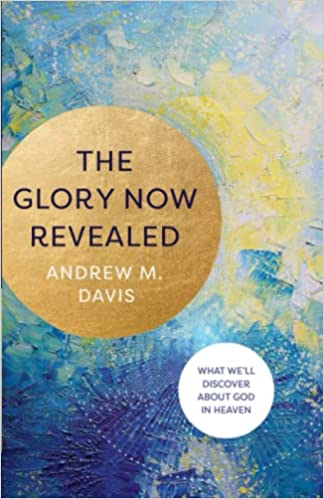
The Glory Now Revealed by Andrew Davis – In this book, Andy Davis gives his readers a foretaste of heaven. In doing so, he focuses in on the topic of heavenly memories. Essentially, he is addressing what we’ll remember when we have resurrected hearts, minds, and bodies. He argues against heavenly amnesia (where we won’t remember anything), and he argues for a robust remembrance of all that happened in this life. As we live our days on the New Earth, we will not be omniscient. Therefore, the triune God will masterfully educate us in all that he did during our time here to bring Himself maximum glory.

He will unveil his providential governance of human history, the workings of the spiritual realm, well-known heroes from church history, unknown and obscure heroes from church history, why we suffered in this life, and so on and so forth. This is a thought provoking book that makes us increasingly interested in what God plans to reveal to us when He comes back to establish a New Heaven and a New Earth. And since many Christians conceive of heaven as a disembodied existence where we’ll skillfully play harps to the glory of God with little knowledge of people we knew in this life, this is an important book to read. It will correct many of contemporary Christianity’s misconceptions about heaven.

Christianity & Liberalism by J Gresham Machen – This book was originally published in 1923. Since then, it has been named one of the top 100 books of the millennium by World magazine and one of the top 100 books of the 20th century by Christianity Today. In this work, Machen sets orthodox Christianity against Christian liberalism in hopes to reveal that Christian liberalism isn’t really Christian! And since liberal theology is still taught and widely promoted, Machen’s voice still needs to be heard. With this in mind, I encourage you to buy this book, begin reading it, and discover more about the difference between orthodox Christianity and Christian liberalism.

Yours, Till Heaven: The Untold Love Story of Charles and Susie Spurgeon by Ray Rhodes Jr. – I’m a lover of all things Spurgeon. Because of this, I was eager to read Ray Rhodes’ newest book that takes a close look at Charles and Susie’s love story. Let’s just say that I wasn’t disappointed. Both Charles Spurgeon and Susie Spurgeon are fascinating individuals. They just seem so well-rounded in the Christian faith. This becomes particularly evident when you look at their marriage. And as I read this book, I couldn’t help but desire to better love my wife. Perhaps MacArthur said it best when he recommeded this book saying:

There are many books that tell us how to have a good marriage. But here is something unique: a book that shows us what such a marriage looks like. . . Husbands and wives will do well to read this book and emulate the loving marriage of Charles and Susie Spurgeon.

The Death of Death in the Death of Christ: A Treatise in Which the Whole Controversy about Universal Redemption is Fully Discussed by John Owen – I tried to read this book a long time ago but I lacked the mental capability! This year, however, I picked it up and worked my way through it (though I still lacked some mental capability!). And, as was expected, it was a brilliant argument for definite atonement. Though this is a very difficult read by a brilliant Puritan, it deserves to be read by both advocates of definite atonement and opponents of definite atonement. Advocates of definite atonement ought to read it because Owen gives us a great example on how to refute arguments for general atonement with biblical texts. Opponents of definite atonement need to read it because Owen’s arguments in favor of definite atonement are hard to refute.

William Carey by S Pearce Carey – William Carey (1761-1834) is largely regarded as “the father of modern missions.” S Pearce Carey was his great-grandson. In 1923, S Pearce Carey wrote this phenomenal biography of his great-grandfather, William Carey. And it is my personal opinion that well-written biographies of faithful Christian missionaries are the most soul-stirring books any Christian can read. This is most certainly the case with this biography. As you read about Carey’s heart for the nations, his relentless work and toil, his endurance through suffering, and his genius in translation, you’ll thank God that He sent this faithful laborer to Calcutta in 1793 to advance the kingdom of Christ.

Becoming Elisabeth Elliot by Ellen Vaughn – I really enjoyed this biography on Elisabeth Elliot. I’m just going to let the back of the book speak here:

Elisabeth Elliot was a young missionary in Ecuador when members of a violent Amazonian tribe savagely speared her husband Jim and his four colleagues. Incredibly, prayerfully, Elisabeth took her toddler daughter, snakebite kit, Bible, and journal . . . and lived in the jungle with the Stone-Age people who killed her husband. Compelled by her friendship and forgiveness, many came to faith in Jesus.

Redemption Accomplished and Applied by John Murray – John Murray (1898-1975) originally published this book in 1955. Since then, this book has been both very popular and highly recommended. Speaking about this book Carl Trueman says, “The book you have in your hand is a miniature masterpiece of theology, dealing reverently on every page with matters of great theological significance.” I think Trueman is right. Throughout the pages of this book, Murray will give you a more robust understanding of the atonement and how it is applied.

Men and Women in the Church: A Short, Biblical, and Practical Introduction by Kevin DeYoung – I’ve found Kevin DeYoung to be a reliable Christian voice that’s always clear, succinct, and biblical. In his newest book, he once again demonstrates these characteristics that I’ve come to appreciate so much. With that said, here’s a brief look at what to expect when you read this book:

There is much at stake in God making humanity male and female. Created for one another yet distinct from each other, a man and a woman are not interchangeable―they are designed to function according to a divine fittedness. But when this design is misunderstood, ignored, or abused, there are dire consequences.

Men and women―in marriage especially, but in the rest of life as well―complement one another. And this biblical truth has enduring, cosmic significance. From start to finish, the biblical storyline―and the design of creation itself―depends upon the distinction between male and female. Men and Women in the Church is about the divinely designed complementarity of men and women as it applies to life in general and especially ministry in the church

Other People’s List

The Gospel Coalition’s 2021 Book Awards

21 Top Biblical Counseling Books of 2021

Midwestern Baptist Theological Seminary’s List

Southwestern Baptist Theological Seminary’s List

World Magazine’s List

The London Lyceum’s Top Books of 2021

More people and websites will post their lists. I’ll add their lists to this blog as they do so!

Counsel from John Stott

Since we are talking about books, here’s a quote from John Stott that I love. I hope it encourages you:

For there is something unique about books. Our favorite books become very precious to us and we even develop with them an almost living and affectionate relationship. Is it an altogether fanciful fact that we handle, stroke and even smell them as tokens of our esteem and affection? I am not referring only to an author’s feeling for what he has written, but to all readers and their library. I have made it a rule not to quote from any book unless I have first handled it. So let me urge you to keep reading, and encourage your relatives and friends to do the same. For this is a much neglected means of grace.